North India Statesman
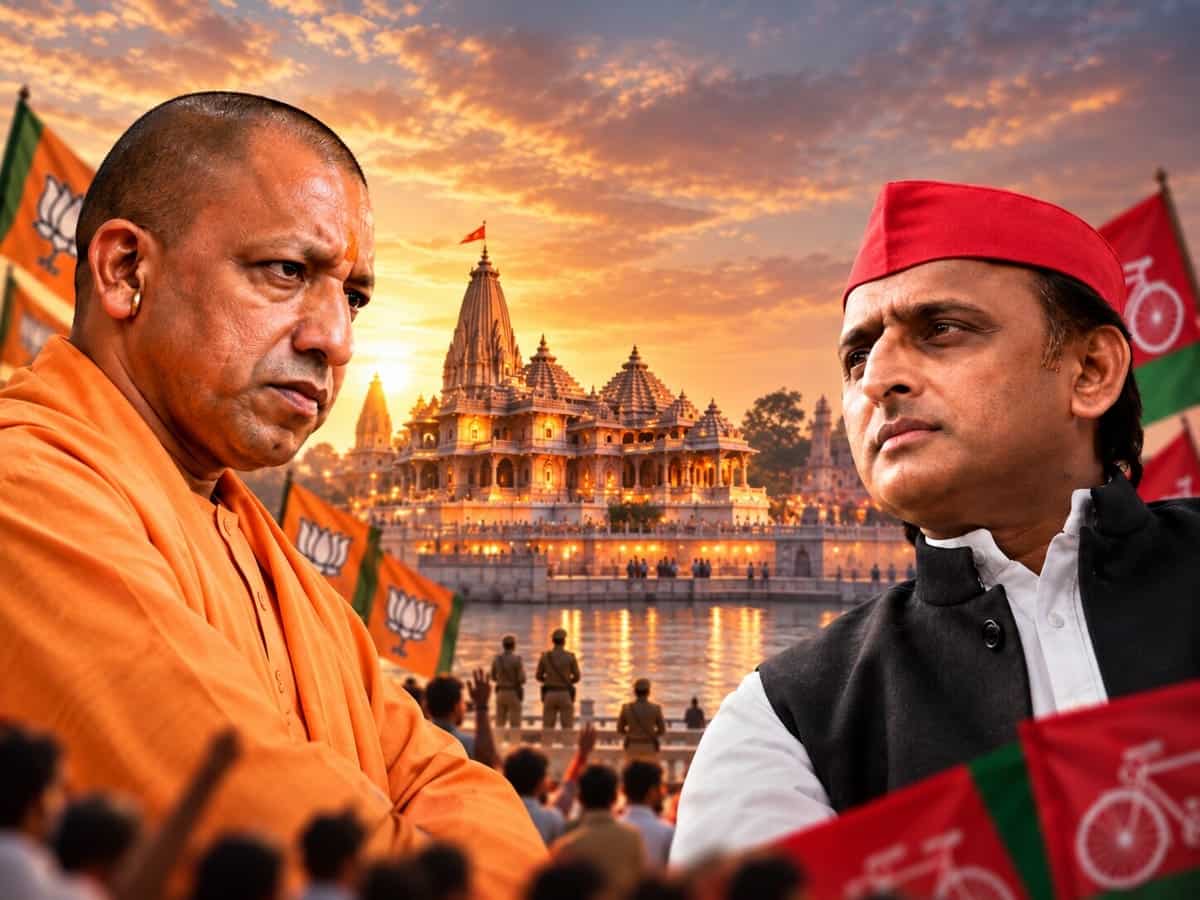
Ayodhya stands as the ideological epicenter of contemporary Indian politics, yet the electoral reality on the ground rarely mirrors straight political rhetoric. While national headlines often project the temple town as an uncontested bastion for the Bharatiya Janata Party, a granular breakdown of the past seven elections—spanning both Uttar Pradesh Assembly and Lok Sabha polls across the Faizabad-Ayodhya belt—paints a far more complex picture. For both Chief Minister Yogi Adityanath and Samajwadi Party president Akhilesh Yadav, conquering and holding Ayodhya requires navigating shifting caste coalitions, localized anti-incumbency, and intricate rural-urban dynamics.
The Myth of a One-Sided Bastion
Popular perception frequently equates Ayodhya’s religious prominence with guaranteed electoral dominance for the saffron party. However, historical data from past assembly and parliamentary cycles shows that Faizabad has never been a mono-dimensional constituency. The seat has witnessed sharp swings, razor-thin margins, and unexpected upsets where opposition parties successfully fragmented the consolidation of votes. Even during waves of ideological mobilization, local factors such as farmer distress, urban land acquisition compensations, and youth employment concerns have routinely exerted heavy pressure on polling day.
The Past Seven Elections: A Pendulum Between Ideology and Caste Arithmetic
Examining election trends over the last seven major electoral contests reveals how dynamic this battlefield truly is:
-
The 2009 Lok Sabha Shock: Before the current dominant cycle, the Congress candidate secured Faizabad, highlighting that split mandates were always viable when traditional bases fractured.
-
The 2012 Assembly Reshuffle: The Samajwadi Party swept multiple assembly segments within the district, demonstrating that the socialist cadre maintains deep roots across the surrounding rural hinterland.
-
The 2014 & 2017 Saffron Surges: The Modi wave and subsequent assembly landslide saw the BJP consolidate non-Yadav OBCs and upper castes, posting dominant victory margins across both assembly and parliamentary seats.
-
The 2019 Lok Sabha Test: Despite the formidable SP-BSP alliance, the BJP retained the Faizabad parliamentary seat, but by a noticeably compressed margin compared to 2014, signaling underlying voter churn.
-
The 2022 Assembly Contests: The BJP retained the urban Ayodhya assembly segment, yet several adjoining rural seats in the district witnessed intense, neck-and-neck contests against Samajwadi Party nominees.
-
The 2024 Lok Sabha Upset: Defying widespread projections following the Ram Mandir consecration, the Samajwadi Party’s veteran leader Awadhesh Prasad pulled off an upset in the Faizabad parliamentary seat, proving that caste equations (PDA) and localized grievances could breach ideological narratives.
The Yogi Challenge: Reclaiming the Narrative and Managing Ground Realities
For Chief Minister Yogi Adityanath, Ayodhya is not just another constituency—it represents the cornerstone of his governance model, cultural revival agenda, and administrative delivery. The challenge for the BJP leadership lies in balancing grand infrastructure development with local grievances. Rapid urban modernization, road expansions, and tourism corridors have caused friction among local traders and displaced residents over compensation. To secure Ayodhya decisively in upcoming rounds, Yogi Adityanath must address ground-level administrative fatigue, bridge gaps with traditional shopkeepers, and rebuild an unshakeable Hindu umbrella coalition that cuts across caste boundaries.
The Akhilesh Dilemma: Can the PDA Strategy Hold Long-Term Ground?
For Akhilesh Yadav, Ayodhya remains both his greatest breakthrough and his most delicate tightrope walk. The Samajwadi Party’s recent success proved the potency of its PDA (Pichhde, Dalit, Alpasankhyak) formula, which successfully united Dalits, OBCs, and minorities around economic issues, government jobs, and the Constitution. However, sustaining this momentum in assembly-level fights where micro-local equations dominate is a formidable task. Akhilesh Yadav must maintain a calibrated stance—respecting religious sentiment while keeping the debate anchored strictly to livelihood issues—to prevent counter-consolidation among upper-caste and non-aligned urban voters.
Beyond Temple Town: The Decisive Role of the Rural Hinterland
A key detail frequently overlooked in political discussions is that the broader Ayodhya-Faizabad constituency comprises expansive agrarian belts alongside the municipal city. While urban wards and temple corridors strongly favor development and tourism-driven commerce, the vast rural pockets prioritize crop prices, stray cattle mitigation, irrigation access, and welfare payouts. Any party hoping to claim enduring authority over Ayodhya must conquer both worlds—the bustling pilgrim hub and the demanding farming villages that ultimately hold the balance of power.