North India Statesman
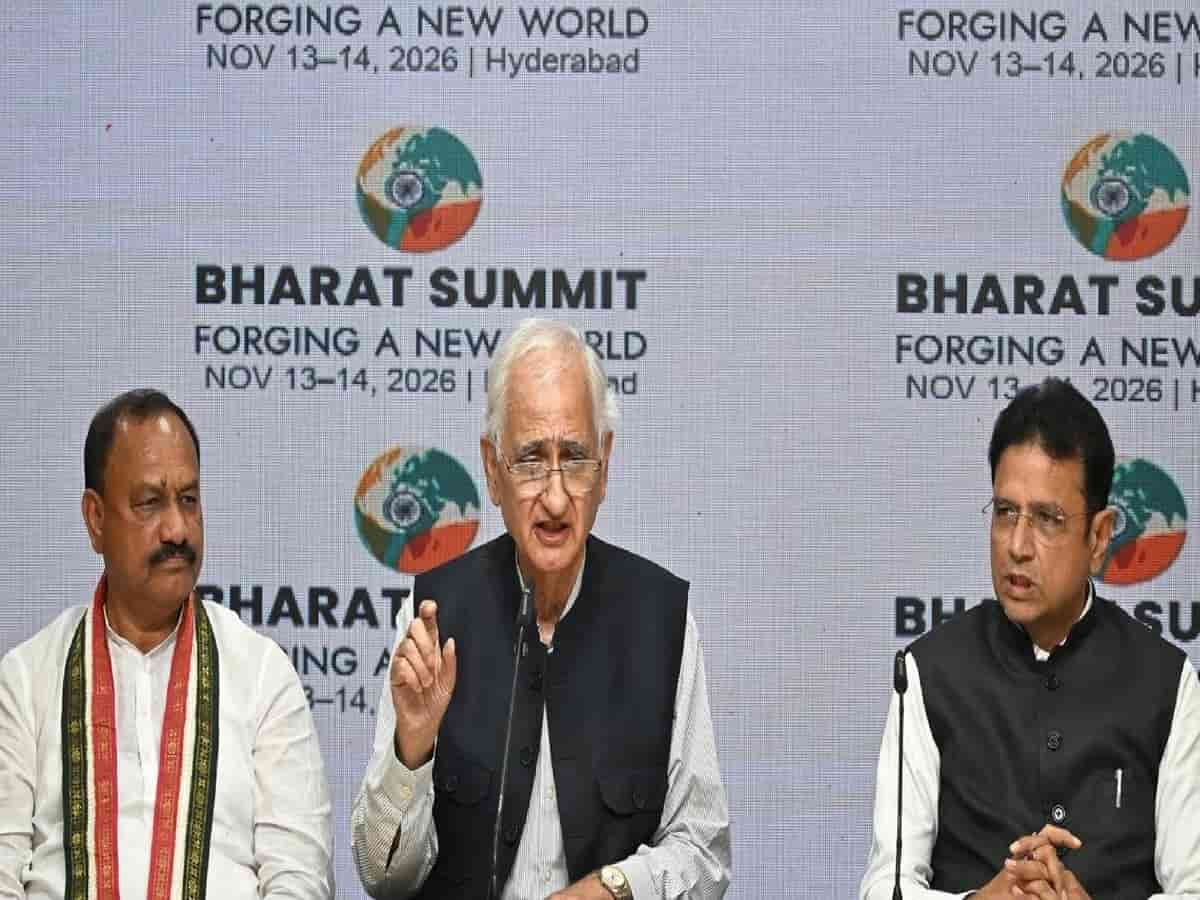
A major diplomatic and political controversy has overshadowed the opening day of the two-day Bharat Summit in Hyderabad on Friday, November 13, 2026, after more than 100 international speakers—who had already received political clearance from the Ministry of External Affairs (MEA)—were abruptly barred from entering India. Organised by the Telangana government in collaboration with the Indian National Congress around the theme “Building a New World”, the high-profile conclave brings together policymakers, elected leaders, journalists, and global thinkers from over 70 countries alongside senior Congress leaders Mallikarjun Kharge and Rahul Gandhi. Yet as proceedings kicked off in Hyderabad, organisers and senior party leaders revealed that between 113 and 115 out of 315 foreign speakers previously cleared by the MEA had their visas revoked or entry blocked at the eleventh hour on instructions from the Union Ministry of Home Affairs (MHA). The sudden freeze—highlighted by the last-minute cancellation of Norwegian journalist Helle Lyng Svendsen’s visa minutes before her flight—has triggered fierce debate across New Delhi, Hyderabad, and international media circles over immigration powers, press freedom, and inter-ministerial coordination.
What Happened Between the MEA Clearance and MHA Block?
According to summit organisers and official correspondence reviewed by media outlets, the clearance process for the international gathering initially appeared smooth. On November 3, 2026, the Ministry of External Affairs issued formal political clearance for a list of 315 international speakers and panellists invited to attend the November 13–14 conclave in Hyderabad. Based on that approval, Indian embassies and consulates abroad processed and stamped travel visas for the invited delegates. However, as participants began boarding flights to India earlier this week, roughly 202 delegates managed to reach Hyderabad while more than 113 speakers were stopped either at foreign airports or via sudden cancellation notices from Indian missions. Organisers noted that the MEA’s November 3 political clearance letter carried a standard clause making final entry subject to clearance from the Ministry of Home Affairs and other security agencies—a provision the MHA invoked without issuing a public explanation.
Norwegian Journalist Helle Lyng’s Last-Minute Visa Cancellation
The controversy gained global attention when Helle Lyng Svendsen, a journalist with the Oslo-based daily Dagsavisen who was scheduled to speak on a Bharat Summit panel examining the future of media and press freedom, posted a video message detailing her experience. Lyng explained that she held a valid Indian visa stamped in her passport and had already packed her bags when she received an urgent phone call from the Indian Embassy in Norway just ten minutes before leaving for the airport. Embassy officials informed her that despite her issued visa, she would not be permitted to enter India—a directive she alleged came directly from “orders from above” inside Union Home Minister Amit Shah’s ministry. Lyng, who had previously made headlines in May 2026 for questioning Prime Minister Narendra Modi on press freedom during his visit to Norway, stated that she received a subsequent email confirming her visa cancellation without any request for additional documents or any stated reason.
Shashi Tharoor and Congress Slam Centre Over ‘Insecurity’
Senior Congress MP Shashi Tharoor, who arrived in Hyderabad to participate in the summit’s discussions on the emerging global order and electoral integrity, strongly criticised the Central government over the episode. Taking to social media platform X on Friday, Tharoor termed the barring of 115 MEA-cleared speakers a “disappointing footnote” to the conference. Questioning under which legal provision such a sweeping, last-minute restriction had been imposed—and noting that the short two-day schedule made any legal or administrative reversal impossible—Tharoor remarked that it was a shame “that a proud democracy has become so insecure that it must stifle any voices it fears will be critical”. Meanwhile, Bharatiya Janata Party (BJP) leaders had already targeted the Hyderabad conclave ahead of its opening, accusing the Congress of hosting an “anti-Bharat” platform.
What Indian Law Says About MHA Visa Powers
While neither the Ministry of Home Affairs nor the Ministry of External Affairs had issued an official public statement explaining the exact grounds for the 113 entry denials as of Friday evening, legal and diplomatic observers point to how India’s dual-track immigration architecture operates. Under Section 7 of the Immigration and Foreigners Act, 2025, and Rule 9 of the accompanying rules, the Central Government—acting primarily through the MHA and the Bureau of Immigration—retains sweeping statutory authority to restrict the entry of any foreign national or revoke a previously granted visa even after diplomatic clearance has been issued. Even so, the unusual public clash between an MEA-cleared international guest list and an MHA entry freeze has turned the Bharat Summit visa row into a major political flashpoint in India’s domestic and diplomatic discourse.