North India Statesman
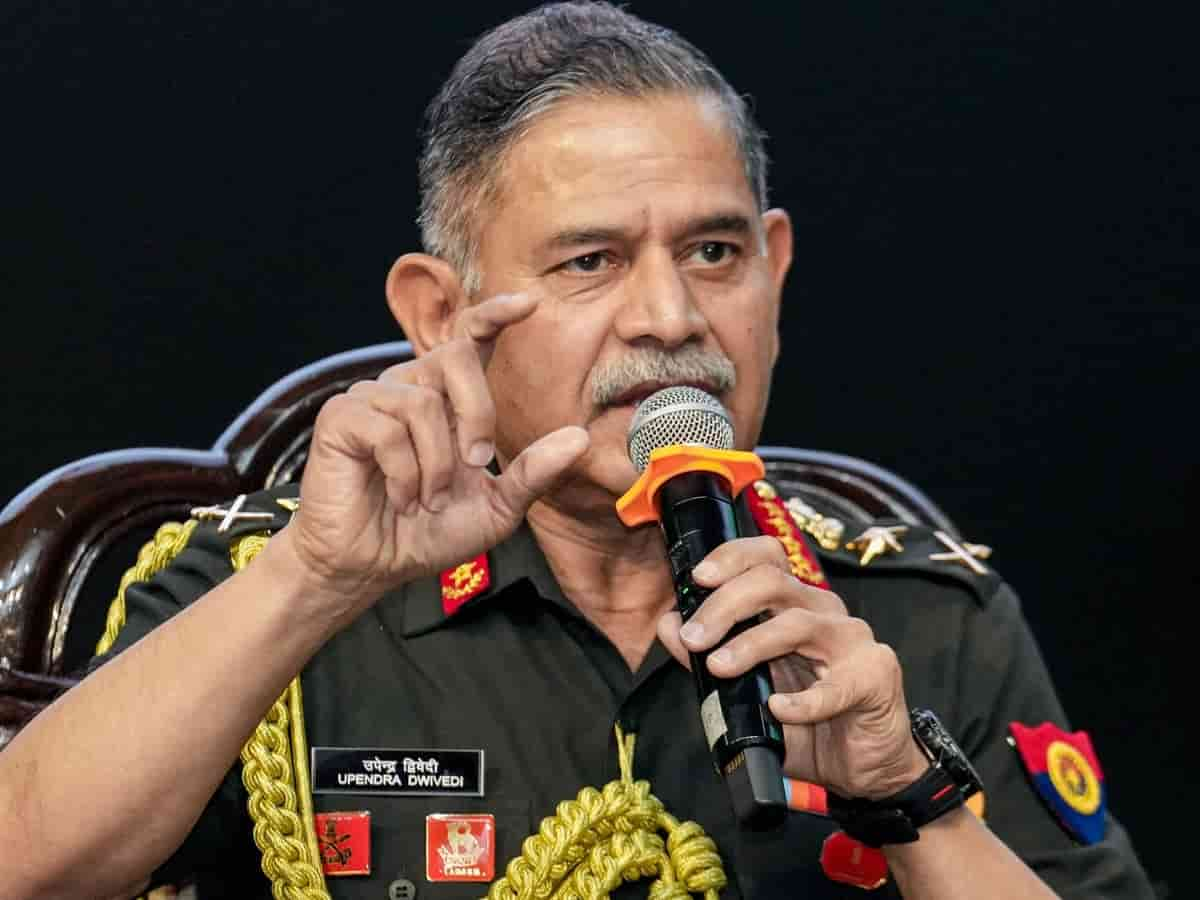
More than a year and a half after India carried out precision cross-border strikes against terrorist infrastructure in response to the Pahalgam terror attack, former Chief of the Army Staff General Upendra Dwivedi (Retd.) has disclosed a crucial behind-the-scenes dimension of Operation Sindoor. Speaking in New Delhi on Friday, November 13, 2026, during his first major public address since retiring from service, General Dwivedi revealed that India simultaneously activated its Civil Defence network across 427 districts nationwide on May 7, 2025—the very day Operation Sindoor was launched. Far from being a routine administrative drill, the sweeping nationwide activation was a deliberate strategic measure designed to preserve operational surprise, shield critical civilian infrastructure from retaliatory drone and missile attacks, and synchronise home-front vigilance with military operations. For citizens across border states as well as major urban and industrial centres from New Delhi, Mumbai, and Bengaluru to Lucknow and Kanpur, the former Army Chief’s revelations offer rare insight into how modern warfare blurs the boundary between the front line and the civilian hinterland.
Why Did India Activate Civil Defence in 427 Districts on May 7, 2025?
Addressing defence experts, security professionals, and policymakers in the national capital, General Upendra Dwivedi explained that activating civil defence mechanisms across 427 districts—spanning well over half of India’s administrative geography—served two vital strategic objectives during Operation Sindoor. First, widening readiness across hundreds of districts simultaneously prevented adversaries from pinpointing which specific border sectors were preparing for imminent military action, thereby protecting the element of surprise when Indian forces struck nine terror hubs in Pakistan and Pakistan-occupied Kashmir in the early hours of May 7, 2025. Second, military planners anticipated that cross-border retaliation would not remain confined to military garrisons along the Line of Control. By placing district magistrates, disaster management authorities, fire and rescue services, hospitals, blackout protocols, and civil defence volunteers on immediate standby across 427 districts, the government ensured rapid emergency response and minimal civilian panic when hostile drones and projectiles targeted Indian territory over the ensuing days.
How Multi-Layered Air Defence and Ground Sensors Worked Together
Reflecting on the operational lessons drawn from Operation Sindoor, General Dwivedi highlighted that defeating modern aerial threats requires tight integration across multiple agencies rather than reliance on a single piece of hardware. Explaining how Indian forces neutralised waves of incoming drones during the May 2025 escalation, the former Army Chief noted that success came from seamlessly linking disparate systems into a unified operational picture—combining the radar and detection sensors of one organisation, the electronic jammers of another, and the air defence guns of a third. Under the broader civil defence framework coordinated with the Ministry of Home Affairs, local administrations across designated districts tested air-raid warning sirens, crash blackout procedures, camouflage measures for power grids and communication hubs, and rapid evacuation drills. That layered coordination ensured that even as precision kinetic and non-kinetic measures pressured terrorist networks across the border, domestic civic life and essential utilities remained resilient.
‘First Sensor of the Nation’: Ex-Army Chief’s Vision for Private Security 2.0
A central theme of General Dwivedi’s November 13 address was that future conflicts will increasingly test the security of India’s internal economic arteries. Warning that modern adversaries look to strike or disrupt power plants, refineries, coal mines, industrial estates, data centres, and hospitals deep inside the country, he underscored how everyday vigilance forms the bedrock of national defence. “The security of this nation is determined not only on the Line of Control but also at the gate of a power plant at three o’clock in the morning,” General Dwivedi remarked. Calling India’s vast private security workforce the largest potential human intelligence and surveillance grid in the country, he described private security guards as the “first sensor of the nation”. Outlining a roadmap he termed Private Security 2.0, the former Army Chief urged security agencies and corporate establishments to transition guards from uncertified manpower into trained, digitally aware, and formally certified partners in homeland security.
Upgrading Training, Wages, and Vigilance for Future Conflicts
To make private security personnel and civil defence volunteers effective against hybrid threats—including compromised insiders, cyber-physical intrusions, drone reconnaissance, and coordinated misinformation campaigns—General Dwivedi stressed the need for institutional reform alongside technological adoption. While artificial intelligence, CCTV analytics, and automated access systems can assist monitoring, he reminded industry leaders that “the task is for the machine, the judgement is always human”. Emphasising ethical and professional standards, he added that genuine security vigilance is rooted in observing suspicious behaviour rather than profiling individuals by identity. At the same time, he advocated ending the classification of experienced security guards as unskilled labour, calling for structured certification, regular retraining, better wages, and stronger social security benefits. Together with the 427-district civil defence architecture tested during Operation Sindoor, General Dwivedi’s blueprint signals a comprehensive “whole-of-nation” approach to safeguarding India’s cities, critical infrastructure, and citizens in an era of evolving security challenges.