 North India Statesman
[ad_1]
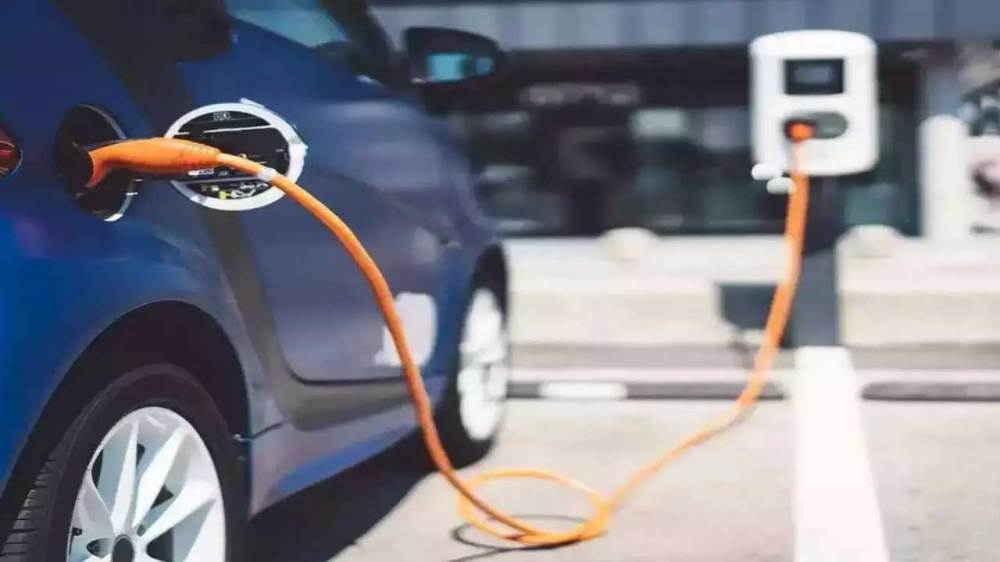
The global automobile industry is currently undergoing a period of revolutionary change, which is inspired by the progress in technology and the rise of electric vehicles (EV).
Since the countries are now insisting on sustainable transport, the trend of private transport is fast moving towards electric vehicles. However, such a change presents both opportunities and serious challenges for the automobile sector of India, especially its auto parts, for industrialists and workers.
There are over 2820 auto-components manufacturers in India, many of which make vehicles with internal combustion engines. Since 45–80 percent of ICE components are dependent on electricity, the trend towards EV has now become a challenge for this. Since electric vehicles now run on batteries powered electric motors, not traditional cars, which depend on 600–800 parts for powertrain, the demand for many engine components is now reduced.
According to IFREFRAST reports, about 25% of 1,100 auto-component manufacturers in Pune alone are expected to be highly or moderately affected due to dependence on ICE Puratrain manufacturing at about 25%. The opposite effect of this change can be seen in the major auto productive districts of Maharashtra such as Pune, Nashik, Aurangabad, Mumbai (suburban), Thane and Kolhapur, where 83% of the state’s formal workers or 65% automobile units are located.
India’s automobile and auto-component sector are formally employed in 340,000 employees, of which EV changes are likely to have an impact on 31%.
14 percent of jobs can be eliminated due to a decline in demand for ICE parts.
17 percent of jobs will require skill changes related to battery technology, electric driving and software integration.
Construction-related jobs will be the most affected due to a decline in demand for traditional ICE component combination.
Despite such disastrous effects, its overall impact on employment is expected to be positive. Although E.V. Vehicles were given ICE Less maintenance workers are required than vehicles, yet employment will increase, because in the coming years, a large number of E.V. It is expected to come. According to the Indian model of iPhrest, passenger car production will increase from 1.7 million vehicles to 2036–37 in 2023-24 to 3.3 million and 2.7 million.
Dr. Ajit Ranade, Vice Chancellor of Gokhale Politics and Economics Institute, emphasized that this change will not only protect jobs, but will also protect workers.
India’s 97 percent auto manufacturers are micro, small and medium -sized enterprises (MSMEs). Such small entrepreneurs do not have enough financial resources or technical capacity to faster in the EV manufacturing sector. Prashant Girbane, Director General of Maharat Chamber of Commerce, Industries and Agriculture, emphasized that industry groups can play an important role by making the following provisions:
Skill development program for displaced workers
Technical aid for MSME
Strategic guidance to facilitate this change
A report by the Boston Consulting Group states that global auto manufacturers need to set up units in India to help local manufacturers to achieve an export target of $ 100 billion. It would be important to strengthen the domestic EV supply chain in India, to remain global auto manufacturing superpower.
Although the change of EV region in India is an important challenge for auto-clock makers and workers, it also openses the doors of development, employment generation and technological advancement. The government, industry and private entrepreneurs should cooperate to ensure that all stakeholders benefit from this change. Again skill programs, technology use and foreign investment will play an important role in successfully bringing this change.


