North India Statesman
[ad_1]
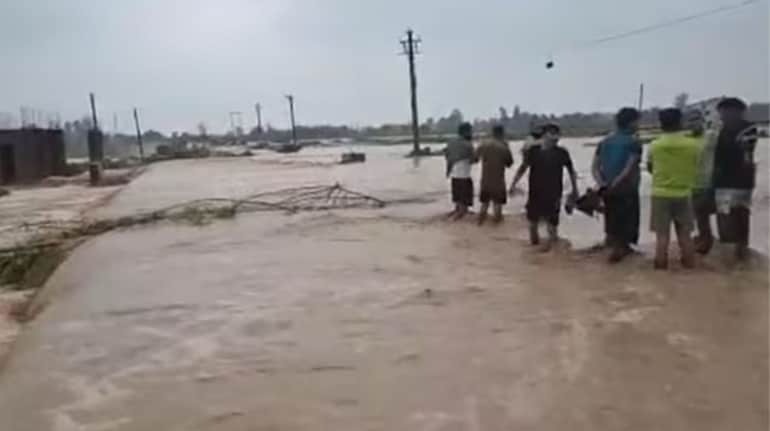
Jammu and Kashmir, called the heaven of the earth, is facing the form of nature these days. Recently, the wounds of the devastation caused by cloudburst in Kishtwar were not yet filled that now Kathua district has also seen a ‘Jala Holiday’ scene. A sudden flood (Flash Flood) has caused huge devastation in Bani tehsil of Kathua after cloudburst, causing outcry in the area.
The most devastating effect of this natural disaster is on the lifeline connecting Jammu to the rest of the country, ie Jammu-Pathankot National Highway and Railway Line. The velocity of flood water was so fast that it shed the land and bridge under the railway track, which has completely stalled both rail and road. This incident has once again caught everyone’s attention to the increasing dangers of climate change in the hilly areas.
What is a cloud burst?
First of all it is important to understand what is ‘cloud bursting’. It is an extreme form of rain. When in a very small place (within a radius of about 20-30 square kilometers) receives 100 mm or more rain within an hour, this incident is called cloud bursting. Its disastrous capacity on the mountains increases because the water flows downwards on the slope and brings a large amount of soil, stone and debris with it, which takes the form of a devastating flood.
The dreadful scene of destruction in Kathua
This incident in Kathua district has disturbed normal life.
- Railway connectivity broken: The most terrible effect of the sudden flood was seen on the Jammu-Pathankot railway line near Chanaiyadin area. The fast flow of floods badly damaged a bridge under the track (Bridge No. 32) and took the entire ground under the track. This caused the railway track to swing in the air, which has stopped operating all trains from Jammu with immediate effect. Indian Railways teams are engaged in repair work, but it may take time to restore contact.
- Break on National Highway: Along with the railway line, the Jammu-Pathankot highway has also suffered heavy damage. Roads have been washed away in many places and debris has accumulated due to landslides. The administration has stopped traffic on the highway, causing thousands of vehicles, including passenger buses, trucks and private vehicles, are trapped on the way.
- Vaishno Devi and passengers going to Kashmir affected: Jammu-Pathankot Highway, Mata Vaishno Devi’s base camp is the main road to Katra and Kashmir Valley. Due to its closure, thousands of pilgrims and tourists are also trapped in the way, which are being transported to safe places.
- Local public life is disturbed: The contact of many villages has been cut off from the main road and flood water has entered the houses in the low -lying areas, causing heavy losses to the people.
Kathua after Kishtwar, a worrying pattern
This is the second major incident of cloudburst in Jammu and Kashmir within a week. Earlier, there was a huge devastation in the Chasoti drain of Kishtwar district due to cloudburst. Meteorological experts believe that due to climate change and global warming, the frequency and intensity of such extreme seasonal events in the Himalayan region is increasing, which is a serious concern.
Administration action and rescue operations
As soon as the incident was reported, the local administration, SDRF (State Disaster Response Force) and police teams immediately swung into action. Rescue operations are being carried out to evacuate the trapped people and bring them to safe places. Work is being done on a war footing to restore the highway and railway tracks as soon as possible. The Meteorological Department (IMD) has also issued alert for heavy rains in many mountainous districts of Jammu and Kashmir in the coming days and has advised people to be vigilant.
These events are a warning that we have an urgent need to create a balance between development and environment on the mountains, so that the destructive effects of such disasters can be reduced in the future.