North India Statesman
[ad_1]
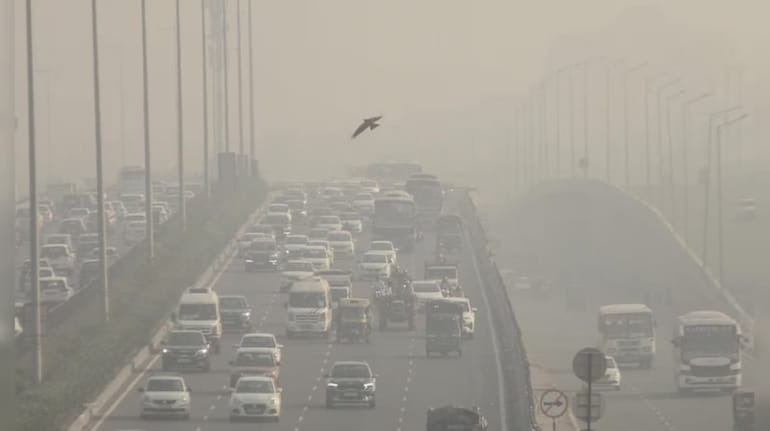
New Delhi: The morning of Monday, 15 December was very difficult for the people of Delhi. The city was wrapped in a white sheet of dense fog, the situation was such that it was difficult to see even a few meters away. Those going to work early in the morning had to brake the speed of vehicles on the roads. With this, Delhi’s air has once again become ‘poisonous’, making even breathing difficult.
Delhi becomes gas chamber, air ‘extremely severe’
This morning, the Air Quality Index (AQI) was recorded around 500 in many areas of Delhi, which falls in the ‘very severe’ category. Due to calm winds, all the pollution has accumulated near the ground, making the situation even worse. The average AQI of Delhi was 460 in the morning, while in areas like Ashok Vihar it reached the dangerous level of 500.
- Bawana: 488
- Burari Crossing: 489
- Alipore: 447
- IGI Airport: 403
Not only pollution, cold has also started showing its effect. According to the Meteorological Department, the night temperature has fallen to 8.2 degrees Celsius and ‘Orange Alert’ has also been issued regarding dense fog.
Flights were also affected
The effect of dense fog is also visible at Delhi Airport. Officials have warned that flight operations may be delayed or affected. Passengers have been advised to contact the concerned airline for information about their flight.
GRAP-4 implemented to stop pollution, know what are the restrictions
In view of the uncontrolled pollution in Delhi-NCR, the Commission for Air Quality Management (CAQM) has implemented the most stringent rule GRAP-4. Many strict restrictions have been imposed under this:
- Ban on construction: There has been a complete ban on any kind of construction and demolition work.
- ‘No Entry’ of trucks: Except for trucks carrying essential goods, entry of trucks from other states is closed in Delhi. However, CNG, electric and BS-VI diesel trucks are exempted.
- Ban on diesel vehicles: There is also a ban on plying of heavy diesel vehicles registered in BS-IV and older in Delhi.
- Instructions for schools: Schools have been asked to run classes in hybrid mode, that is, children can take classes both online and offline.
- Preparing for odd-even? State governments have been told that if the situation worsens, they can take steps like closing colleges and non-essential offices and implementing odd-even rules for vehicles.