North India Statesman
From Plato and Kautilya to Machiavelli and Locke
Public Policy draws on a rich history of political philosophy and statecraft literature, with influential scholars & thinkers contributing to the development of modern governance.
Plato’s “The Republic” expresses an idealized version of the ruler in creating a just society, while Kautilya’s “Arthashastra” is a treatise on statecraft that covers topics such as foreign policy, economics, and law.
Machiavelli’s “The Prince” promotes a cynical yet pragmatic approach to governance, whereas John Locke’s “Two Treatises of Government” emphasizes the importance of individual liberty and natural rights.
These works have had a profound impact on the development of administrative education and continue to be studied and referenced by scholars and policymakers today.

Transitioning to the 21st century
The world has charted its growth story from an Agrarian Community to an Industrial Society, and further into a Digital Economy.
India, as the largest democracy, presents distinct challenges for the administrative system in terms of managing cultural diversity, fiscal priorities, and social-welfare requirements. Thus, policy-making and governance skills (albeit veiled) are essential for delivering equitable and sustainable growth.
Public Policy expertise, too, has transformed from intuitive decisions to data-backed first-principles strategy. Gone should be the days of gut-based and wing-it approaches; now, multi-disciplinary knowledge and adaptive leadership should pave the way forward. TISS and NLSIU are leading universities for a Policy Masters, and realizing its emerging importance, IITs & IIMs too have established dedicated departments offering specialized courses.
Case in point, even the Indian Armed Forces are looking at ancient scholars such as Chanakya, Kamandaka (Nitisara), and Tamil poet-saint Kural (Thiruvalluvar’s Thirukkural). Project Udbhav seeks to bridge the historical and the contemporary for wisdom on strategy & warfare that governed the subcontinent for a millennium.
Next-Gen Policy Specialists
Traditional teaching methods will not suffice, as a static academic curriculum limits innovative thinking. Here comes new-age colleges to the rescue, with modular learning and globally-aligned programs, a story on one such institute below:
Kautilya School of Public Policy, helmed by Founding Dean Syed Akbaruddin (fmr. UN Ambassador, IFS), has envision ed a dynamic pedagogy, focusing on expert-led mentorship and utilitarian specializations. KSPP hosts an illustrious lineup of ex-bureaucrats and international specialists as Faculty & Advisors, complemented by esteemed Guest Lecturers from diverse sectors.
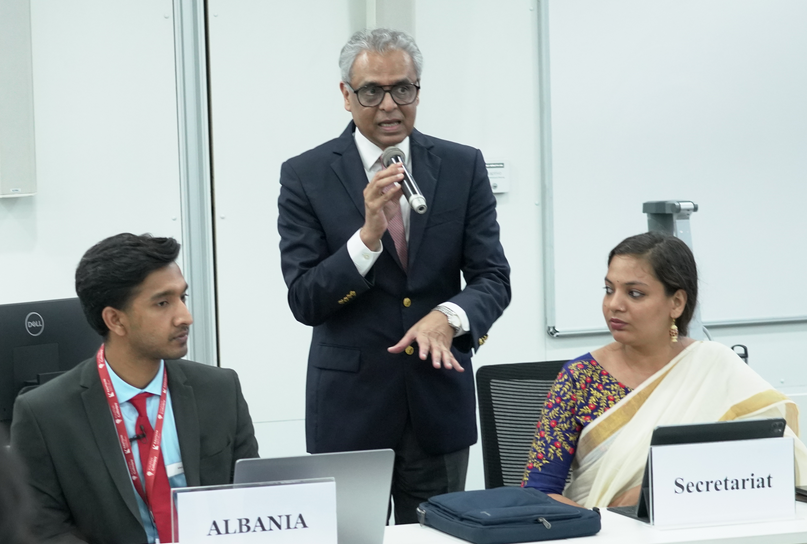
In the spirit of experiential learning, the department organized a student-led “Kautilya Colloquy 2026“, comprising two events (A paper presentation and MUN Simulation).
The Paper presentation (Theme:” Fostering Equity“) saw several groups sharing original work on National polity issues. Jury included Dr. Anant Maringanti, Dr. Amir Ullah Khan, Ms. Sharmila Chavaly, and Ms. Srividya Reddy.
Following it was the Model United Nations Simulation, centered around the UNSC (Theme:” Ecological Degradation: A Threat to International Peace“). As a preparatory process, three eminent personalities- Amb. Sanjay Bhattacharya, Lt. Gen. Sanjiv Langer (Retd.), and Amb. DB Venkatesh Varma was mentoring competing groups in the nuances of Global Affairs & Diplomacy.
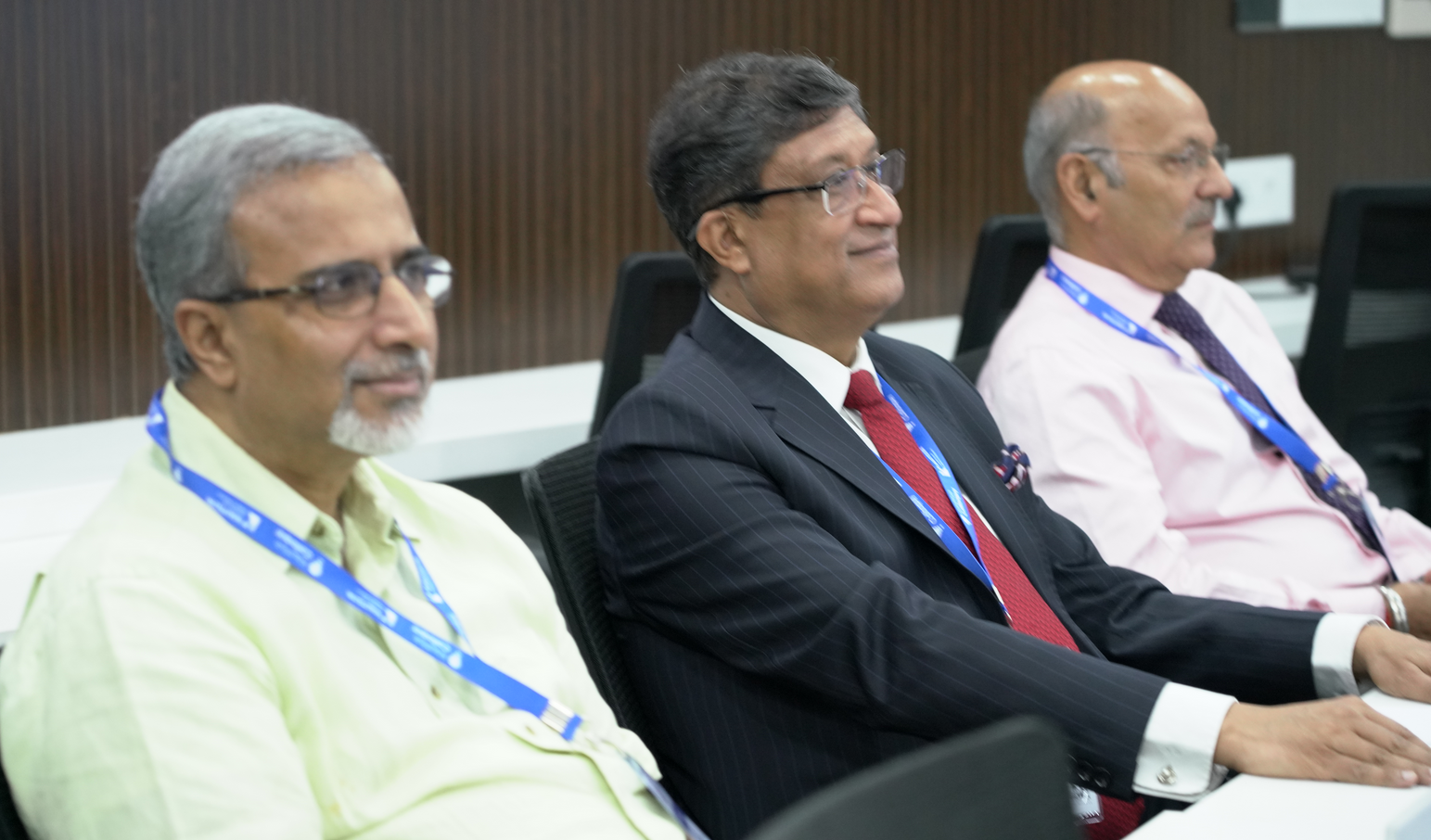


Policy specialists are often solicited for legislative or proposal drafting, CSR compliance, and, recently, government advocacy (FinTech, Emerging Technologies like AI, Pharma, Space, etc.). Such events are vital for holistic development and impart lessons in public speaking, cooperative negotiation & mediation.
Image credits belong to the KSPP Community.