North India Statesman
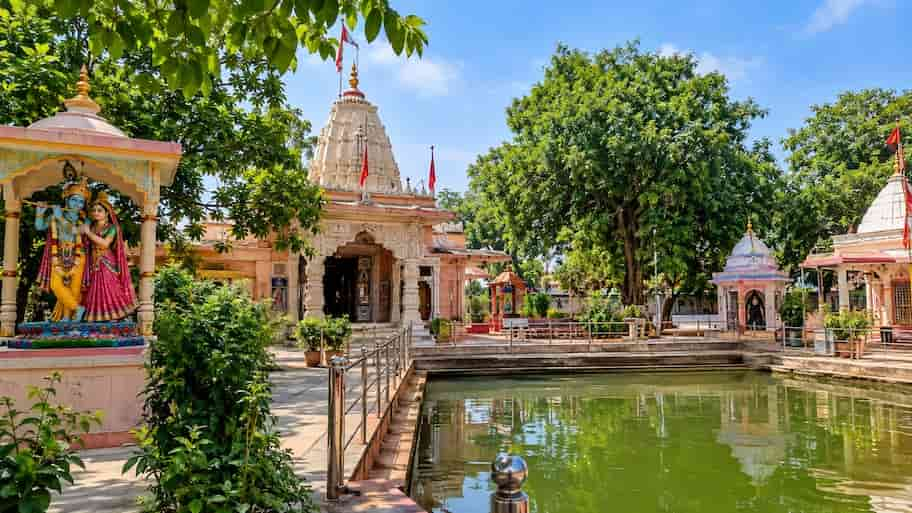
Tucked away in the historic village of Nawada within Haryana’s bustling industrial hub of Faridabad, the ancient ‘Bansi Wale’ Radha-Krishna Temple stands as a timeless sanctuary of faith, folklore, and spiritual stillness. Rooted in oral traditions and revered by generations of local residents and temple custodians, the sacred site traces its spiritual lineage directly to the Dwapar era, an epoch associated with Lord Krishna’s divine pastimes. Believed to be nearly 5,000 years old, this expansive complex remains lush and shaded by venerable trees, offering pilgrims a tranquil retreat that feels worlds apart from the urban sprawl of Delhi-NCR.
The Spiritual Significance of Parikrama and Darshan
A steady stream of pilgrims and local devotees visits the temple grounds each day, particularly during morning and evening aartis. While witnessing the darshan of Lord Krishna playing his divine flute alongside Radha is spiritually uplifting in itself, circumambulation (parikrama) of the complex holds deep devotional significance. Popular faith holds that completing the parikrama with focused devotion clears enduring obstacles, fulfills unspoken prayers, and restores emotional balance. During the festive period of Shri Krishna Janmashtami, footfalls surge exponentially as thousands observe fasting rituals, participate in midnight celebrations, and join the rhythmic circumambulation of the holy grounds.
The Month-Long Jeth Mela and Community Tradition
According to the temple’s head priest, Somnath, the sacred complex plays host to a grand annual religious fair held throughout the traditional Hindu month of Jeth (Jyeshtha). Lasting an entire month, this historic gathering draws visitors from across Faridabad, Palwal, Gurugram, Delhi, and adjoining rural belts of western Uttar Pradesh. The fair transforms Nawada village into a bustling spiritual carnival, sustained by age-old community traditions including large-scale bhandaras (community feasts), free water and sherbet distribution stalls, and complimentary lodging facilities organized by villagers to accommodate visiting ascetics, sadhus, and families.
The Sacred Kund and the Pantheon of Guardian Deities
Beyond the primary sanctum housing the divine idols of Radha-Krishna, the temple complex preserves an ancient water tank (kund) that villagers hold in sacred regard for its timeless, restorative aura. Over the centuries, the secluded setting has also served as a retreat for meditating ascetics, whose ashrams still sit on the peripheral grounds. The expansive premises encompass distinct shrines dedicated to Mahadev Lord Shiva, Shanidev, and other prominent deities. Devotees routinely conclude their pilgrimage by offering water and prayers across these secondary shrines, praying for family well-being, protection, and prosperity after receiving the blessing of the Bansi Wale Lord.