North India Statesman
[ad_1]
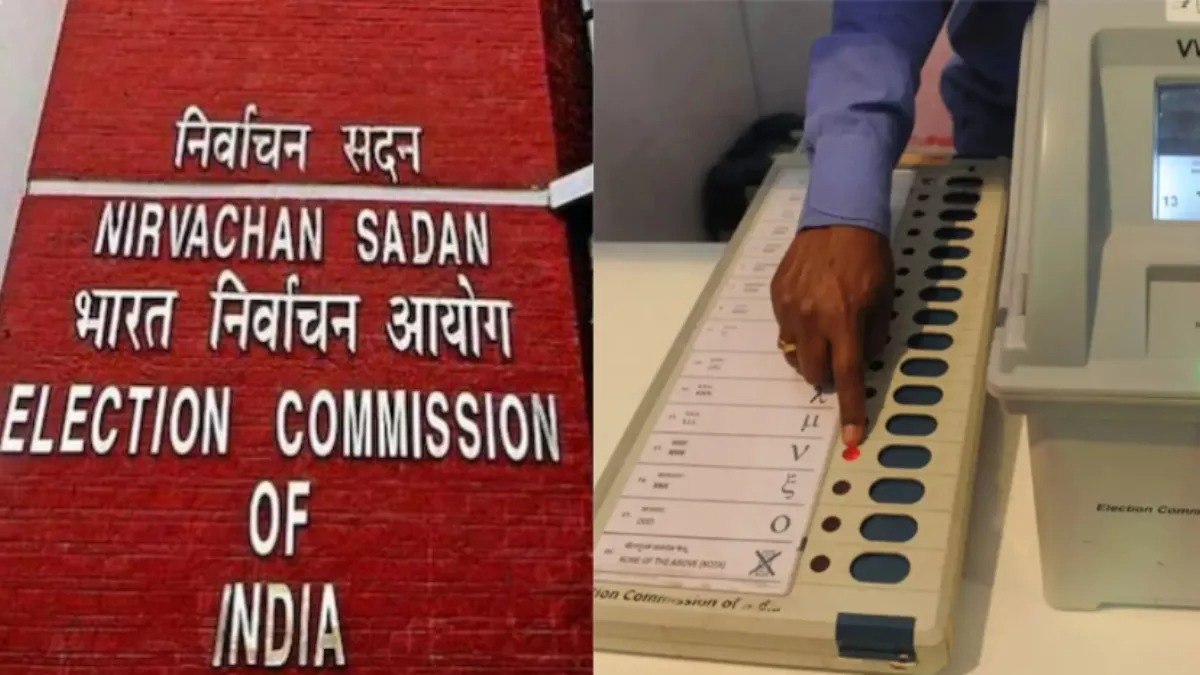
20 December 1988 is recorded as an important day in the history of Indian democracy. On the same day, Parliament approved the 62nd Constitutional Amendment Bill, under which the minimum age for voting was reduced from 21 years to 18 years. This historic decision opened the way for crores of youth of the country to be directly connected to the democratic process.
The objective of this amendment was to give the youth an opportunity to actively participate in politics and governance. Citizens between the ages of 18 and 21 were playing an active role in education, employment, and social activities, but did not have the right to vote. After the constitutional amendment, this inconsistency was removed and the youth got the constitutional right to elect their representatives.
This decision strengthened the role of youth in the electoral process. With the addition of a large number of new voters, issues related to youth started getting an important place in the policies and election agenda of political parties. Political dialogue got a new direction on topics like education, employment, sports, technology and social justice.
The 62nd Constitutional Amendment is considered a major step towards making Indian democracy more inclusive and empowering. This decision is still a reminder of the decisive role of youth in democracy and is an important example of the expansion of civil rights.
important events
1757 – Lord Clive was made the Governor of Bengal.
1780 – Britain declared war against Holland.
1830 – Britain, France, Austria and Russia recognized Belgium.
1919 – The House of Representatives of the US Parliament banned immigration.
1924 – Release of Adolf Hitler from prison in Germany.
1942 – First Japanese air attack on Calcutta.
1946 – Mahatma Gandhi stayed in Shrirampur for a month.
1951 – Oman became independent after the agreement between Oman and Britain.
1951 – For the first time in America, electricity was generated from a nuclear power reactor.
1955 – Formation of Indian Golf Association.
1956 – The US Supreme Court ruled to ban racial discrimination in buses.
1957 – Gorakh Prasad took the responsibility of editing ‘Hindi Encyclopedia’.
1959 – Jasu Patel took 9 wickets in the Kanpur Test against Australia.
1963 – The Berlin Wall opened to West Berliners for the first time.
1971 – Yahya Khan resigned from the post of President of Pakistan, Zulfikar Ali Bhutto became the President.
1973 – Spanish Prime Minister Admiral Luis Carrero Blanco died in a car bomb attack.
1976 – Israeli Prime Minister Yitzhak Rabin resigned.
1985 – Diamond studded crown was offered to Lord Venkateswara in Tirupati Balaji temple.
1988 – Parliament reduced the voting age from 21 to 18 years by the 62nd Constitutional Amendment.
1990 – India and Pakistan agreed not to launch nuclear attacks on each other.
1991 – Paul Keating became Prime Minister of Australia.
1993 – Cooperation agreement between India and the European Union in Brussels.
1998 – Conclusion of the 13th Asian Games.
1998 – Bill Clinton and Kenneth Starr became ‘Time Persons of the Year’.
1998 – China launched two iridium-based communication satellites.
1999 – Spacecraft ‘Discovery’ leaves for repair of Hubble telescope.
1999 – Macau became part of China.
2002 – South Korea sought cooperation from America on North Korea issue.
2007 – Pakistan’s Federal Shariat Court termed the citizenship law as discriminatory against women.
2008 – State Bank of India reduced interest rates on deposits and loans.
2008 – Ban on elections of Uttar Pradesh Industry Trade Delegation.
2008 – India got the opportunity to host the World School Games.
Birth
1871 – Gokarnath Mishra – India’s famous politician, leader and jurist.
1917 – Dhanraj Bhagat – Apart from being a sculptor, he was also a painter.
1928 – Motilal Vora – was one of the senior leaders of the Indian National Congress.
1933 – Sunil Kothari – was a famous Indian dance historian, scholar and critic.
1936- Robin Shaw Pushp- famous litterateur.
1999 – Mohit Grewal – Indian wrestler.
1940 – Yamini Krishnamurthy – famous Indian classical dancer.
1947 – Madanlal Verma ‘Krant’ – originally a Hindi poet and writer.
1949 – Kailash Sharma – He is a Hindi blogger whose world is the world of children.
1952 – Rajkumar Singh – politician of Bharatiya Janata Party.
1960 – Trivendra Singh Rawat – Eighth Chief Minister of Uttarakhand.
1980 – K. M. Binu – Indian sprinter, track and field athlete.
demise
1968 – Sohan Singh Bhakna – Revolutionary of the Indian freedom struggle.
1994- Amalprava Das – was a prominent social worker.
2010 – Nalini Jaywant – one of the beautiful and famous actresses of Indian cinema.
2024 – Om Prakash Chautala, former Chief Minister of Haryana and President of INLD (Indian National Lok Dal), dies of heart attack.
important day
international human unity day