North India Statesman
[ad_1]
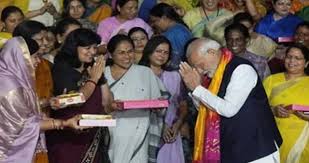
News India Live, Digital Desk: After the Women’s Reservation Bill (Nari Shakti Vandan Act) has become a law in the country, now everyone’s eyes are on when it will actually come on the ground. But do you know that the path to women’s reservation passes through a major increase in seats in Parliament? of the constitution Article 81 Is going to play the biggest role in this. According to experts, after the next delimitation, the number of Lok Sabha seats may increase from the current 543 to 850. If this happens, it will be the biggest change ever in the history of Indian democracy.
What is Article 81 and why is it so special?
Article 81 of the Indian Constitution determines the composition of the Lok Sabha and the allocation of seats. Under this, seats are distributed in proportion to the population of the country. The present number of 543 seats is based on the 1971 census. The freeze on the number of seats is going to be removed by the year 2026. After this, new population figures will be used in the new delimitation. Since the population has increased rapidly in the last 5 decades, reappraisal of seats under the provisions of Article 81 will become mandatory.
850 seats formula: North India vs South India
According to experts’ estimates, when the seats are reorganized after the new census, the total number of members of the Lok Sabha may reach closer to 848 to 850. Those states whose population growth rate has been high, like Uttar Pradesh and Bihar, will get the most benefit from this expansion. The number of seats in Uttar Pradesh may increase from 80 to 140. However, South Indian states are worried about this math, as despite their successful efforts at population control, the increase in seats there is likely to be less than in the North.
Deep connection between women’s reservation and delimitation
The most important condition of the Nari Shakti Vandan Act is that it will be implemented only after the census and delimitation process is completed. According to the law, 33 percent of the total seats will be reserved for women. If Lok Sabha seats increase to 850, then about 280 seats will go to women. That is, the new form of Parliament will not only be larger in numbers, but women’s participation in it will also reach a historic level. The challenge for the government now is to conduct the census on time and conduct a fair delimitation process.