North India Statesman
[ad_1]
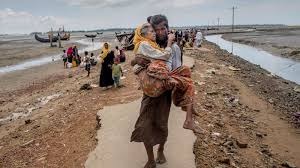
News India Live, Digital Desk: As humans, we all know how difficult it is to leave our home and our land. Millions of Rohingya Muslims who fled from Myanmar’s Rakhine state have been living in refugee camps in Bangladesh and India for the last several years. But now it is not just about living and eating, it is about ‘justice’.
The hearing of the Genocide case against Myanmar has started in the world’s largest court i.e. ‘International Court of Justice’ (ICJ). This lawsuit is both like scratching those wounds and also like trying to heal them.
How did this matter reach the court?
Often big battles begin with a small step. African country Gambia showed this courage against Myanmar. He argued that Myanmar’s military attempted to systematically exterminate the Rohingya people in 2017, including the massacre of innocents, atrocities against women and the burning of thousands of homes. Gambia was supported by many human rights organizations from all over the world.
What is the biggest challenge of the trial?
In court terms, the word ‘genocide’ is the most difficult thing to prove. For this, it would have to be shown that the Myanmar government and army had the ‘intention’ to destroy the entire community. Myanmar has so far denied these allegations and has been calling it a ‘cleanup operation’ against insurgency. But satellite images and testimonies of thousands of eyewitnesses have revealed a different truth to the whole world.
What difference does it make to you and me?
We may think that what does this hearing happening in ‘The Hague’ city of Netherlands have to do with us? But this is a big deal for neighboring countries like India and Bangladesh. The issue of millions of refugees is not only humanitarian but also related to security and economy. If Myanmar is proven to be committing genocide and international pressure increases, then perhaps the way for these people to return safely to their homeland may be cleared in the future.
a silver lining
This case may go on for years in the International Court, but the very beginning of the hearing is proof that the world is not silent. The law book may be thick, but it should ultimately stand on the side of the victims. Will millions of homeless people get back their lost rights and respect? The eyes of the entire world are now fixed on the judges who are going to write this historic judgment.