North India Statesman
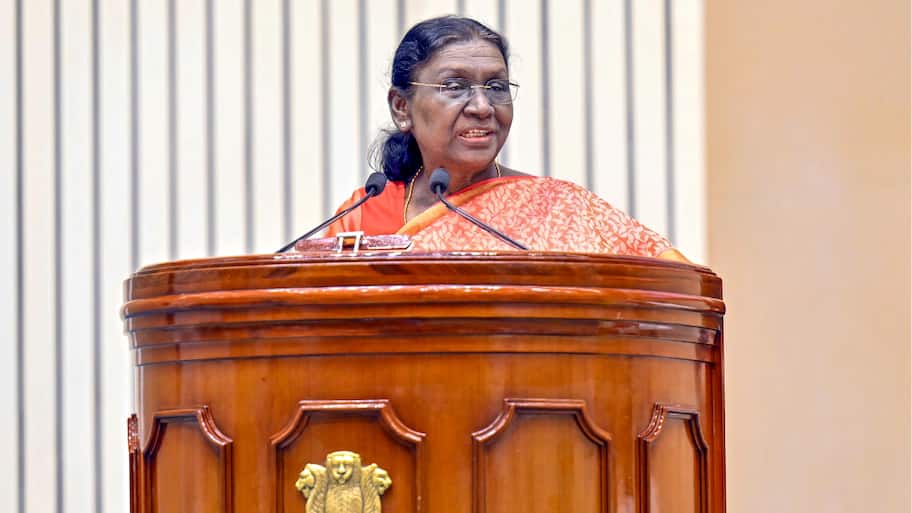
In a major political development at the center, President Droupadi Murmu has agreed to meet a top delegation of the opposition INDIA bloc at 8:00 PM on Friday, October 9, 2026. The appointment at Rashtrapati Bhavan comes amid an escalating face-off between the opposition alliance and the central government over the institutional functioning of the Election Commission of India (ECI). Opposition parliamentarians have been staging demonstrations in New Delhi, demanding immediate accountability and the resignation of Chief Election Commissioner (CEC) Gyanesh Kumar over alleged large-scale discrepancies in the Special Intensive Revision (SIR) of voter lists.
10-Member Opposition Delegation to Submit Formal Memorandum
A 10-member delegation comprising the highest echelon of the INDIA alliance will present a formal memorandum to the President as the constitutional custodian of Indian democracy. Key leaders slated to attend include Congress President Mallikarjun Kharge, Leader of Opposition in the Lok Sabha Rahul Gandhi, Trinamool Congress (TMC) supremo and West Bengal Chief Minister Mamata Banerjee, and Rashtriya Janata Dal (RJD) leader Tejashwi Yadav. The leaders are expected to highlight what they describe as systematic procedural anomalies during the electoral roll revision, which they argue disproportionately targets specific voter segments and undermines fair franchise safeguards.
The Core Contention: CEC Resignation and Special Intensive Revision (SIR)
The focal point of the confrontation is the ECI’s recent execution of the Special Intensive Revision (SIR) exercise across multiple states. Opposition parties have alleged arbitrary deletions and improper verification protocols, labeling the process as an institutional compromise that endangers free and fair elections. Frontline opposition figures have intensified their public campaign under the banner of preventing “vote theft,” maintaining that nothing short of the CEC’s resignation and a complete audit of the revised rolls will restore public confidence in democratic processes.
Capital on Edge: Section 163, Metro Curbs, and Supreme Court Scrutiny
The evening meeting follows escalating security measures across the national capital. Delhi Police imposed prohibitory orders under Section 163 of the BNSS and denied permission for mass demonstrations planned by various groups, citing past violations and acute law-and-order concerns. The extensive barricading and planned metro station closures even drew sharp observations from the Supreme Court on Friday. A bench led by Chief Justice Surya Kant questioned the sweeping curbs on public transit, observing that ordinary citizens, office-goers, and senior citizens cannot be paralyzed by transport bans while affirming the fundamental right to peaceful assembly. Against this backdrop of street tensions, judicial intervention, and administrative curbs, all eyes now turn to Rashtrapati Bhavan as the President prepares to hear the opposition’s grievances firsthand.