North India Statesman
[ad_1]
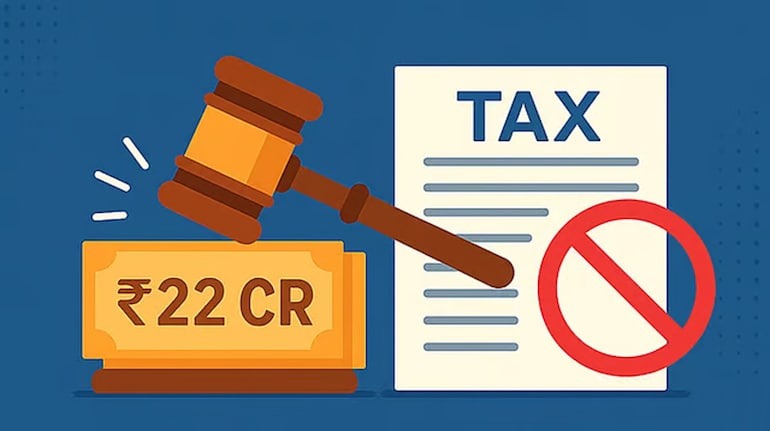
WhatsApp Chat Income Tax Notice: The Income Tax Department had issued a tax notice of more than Rs 22 crore to a Delhi-based businessman, Mr Kumar, on the basis of only WhatsApp chats and photos found in his mobile. But finally, ITAT Delhi has given a big relief to the businessman by canceling this notice. This case shows how dangerous the misuse of digital evidence can be.
Controversy started from WhatsApp chat
The case began during a raid by the Income Tax Department on a real estate company. During the raid, the department found some WhatsApp chats and photographs of envelopes from the mobile phone of Praveen Jain, who was associated with the company. Names of many people were written on these envelopes. The department claims that these envelopes contained cash or cheques, which were used to provide guaranteed returns on investments.
Seeing the name “Kumar” on an envelope, the department assumed that he was Mr. Kumar, a resident of Delhi. On this basis, he was charged with unexplained investment of Rs 22,50,75,000 and unexplained wealth of Rs 22,50,750. The department adopted the reverse calculation method – that is, estimating the original investment by looking at the amount of interest.
Kumar denied the allegations
Mr Kumar denied all the allegations. He said that he had no dealings with any real estate company or Praveen Jain. The WhatsApp chat was found on a third party’s phone and his name was not clearly mentioned. There was no loan agreement, receipt or proof of payment.
At the first stage, the Income Tax Officer (AO) rejected his objection. CIT (Appeals) also did not give any relief. Ultimately Kumar reached ITAT, Delhi.
ITAT gave relief
ITAT rejected the department’s arguments. The tribunal stated that:
– Kumar’s name was not clear on the envelope or document.
– The interest calculation sheet was unapproved and unverified.
Kumar was not mentioned in the statement of Praveen Jain or his son.
– Digital evidence obtained from a third party’s mobile phone is not legally valid, as it is unverified.
Citing previous Supreme Court decisions, ITAT said that action under Section 153C requires concrete, conclusive evidence. There was nothing like that here. No tax was added on the real estate company, so how can Rs 22 crore be taxed on Kumar?
ITAT completely rejected the tax demand of Rs 22 crore. Called the department’s action a “story without evidence.” This case shows that independent verification is essential when using digital evidence.