North India Statesman
[ad_1]
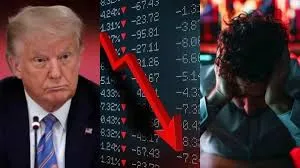
Recently, the global stock markets have seen a decline after the US decision to impose counter -tariffs on about 60 countries. The US market itself has fallen below the record level. Experts believe that the move has increased the possibility of global trade war, causing deepening the possibilities of economic uncertainty and inflation.
JP Morgan has said in its latest report that the possibility of recession in the US and the global economy has reached 60%, which was previously believed to be 40%. The main reason for this increasing apprehension has been explained to the new trade policies and tariffs of America.
Tariff policy and global impact
Under the leadership of former President Donald Trump, the US has imposed new tariffs on several countries. In response, China has also increased the fees on US products, causing uncertainty in the business environment. JP Morgan says that the policies of America are no longer business-friendly as before, due to which the trust of investors and traders is decreasing. Other countries can also give equal response in response to tariffs, causing the situation to worsen.
Increasing fear of recession
- S&P Global has increased the possibility of recession in the US between 30% to 35%, which was 25% in March.
- Goldman Sachs has also increased the estimate from 20% to 35% after Trump’s recent policies.
- HSBC says that the discussion of recession has now become more serious, and signs of its impact are appearing in the market.
HSBC analysts estimate that the stock markets are already reacting to about 40% of the recession, taking into account the possibility of recession.
Direct impact on the stock market
The stock market was seen in November after Trump became President again, as it was expected that they would implement pro -trade policies. But the market declined after the announcement of tariffs in January. The S&P 500 index has fallen by 8% so far this year.
Major brokerage companies like Barclays, Goldman Sachs, RBC and Capital Economics have also reduced the targets by the end of the US stock market by the end of the year. At the same time, UBS has reduced its rating from ‘Attractive’ to ‘Neutral’.
Possibility of cutting interest rates
Given the economic lethargy, analysts hope that the US Federal Reserve can cut interest rates to re -move economic activities.
- JP Morgan hopes that the Federal Reserve can cut 25 basis points twice.
- Goldman Sachs has expressed the possibility of cutting three times, which was the first twice.
- Nomura and RBC have hoped to cut from one to three times.
- UBS estimates that it is possible to cut 75 to 100 basis points in 2025.
- Citigroup has reiterated an estimate of cuts from May to 125 basis points.
Investors are also expecting a cut of at least 100 basis points in interest rates.