North India Statesman
[ad_1]
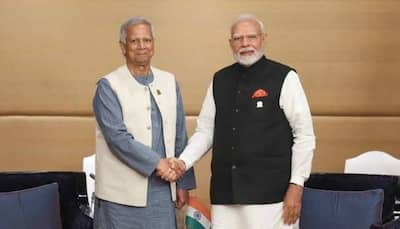
New Delhi: Relations between Bangladesh and India have been tense since the ouster of Prime Minister Sheikh Hasina from power in August last year. Amid preparations for the elections to be held in February next year, New Delhi has emerged as an important issue in domestic politics.
The Indian High Commission in Dhaka and its sister embassies across the country have faced threats in recent weeks. India is closely monitoring the upcoming elections, as their outcome could impact bilateral relations for years to come.
The recent unrest in the country began after the killing of 32-year-old Sharif Osman Hadi on 12 December. He was part of the movement that led to Hasina’s ouster from power on August 5, 2024. He was shot in the head by masked assailants riding a motorcycle in Dhaka as he began campaigning for the February elections. He died six days later, on 18 December.
Following his death, claims on social media that the attackers had crossed into India sparked outrage among Hadi’s supporters. A crowd began gathering near the Indian High Commission in Dhaka and leaders of the National Citizen Party demanded the removal of the Indian High Commissioner.
Apart from Dhaka, India has associate high commissions in Chattogram, Rajshahi, Khulna and Sylhet. Visa application centers had to be closed for a day due to protests and threats. India has summoned Bangladesh’s ambassador to Delhi and requested Dhaka authorities to ensure the security of its embassies.
Media offices in Bangladesh have also been targeted. Publications such as The Daily Star and Prothom Alo have been affected. Hasina’s critics have accused these media outlets of being allies of India, even though both publications had opposed her government and supported last year’s student-led protests.
Hasina has been living in India since August 2024. He has been sentenced to death in Bangladesh and the interim government led by Mohammad Yunus has sought his extradition, which India has rejected. The Bangladesh government has repeatedly expressed displeasure over India’s refusal.
The international community, including India, is closely monitoring the elections. New Delhi on 14 December stressed that it supports the holding of free, fair and inclusive elections in a peaceful environment in Bangladesh.
Analysts say the term “inclusive” indirectly means including Hasina’s Awami League in the electoral process, although the Bangladesh government has avoided using the term and has simply stated the goal of high-stakes elections that encourage voter participation. The interim government argued that such an environment had not existed in the last 15 years.
Bangladesh’s foreign affairs advisor Tauheed Hossain reportedly rejected India’s comments, saying Dhaka does not need advice from the neighboring country on how to conduct its elections.
Historically, India has maintained strong relations with Hasina’s government. In contrast, its relations with the Bangladesh Nationalist Party (BNP) government have not been as smooth. BNP leader and former Prime Minister Khaleda Zia is currently unwell. Earlier this month, Prime Minister Narendra Modi prayed for his health and offered all possible assistance, which is being seen as a sign of India’s soft stance towards BNP.
Zia has been an important figure in Bangladesh politics for more than four decades, since taking over the reins of the BNP following the assassination of her husband in 1981. She became the first female Prime Minister of Bangladesh in 1991 and served several terms.
The BNP had boycotted the last three elections, but had supported the anti-Hasina movements that started in 2024. His BNP is the largest political party in Bangladesh and is expected to have a strong presence in the upcoming elections.
Experts say Hasina’s presence in power has influenced the current direction of Bangladesh. India’s former Foreign Secretary Nirupama Rao argued that although Hasina faced criticism abroad, she maintained stability in a complex and densely populated country with a history of violent political culture.
He emphasized that Hasina was not a revolutionary but a stabilizing force who controlled extremist organisations, protected minorities and kept Bangladesh geopolitically relevant.
Rao further said that his critics overstated the role of the democratic opposition, thereby strengthening grassroots extremist forces, and that historical assumptions about how overthrowing authoritarian leaders contributed to liberal democracy were misleading.
He argued that these miscalculations led to political instability and that oppression became normal after Hasina was removed from power.
Other experts also share the same opinion. He also said that Hasina was a deterrent against violent elements. He explained that his removal created a power vacuum that extremist groups immediately took advantage of. Counter-revolutionary elements gained ground, leading to widespread violence against religious minorities and Awami League supporters, while the interim government presented these events as a “revolution”.
He highlighted the irony of imposing election ban on student organizations and then Awami League before declaring democratic elections. He said Hasina and members of her entourage were sentenced to death in a sham trial, which deepened divisions in society, while the interim government remained in place without elections for more than a year.
Bangladeshi political analyst Yusuf Khan refuted this, saying that blaming Hasina for the current chaos is an easy excuse. He argued that the primary responsibility for today’s chaos lies with them and the political structures they have created.
Although Hasina may be criticized, she did not incite violence on the streets; Whereas, the forces he opposed are now spreading unrest, hence repeatedly blaming him for the anarchy that spread after his removal from power is tantamount to shirking responsibility.
As elections approach in Bangladesh, analysts believe that regardless of the government that comes to power, instability and political violence will continue in the country. The election result will impact Bangladesh’s relations with India and the broader international community.