North India Statesman
[ad_1]
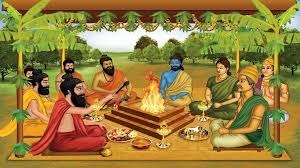
News India Live, Digital Desk: As soon as ‘Ashvamedha Yagya’ is mentioned in the stories of Ramayana, the image of the war between Maryada Purushottam Lord Shri Ram and his brave sons, Luv-Kush emerges in our mind. But do you know that in ancient times this Yagya was not just a means of demonstrating power, but there were deep spiritual and political meanings hidden behind it? Let us know about the entire process of Ashwamedha Yagya and its special importance in the Ramayana period.
What is Ashwamedha Yagya? (Meaning of Ashwamedha)
In Sanskrit, ‘Ashwa’ means horse and ‘Medha’ means purification or offering. Ashwamedha Yagya was a ritual that only Chakravarti emperors could perform. Its main objective was to expand the boundaries of its empire and prove its sovereignty.
Process and rules of Yagya during Ramayana period
According to Ramayana, when Lord Rama conquered Ravana and took over the rule of Ayodhya, he organized this grand yagya. The process was something like this:
Selection of dark horse: A white horse with special features (with a black forehead) was selected and set free with chanting of mantras.
Symbol of victory: A gold plate was tied on the forehead of the horse, on which the king’s name and challenge were written.
Army Guard: A huge army of the king followed the horse (Shatrughan ji was leading the army in the Yagya of Shri Ram).
Facing Challenge: The kings of the states through which the horse passed had to either accept the emperor’s subordination or stop the horse and fight.
Why did Lord Ram perform Ashwamedha Yagya?
According to Valmiki Ramayana, Lord Rama was accused of ‘Brahmhatya’ after killing Ravana (as Ravana was a Brahmin). To get rid of this defect and for the happiness and prosperity of the kingdom, the sages had advised him to perform Ashwamedha Yagya.
Interesting facts: Since Mother Sita was not in the palace at that time, to follow the rules as per the scriptures, Lord Ram performed this yagya by keeping the ‘Golden Idol’ of Sita ji with him.
Struggle between Luv-Kush and Yagya horse
It was Ashwamedha Yagya which brought about the union of father and sons. When the sacrificial horse reached near Valmiki Ashram, the children Luv and Kush captured it. He defeated the huge army of Ayodhya, even Lakshman and Bharat, which shows that this yagya was not only a test of the king’s strength but also of truth and courage.
Spiritual significance of Ashwamedha Yagya
In spirituality, Ashwamedha Yagya is considered a symbol of victory over the senses of the mind. ‘Horse’ has been said to be a fickle mind, disciplining it through knowledge and devotion and surrendering it at the feet of God is the real Ashvamedha. In today’s era this Yagya is not physically possible, but its symbolic meaning is still relevant.