North India Statesman
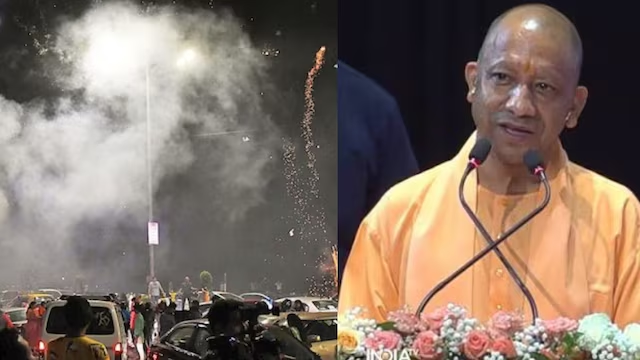
The debate surrounding seasonal air pollution and traditional festival celebrations has once again taken center stage in Indian politics. Following widespread Diwali festivities that left major urban centers across northern India under a thick blanket of smog and elevated Air Quality Index (AQI) levels, Uttar Pradesh Chief Minister Yogi Adityanath issued a bold and uncompromising response to critics. Addressing a public event in Lucknow, CM Yogi dismissed concerns over temporary pollution spikes caused by fireworks. Highlighting the cultural significance of the festival of lights, he questioned why public celebrations spanning just a single day attract severe scrutiny while long-term systemic corruption often escapes public outcry.
‘So What If the Public Burst Crackers?’: Addressing the Post-Diwali AQI Debate
The controversy erupted after Diwali night celebrations caused AQI metrics to plunge into ‘very poor’ and ‘severe’ categories in various cities across Uttar Pradesh and the National Capital Region. Critics, environmentalists, and public health advocates frequently point to large-scale firecracker usage as a primary catalyst for acute winter air pollution. Addressing these concerns head-on, CM Yogi remarked that temporary environmental fluctuations resulting from cultural expressions should not be blown out of proportion. “Some people are saying that pollution has increased because of Diwali. So what if it has increased? It will subside as well. Why are you worried?” he stated, defending the state government’s decision not to enforce blanket bans on firecrackers.
Pointing Fingers at Systemic Corruption: The Chief Minister’s Counter-Attack
Beyond defending traditional celebrations, Yogi Adityanath leveraged the platform to target critics who single out cultural festivals while ignoring deep-rooted societal malpractices. During an official ceremony at Lucknow where appointment letters were distributed to newly selected junior assistants in the revenue department, the Chief Minister drew a sharp contrast between public joy and systemic wrongdoing. “Those who have polluted the entire system through their corrupt deeds are never questioned. But if the general public bursts firecrackers and celebrates with enthusiasm for just one day, suddenly pollution becomes an international issue,” he asserted. He emphasized that the administration deliberately chose to keep celebrations unhindered, noting that he personally participated in grand Deepotsav and fireworks events in Ayodhya.
Balancing Cultural Traditions with Environmental Realities Across Uttar Pradesh
The Chief Minister’s remarks have ignited a wider national conversation regarding how state administrations should balance environmental preservation with cultural autonomy. While environmental experts continue to warn against hazardous particulate matter (PM2.5PM_{2.5} and PM10PM_{10}) spikes that pose immediate respiratory risks to vulnerable populations, millions of citizens view traditional festivities as an indispensable part of their heritage. As northern Indian cities grapple with annual winter inversions, stubble burning, and vehicular emissions, the friction between ecological management and festival freedom remains one of the most persistent governance challenges. For now, the Uttar Pradesh government remains firm in its stance that brief periods of celebratory jubilation should not overshadow broader socio-cultural liberties, even as meteorological agencies monitor air quality recovery patterns across the region.