North India Statesman
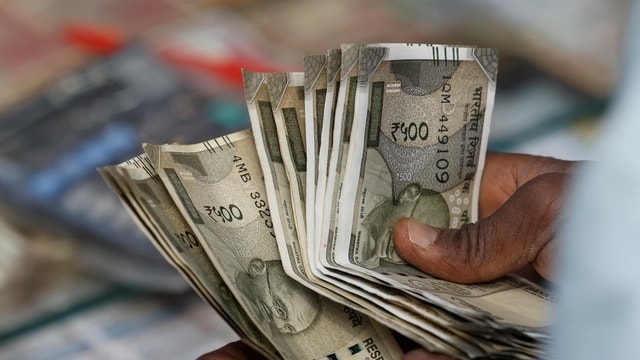
Bringing major festive cheer to lakhs of government personnel ahead of the festive season, the Ministry of Finance has formally notified the Non-Productivity Linked Bonus (Ad-hoc Bonus) for eligible central government employees. Under the latest directive issued by the Department of Expenditure, eligible staff members will receive a financial payout equivalent to 30 days of emoluments. The announcement delivers immediate disposable income into the hands of employees preparing for festive shopping across cities and towns nationwide, continuing the government’s tradition of disbursing festival ex-gratia before Diwali.
The Mathematics Behind the ₹6,908 Calculation
The sanctioned bonus is structured on an established government calculation model governed by a statutory wage ceiling. Under official guidelines, the monthly emoluments for calculating the ad-hoc bonus are subject to an upper cap of ₹7,000, irrespective of whether an employee’s actual basic pay and allowances are significantly higher. To determine the one-day entitlement, the ₹7,000 threshold is divided by 30.4, which represents the standard average number of days in a month. This daily rate of ₹230.26 is then multiplied by the 30-day bonus period, yielding ₹6,907.89. In accordance with government accounting norms, the amount is rounded off to the nearest rupee, fixing the maximum payout at exactly ₹6,908 per eligible employee. For individuals whose monthly emoluments fall below ₹7,000, the payout is calculated based on their lower actual earnings.
Who Qualifies for the Non-Productivity Linked Bonus
The festive ad-hoc bonus specifically covers all eligible Central Government employees belonging to Group ‘C’ as well as non-gazetted personnel in Group ‘B’ who are not covered under any departmental Productivity-Linked Bonus (PLB) scheme, such as those running in the Railways or Postal departments. The order also extends complete coverage to eligible personnel serving in the Central Armed Police Forces (CAPF) and the Indian Armed Forces. In addition, employees working across Union Territory administrations that operate under the Central Government pay structure and are not enrolled in separate ex-gratia arrangements are entitled to claim the benefit.
Strict Service Conditions and Pro-Rata Rules
To secure the bonus, employees must fulfill specific service criteria laid down in the official memorandum. The beneficiary must have been in active government service on March 31 of the concluding financial year and must have rendered at least six continuous months of service during that financial year. Employees who have served for a portion of the year ranging between six months and a full twelve-month term will receive a proportionate pro-rata disbursement. Periods classified as extraordinary leave, unauthorized absence, or suspension not subsequently regularized as duty will be deducted while computing eligible months. Meanwhile, employees who retired or passed away during the financial year remain entitled to pro-rata payments provided they fulfilled the minimum six-month service requirement.
Relief Extended to Eligible Casual Labourers
The festive relief package does not stop at permanent establishment staff; it extends structured support to casual labourers working across central government establishments. Casual workers who have reported for duty on offices observing a six-day work week for a minimum of 240 days per year over three consecutive years qualify for the benefit. For offices following a five-day weekly schedule, the minimum attendance threshold is set at 206 days per year over three continuous years. The bonus calculation for eligible casual workers operates under an adjusted monthly ceiling of ₹1,200, translating into a festive payout of approximately ₹1,184. The financial expenditure for these bonus disbursements will be absorbed directly from the sanctioned annual budget allocations of the respective ministries and administrative departments.