North India Statesman
Observed on the Ashtami Tithi (eighth day) of the Krishna Paksha in the holy Hindu month of Kartik, Ahoi Ashtami stands as one of the most revered and emotionally profound festivals celebrated across North Indian households in Uttar Pradesh, Delhi-NCR, Haryana, Rajasthan, and Punjab. Arriving exactly four days after Karwa Chauth, this rigorous nirjala (waterless) fast shifts the maternal heart’s devotion from the husband’s longevity toward the lifelong health, protection, and prosperity of children. Deeply connected to the maternal form of Goddess Parvati—revered here as Ahoi Mata—the vrat honors the goddess who safeguards young lives from unforeseen perils and untimely obstacles. According to ancient lore and regional customs, performing the puja with meticulous adherence to traditional rituals grants longevity to children, resolves obstacles in childbearing for hopeful couples, and brings peace to the household. Because the rituals are deeply intricate and involve age-old familial traditions, gathering every essential sacred item well before the day of the fast ensures seamless devotion without last-minute panic.
Essential Puja Samagri: The Complete Checklist to Assemble in Advance
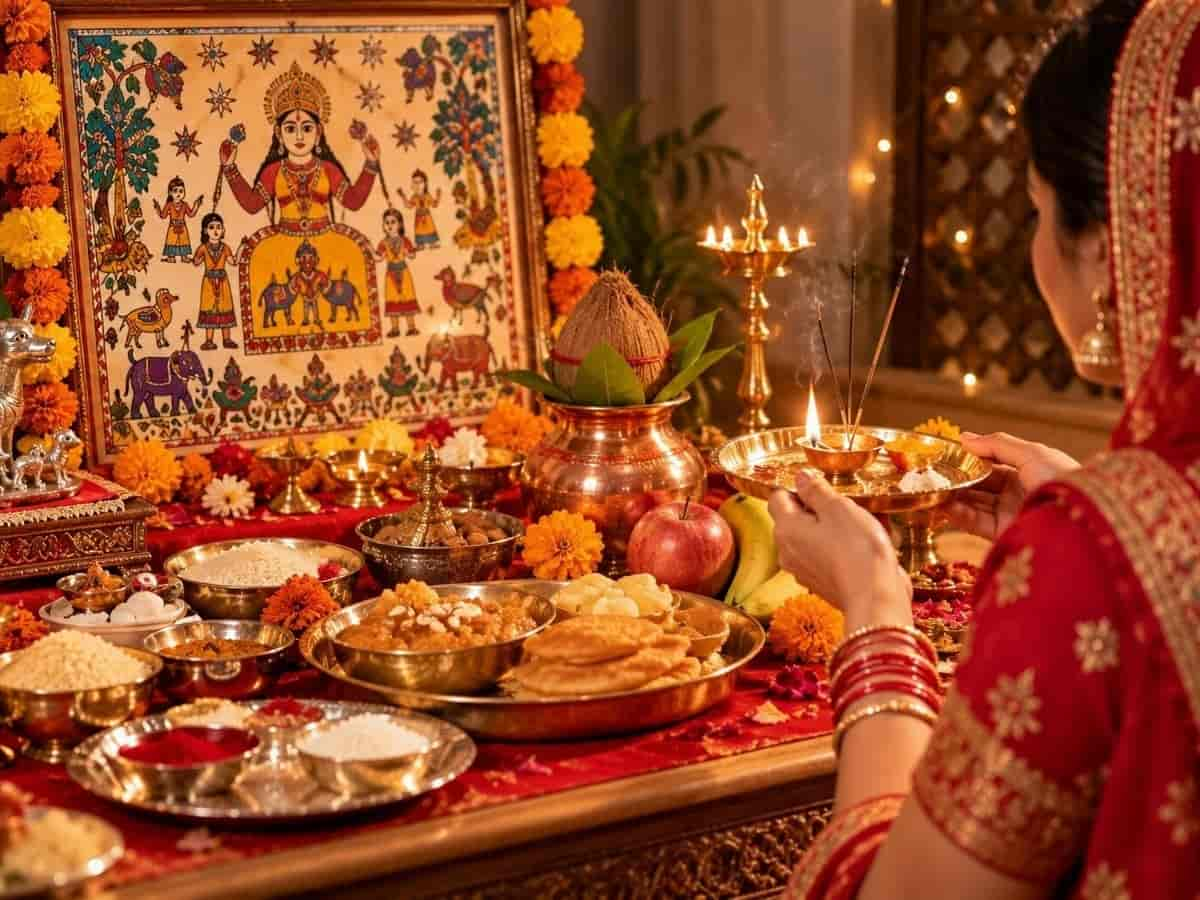
Purity and prior preparation are paramount when observing Ahoi Ashtami, and experienced mothers always ensure their puja room is fully organized a day prior to the fast. The central requirement is the sacred depiction of Ahoi Mata. While older generations hand-painted the likeness of the Goddess along with her seven sons, daughter-in-law, and the hedgehog (Syahoo) family on northern or eastern walls using red ochre (geru) and ground rice flour paste, modern households frequently use beautifully framed calendars or printed wall cloths. Alongside the image, assemble a clean wooden platform (chauki) covered with fresh, unstitched red or yellow cotton fabric. You will also need raw unbroken rice grains (akshat), sacred red thread (moli or kalawa), natural vermilion (roli), organic turmeric powder, fragrant sandalwood paste, pure camphor (kapoor), long-stemmed cotton wicks, and aromatic dhoop sticks. A four-wick brass diya fueled by pure cow desi ghee must be readied to burn continuously through the rituals. For the goddess’s adornment, gather traditional suhaag items including a red chunri, glass bangles, bindi, fresh mehendi, alta, and toe rings, which symbolize marital grace and domestic joy.
The Mystical Silver Syahoo Mala: The Heart of the Sacred Ritual
No Ahoi Ashtami puja is considered complete without the revered Syahoo mala, which functions as the central talisman of the entire ceremony. The pendant represents the legendary hedgehog (Syahoo) and her innocent offspring, reminding devotees of the virtue of protecting all living creatures. Kept safely inside family vaults and handed down through generations, this sacred silver necklace is enriched over time. By custom, two fresh silver beads (mankas) are woven into the chain using a sacred red thread whenever a child is born into the family or a son gets married. On the morning of the puja, the silver Syahoo locket and beads are gently cleansed with raw cow’s milk and holy Gangajal, consecrated with roli-akshat, and placed reverently in the center of the puja thali before Ahoi Mata. After listening to the sacred vrat katha in the evening, the mother wears this sanctified silver mala around her neck. In traditional homes, the necklace is worn continuously until Diwali or Kartik Purnima, serving as an energetic shield that absorbs misfortunes directed at her children.
Divine Offerings: Traditional Bhog Delicacies Beloved by Ahoi Mata
The kitchen preparations for Ahoi Ashtami differ starkly from regular festive cooking, prioritizing satvik purity and traditional, unrefined ingredients over commercial sweets. Because the ritual honors the eighth lunar day, the number eight holds immense mystical power. The quintessential bhog offered to Ahoi Mata consists of eight sweet puas (gulgule)—golden, pillowy dumplings made from whole wheat flour, crushed jaggery (gur), and fennel seeds, gently deep-fried in pure desi ghee. Alongside the puas, prepare eight sweet puris or fresh whole-wheat halwa. The festival also coincides with the late-autumn harvest, making seasonal produce an indispensable part of the offering. Fresh green and black singharas (water chestnuts) are mandatory, as they represent aquatic purity and physical endurance. Devotees also offer custard apples (sharifa), fresh guavas, bananas, sprouted moth beans, whole soaked black grams, roasted makhanas, and crisp winter radishes. Offering these wholesome farm bounties connects the mother’s prayers to the grounding cycles of nature and seasonal vitality.
The Evening Stargazing Arghya: Karwa and Kalash Preparations
While Karwa Chauth culminates with sighting the moon, Ahoi Ashtami requires women to conclude their fast under the quiet twinkle of the evening stars. Preparing the vessels for the arghya ceremony requires careful forethought. You will need a clean brass or copper lota (water pot) and a traditional earthen pot (karwa) fitted with an earthen lid. Fill the karwa with clean drinking water, sweet sugar candy or jaggery bits, and a handful of unbroken wheat grains. Securely tie a sacred red moli around the neck of both vessels and apply five auspicious vermilion dots on the earthenware. Fill the shallow lid of the karwa with sweet puas, roasted grains, and water chestnuts. As twilight fades into dusk and the first celestial stars become visible in the sky, mothers step into their courtyards or balconies to offer water through the sieve or directly from the kalash, praying to the cosmic constellations to watch over their children just as the stars illuminate the darkest skies.
The Bayna Tradition: Honoring Elders and Ensuring Complete Blessings
The conclusion of the Ahoi Ashtami fast is anchored in the traditional practice of offering ‘Bayna’ or ‘Mansa’ to senior family matriarchs, specifically the mother-in-law or elder sisters-in-law. Before the fast is broken, prepare a ceremonial brass thali containing eight sweet puas, eight puris, fresh seasonal fruits, traditional suhaag items, and cash dakshina according to one’s capacity. Sprinkle a few drops of water around the plate, circle your hands over it in reverence, and present it to the elder matriarch while touching her feet to seek heartfelt blessings for your progeny. If elders are not physically present, this sacred offering is reverently dispatched to an elderly Brahmin woman or a temple priest. By organizing every sacred element in advance and performing each age-old custom with single-minded devotion, mothers invoke the boundless protective grace of Ahoi Mata, creating a lifelong spiritual sanctuary around their family.