North India Statesman
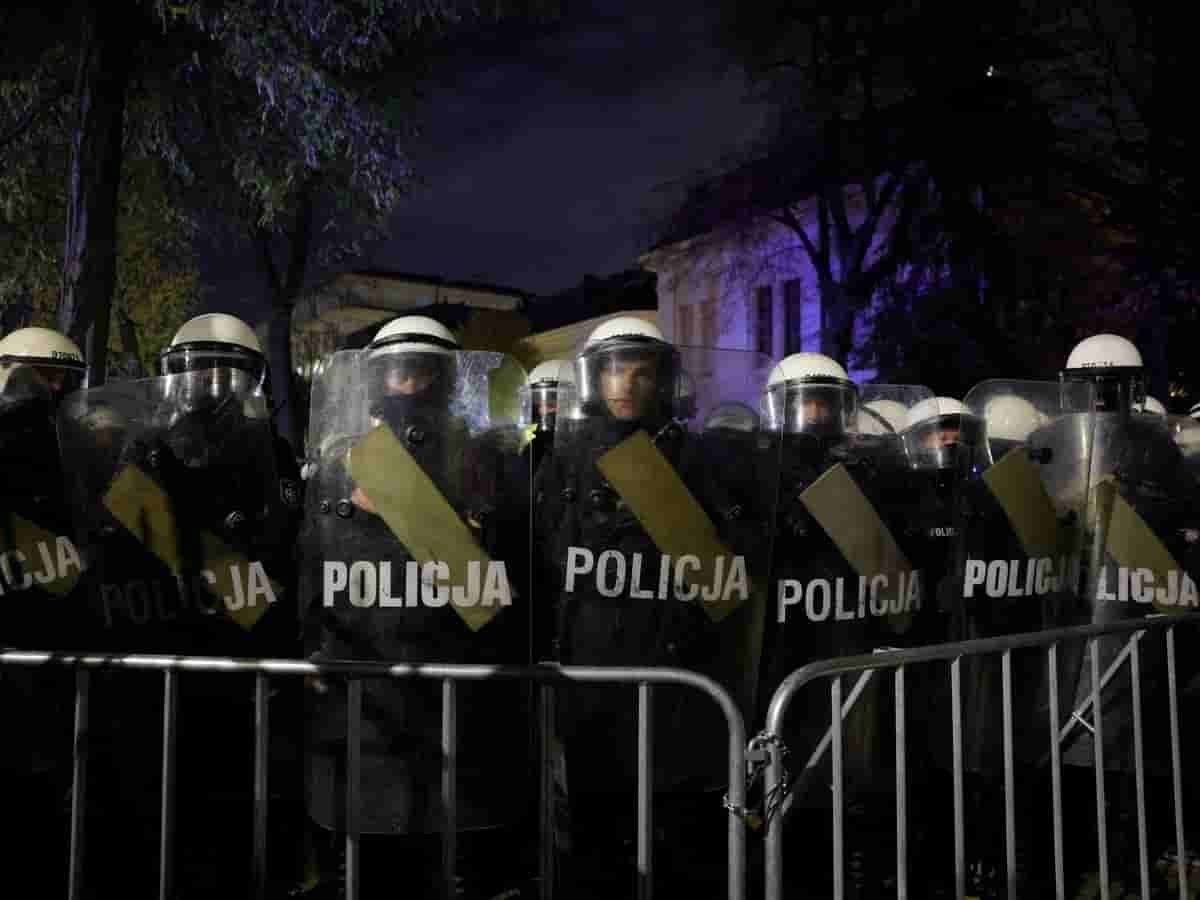
Poland’s capital, Warsaw, has been thrust into its most volatile institutional confrontation in decades following the sudden suspension of the country’s top judicial authority. On Friday, October 30, 2026, Constitutional Tribunal judge Anna Korwin-Piotrowska announced the one-month suspension of Tribunal President Bogdan Święczkowski and Vice-President Bartłomiej Sochański, citing their refusal to allow legally elected parliamentary judges to assume their constitutional seats. Within hours, riot police cordoned off the perimeter of the Constitutional Tribunal building amid surging street demonstrations, while the tribunal’s official channels condemned the action as an unconstitutional “coup d’état”. The spiraling turmoil represents an explosive climax in the long-running power struggle between Prime Minister Donald Tusk’s centrist coalition government and the right-wing opposition aligned with the Law and Justice (PiS) party.
Mid-Air U-Turn: President Karol Nawrocki Aborts Senegal Trip to Rush Home
The sheer magnitude of the crisis was underscored when Polish President Karol Nawrocki abruptly ordered his presidential aircraft to turn around mid-flight over the Mediterranean. Nawrocki, a political ally of the conservative opposition who was en route to Dakar, Senegal, for an official state visit, issued an urgent announcement from the air:
“At such a moment, the president must be in Poland. I am cutting short my flight to Senegal. I am returning.”
Touching down in Warsaw late Friday night, the President headed directly to the Constitutional Tribunal building to signal solidarity with the embattled court leadership and oppose the government’s intervention, turning an administrative showdown into an unprecedented face-off between the executive and judicial branches.
The Roots of the Clashing Mandates: Judicial Overhauls and the Rule of Law
At the core of the dispute lies an intractable battle over judicial appointments and institutional independence dating back to the PiS administration that governed Poland between 2015 and 2023. During that tenure, the previous government instituted far-reaching judicial changes that domestic critics and the European Union argued subordinated the courts to political control, resulting in the European Court of Human Rights and the CJEU ruling that several sitting tribunal appointments were legally flawed. When Donald Tusk assumed the premiership in late 2023, he pledged to dismantle PiS-era judicial structures and restore compliance with EU rule-of-law standards. However, Tusk’s legislative reforms have repeatedly collided with the veto powers of the presidency and the resistance of Tribunal President Bogdan Święczkowski, who refused to administer oaths or seat judges elected by the current parliamentary majority.
Police Deployed Around Top Court as Both Factions Dig In
Tensions escalated on Friday when Justice Minister and Prosecutor-General Waldemar Żurek sought criminal charges against Święczkowski and Sochański for obstructing the work of newly elected judges. Acting on a security assessment from judge Korwin-Piotrowska regarding potential public disorder, riot police were dispatched to secure the tribunal grounds as opposing factions and PiS supporters rallied outside. Warsaw police clarified that while officers maintained security on the exterior grounds, they had not stormed the tribunal chambers. Defending the state’s intervention, Prime Minister Tusk took to social media to state that restoring the rule of law after years of institutional obstruction is a “difficult, sometimes painful process requiring decisive action”. With the tribunal’s leadership rejecting the suspension as invalid and international observers watching closely, Poland stands locked in an unprecedented constitutional deadlock with no immediate legal consensus in sight.