North India Statesman
The sacred festival of Tulsi Vivah stands as one of the most spiritually profound observances in the Sanatan calendar, heralding the auspicious revival of Hindu wedding festivities across households. Celebrated with immense devotion during the Shukla Paksha of the holy Hindu month of Kartik, this sacred event commemorates the ceremonial celestial union of Goddess Tulsi—revered as the earthly manifestation of Vrinda—with Lord Shaligram, the sacred stone incarnation of Lord Vishnu. The day coincides with Devutthana Ekadashi and continues through Kartik Dwadashi, marking the momentous conclusion of Chaturmas, the four-month cosmic slumber of Lord Vishnu in the Kshir Sagar. As the deity awakens from his divine rest, the cosmos transitions out of spiritual hibernation into an auspicious season of marital ceremonies, housewarmings, and joyous festivities. For millions of devotees seeking domestic harmony, the liquidation of marital obstacles, and the supreme spiritual merit of performing a divine Kanyadaan, observing Tulsi Vivah at home represents a golden gateway to health, prosperity, and spiritual liberation.
Exact Date and Auspicious Muhurat for Tulsi Vivah in November 2026
According to the Vedic panchang, the auspicious festival of Tulsi Vivah is traditionally observed on both Kartik Shukla Ekadashi (Devutthana Ekadashi) and the subsequent Kartik Shukla Dwadashi, with the evening Godhuli and Pradosh Kaal considered the most potent windows for conducting the marriage rituals. In November 2026, Kartik Shukla Ekadashi tithi commences on the evening of November 20 and culminates on the afternoon of November 21, while the Dwadashi tithi extends into Sunday, November 22. Devotees observing the marriage ceremony on Ekadashi can conduct the evening rites on November 20 and 21, whereas those following the Dwadashi tradition will celebrate the holy union during the Pradosh Kaal on November 21 and 22. The most auspicious planetary window for solemnizing the divine wedding occurs during the Pradosh Muhurat, between 05:25 PM and 07:05 PM, when planetary alignments shower boundless marital bliss, prosperity, and wish fulfillment upon participating households.
The Mythological Legend of Vrinda, Demon King Jalandhar, and Lord Shaligram
The eternal roots of Tulsi Vivah are chronicled in the Padma Purana and Shiva Purana, centered around Vrinda, a devoted worshipper of Lord Vishnu married to the formidable demon king Jalandhar. Shielded by Vrinda’s unwavering marital fidelity and chastity, Jalandhar became invincible, waging ruthless war against the celestial devatas and unsettling the cosmic balance. Recognizing that Jalandhar’s reign of terror could only be halted by dissolving the shield of Vrinda’s devotion, Lord Vishnu assumed the physical likeness of Jalandhar and appeared before her. When Vrinda unknowingly touched his feet, her supreme vow was compromised, allowing Lord Shiva to defeat Jalandhar on the battlefield. Upon uncovering the divine deception, an anguished Vrinda laid a curse upon Lord Vishnu, declaring that because his heart was as unyielding as stone, he would turn into a black stone—manifesting as the sacred Shaligram stone found in the Gandaki River. Moved by Vrinda’s pure soul and recognizing the sorrow of her sacrifice for universal order, Lord Vishnu granted her a boon: she would reincarnate as the sacred Tulsi plant, forever adorning his crown, and no offering would ever be accepted by him without a leaf of holy Tulsi. To honor her purity for eternity, Lord Vishnu established that he would marry her each year in the form of Shaligram during the Kartik month, creating the sacred tradition of Tulsi Vivah.
Comprehensive Samagri List Required for Conducting Tulsi Vivah at Home
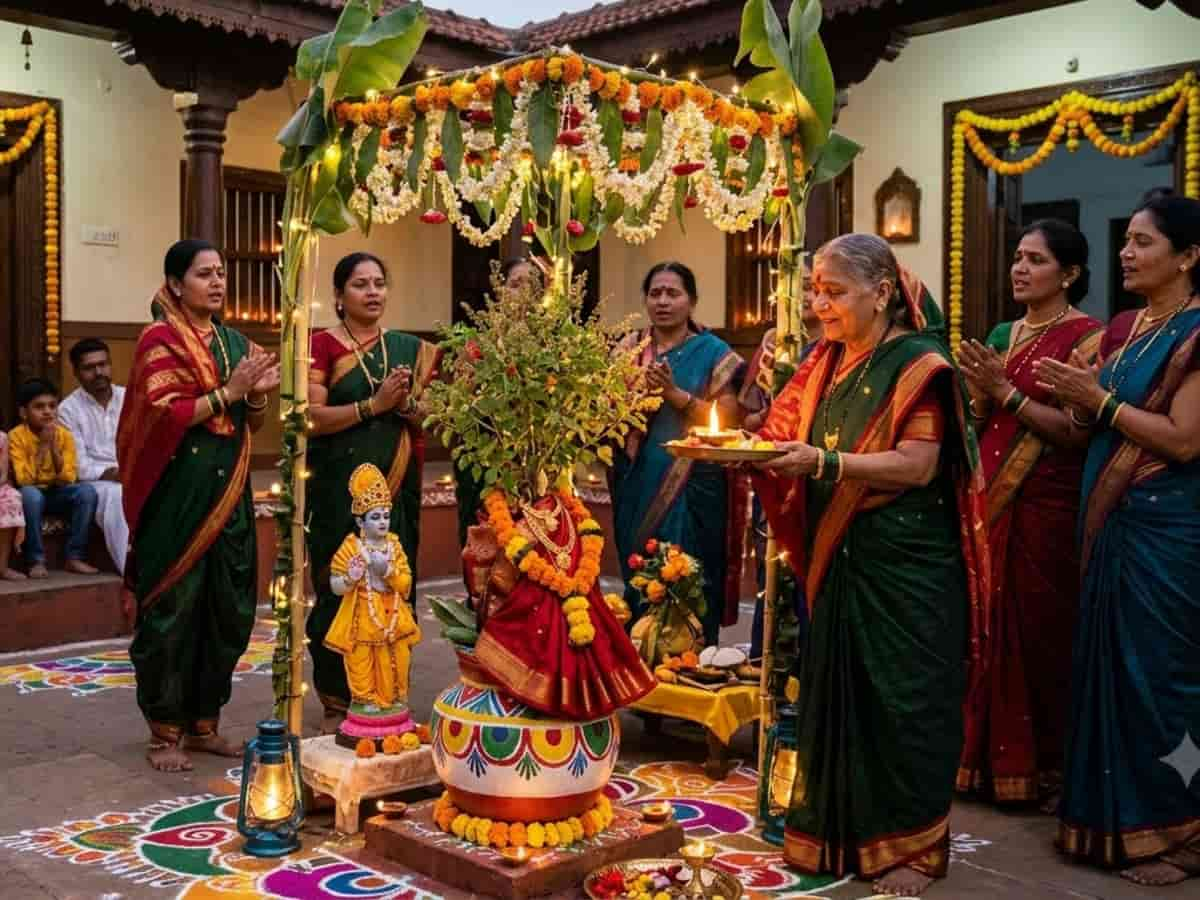
Organizing an authentic Tulsi Vivah at home requires simple yet spiritually significant ritual items that mirror a traditional Hindu wedding ceremony. Devotees should arrange four whole sugarcane stalks (Ganna) with fresh leaves intact to build the sacred wedding canopy (Mandap) over the Tulsi planter. Essential samagri includes a fresh potted Tulsi plant, a sacred Shaligram stone or an idol of Lord Krishna/Vishnu, a vibrant red silk bridal chunri, and a complete traditional solah shringar bridal kit containing vermilion (sindoor), bindi, glass bangles, toe rings (bichhiya), mehendi, and alta. For Lord Shaligram’s groom attire, procure yellow cloth (pitambar), a sacred thread (janeu), and a small crown or turban. Ritual offerings must feature raw milk, Ganga water, aromatic sandalwood paste (chandan), turmeric (haldi), kumkum, unbroken sacred rice grains (akshat), a brass bell, incense sticks, ghee lamps, seasonal fruits, water chestnuts (singhada), sweet potatoes (shakarkandi), roasted grams, and traditional sweets like kheer or laddus for the divine bhog. A sacred yellow thread or molli is also essential to tie the sacred nuptial knot between the divine couple.
Step-by-Step Easy Puja Vidhi to Solemnize the Divine Wedding
Performing the Tulsi Vivah ritual at home can be done smoothly by following time-honored Vedic steps that bring immense peace to the domestic altar. Begin the ceremony during the evening Pradosh Kaal by thoroughly cleaning the puja courtyard or terrace and drawing an auspicious rangoli with turmeric and rice flour. Erect the four sugarcane stalks around the Tulsi planter, tying their tops together with a holy thread to fashion a ceremonial wedding mandap. Decorate the Tulsi pot with fresh geru or turmeric paste, and place the Shaligram stone on an elevated wooden chowki draped in yellow cloth to the right of Goddess Tulsi. Bathe Lord Shaligram with Ganga water and Panchamrit, dress the deity in a yellow pitambar, and offer a sacred janeu along with fragrant white flowers and chandan. Next, adorn the sacred Tulsi plant as a blushing bride by draping her in the bright red chunri, applying turmeric and kumkum to her leaves, and offering the complete set of shringar ornaments, bangles, and mehendi. Connect Goddess Tulsi and Lord Shaligram by tying a sacred yellow or red thread (Gathbandhan) between the Tulsi pot and the deity’s altar, symbolizing their eternal marital union. Perform the holy Kanyadaan ritual by holding akshat, flowers, and holy water in your palms, offering the sacred plant to Lord Vishnu in the presence of Agni or the burning ghee lamp. Take the Shaligram chowki and gently perform seven parikramas (circumambulations) around the Tulsi plant while chanting the sacred Vishnu Sahasranama or the holy mantra Om Namo Bhagavate Vasudevaya. Conclude the joyous wedding by applying holy sindoor to Tulsi Mata, waving a lit camphor aarti plate, chanting the Tulsi Aarti, and distributing the consecrated prasad, seasonal fruits, and sweets among family members and loved ones.
Tremendous Spiritual and Astrological Significance of Observing Tulsi Vivah
The spiritual merits associated with observing Tulsi Vivah are described as boundless in ancient scriptures, equivalent to performing thousands of Ashwamedha Yagnas. Performing the Kanyadaan of Tulsi Mata holds the profound power to wash away past-life sins, absolving couples who do not have a daughter of the karmic void of not having performed Kanyadaan in their lifetime. For unmarried men and women struggling with astrological delays, Manglik Dosha, or planetary afflictions in their seventh house of horoscope, participating in Tulsi Vivah removes cosmic hurdles and opens doorways to loving, committed life partners. In married households, solemnizing this celestial wedding neutralizes chronic domestic discord, infuses warmth into husband-wife relationships, and invites the perpetual residence of Goddess Lakshmi, ensuring that financial shortages and negative energies are permanently banished from the threshold.