North India Statesman
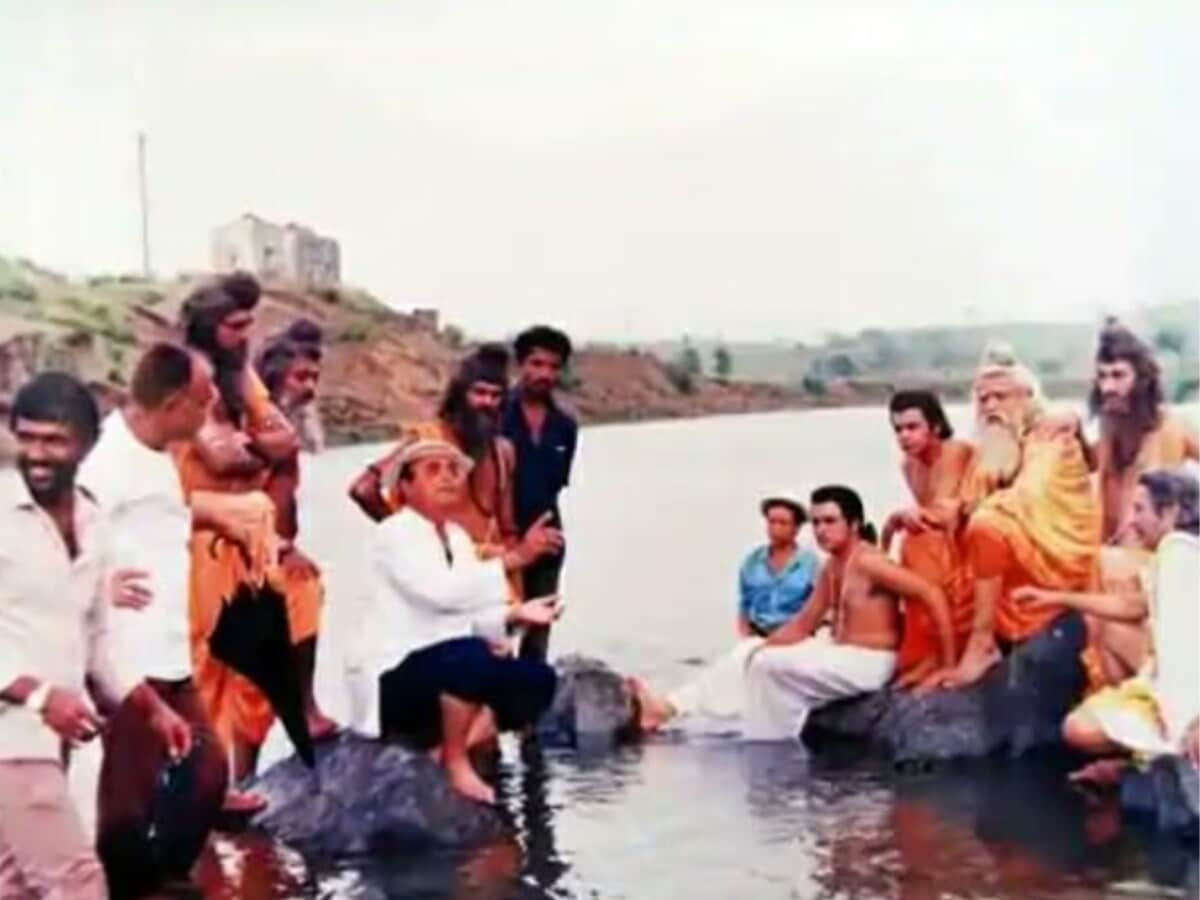
With Bollywood superstar Ranbir Kapoor stepping into the sacred shoes of Lord Ram in Nitesh Tiwari’s upcoming magnum opus Ramayana, excitement across cinema lovers and devotees has reached fever pitch. Yet, as visual effects, international action choreographers, and massive studio sets dominate headlines, every modern cinematic retelling inevitably finds itself compared to one timeless benchmark: Ramanand Sagar’s legendary 1987 television masterpiece, Ramayan. Broadcast on Doordarshan every Sunday morning, this landmark production did not merely entertain—it transformed into a socio-cultural phenomenon that halted public life across the Indian subcontinent. Behind the ethereal sets of Umbergaon, Gujarat, lay an extraordinary saga of passionate storytelling, shoestring innovation, casting miracles, and profound human devotion. Here are 10 unforgettable, lesser-known stories from the making of Ramanand Sagar’s magnum opus that showcase why the classic remains an immortal cultural touchstone.
1. Arun Govil Was Outright Rejected for Lord Ram Before His Smile Changed Destiny
It is almost impossible for generations of Indians to visualize Lord Ram without seeing Arun Govil’s serene countenance, but history almost took a vastly different course. When Govil initially auditioned for the role, Ramanand Sagar and his selection panel rejected him, feeling he lacked the majestic, divine aura needed to command the screen as Maryada Purushottam. Several prominent actors were shortlisted while Govil was offered the secondary roles of Bharat and Lakshman, which he politely declined, stating that his heart was set strictly on playing Ram. Weeks later, during a casual conversation, Sagar noticed Govil flash an effortless, warm, and gentle smile. The director immediately froze, turned around, and remarked that a deity who radiates boundless compassion must possess a smile that instantly dissolves human grief. Govil was called back, handed the sacred bow and yellow pitambar, and the rest became immortal television history.
2. Deepika Chikhalia Auditioned Four Times in Full Bridal Finery to Win Sita’s Crown
Landing the iconic character of Mata Sita was an equally grueling ordeal for a young Deepika Chikhalia, who was only 15 years old when casting commenced. Having previously worked with Ramanand Sagar in the fantasy show Vikram Aur Betaal, Chikhalia was not handed the role on a platter. Sagar insisted that the actress playing Sita must possess an ageless grace that would evoke spontaneous maternal reverence from spectators of all generations. Chikhalia was made to undergo four separate screen tests, each requiring her to sit for hours in full royal bridal attire, heavy ethnic jewellery, and traditional makeup. She had to walk, speak Sanskritized Hindi dialogues, and emote grief without shedding theatrical tears. It was only on the fourth trial, when Sagar observed her effortless poise and expressive eyes, that he declared to his crew that they had found their Janaki.
3. Arvind Trivedi Auditioned to Play the Boatman Kevat and Walked Out as Lanka King Ravana
One of the most theatrical casting miracles involved seasoned Gujarati theatre veteran Arvind Trivedi. Having traveled from Gujarat to Mumbai, Trivedi arrived at the Sagar Arts audition studio with the modest aspiration of auditioning for the humble role of Kevat, the devoted boatman who ferries Lord Ram across the holy Ganga. Ramanand Sagar handed him a script to read, observed his imposing physical posture, and then asked him to simply walk across the hall in total silence. As Trivedi took heavy, authoritative strides with an innate regal arrogance, Sagar stood up from his chair and exclaimed that he had finally found his Lankapati Ravana. Despite Trivedi’s initial hesitation to portray the arch-villain of the epic, his thundering laughter, razor-sharp dialogue delivery, and grand screen presence turned his portrayal of the scholarly demon king into a masterclass in dramatic acting.
4. Dara Singh Was the Sole Contender for Hanuman: Cast Without a Single Screen Test
While every major character endured rigorous auditions and multiple rejections, there was exactly one role for which no audition was ever conducted: Lord Hanuman. Ramanand Sagar was steadfast in his conviction that only world wrestling champion and veteran actor Dara Singh possessed the physical stature, broad chest, and innocent warmth required to embody the loyal devotee of Lord Ram. When Sagar approached him, Dara Singh was already nearing 60 years of age and expressed serious reservations about spending hours in intense silicone-free prosthetic makeup and enduring exhausting battle scenes in peak Gujarat heat. However, Sagar refused to consider any other actor, reassuring him that divine grace would shepherd him through the rigorous shoot. Singh’s powerful yet gentle performance established an iconic gold standard that remains unmatched across Indian screen history.
5. The Sunday Morning Curfew: How an Entire Nation Froze in Silence at 9:30 AM
The cultural footprint of Ramayan reached heights that modern streaming platforms cannot dream of replicating. Every Sunday morning at 9:30 AM, streets across Mumbai, Delhi, Lucknow, Patna, and Kolkata emptied completely, creating what sociologists dubbed the “Ramayan Curfew.” Public transport state buses came to a complete halt as drivers and passengers crowded around dhabas with black-and-white television sets. In rural villages with scarce electricity, entire hamlets pooled car batteries to keep single community televisions running, with elders garlanding the screen with fresh marigold flowers, lighting incense sticks, and removing their footwear before the opening conch shell sounded. Even government cabinet meetings, interstate train departures, and Sunday morning matrimonial ceremonies were routinely rescheduled to ensure no citizen missed the weekly telecast.
6. Primitive VFX and Mechanical Rigs: Crafting Miraculous Astra Battles on a Budget
In an era predating sophisticated CGI workstations, digital green screens, and AI animation tools, the visual effects team of Ramayan had to build cinematic miracles using ingenuity and raw mechanical craft. The iconic sequences featuring clashing divine astras—where arrows emitted sparks, multiplied mid-air, and exploded into cosmic flames—were created using primitive video switchers, multi-pass optical exposure tricks, and manual stop-motion animation. Technicians used thin mechanical wires, physical smoke pots, compressed air canisters, and miniature models hand-carved out of wood and plaster. The actors had to maintain steady eye levels and frozen expressions for minutes while technicians physically swapped arrow rigs on cameras, yielding a uniquely hypnotic visual charm that enthralled millions of households.
7. Local Tribals and Forest Dwellers of Umbergaon Formed the Legendary Vanar Sena
Bringing Lord Ram’s massive Vanar Sena to life on screen posed a colossal logistical nightmare, as hundreds of background artists were required for months of shooting on the banks of Gujarat’s coastal forests. Rather than hiring expensive Mumbai background dancers, Ramanand Sagar hired local adivasis, tribal laborers, and daily-wage villagers residing near the Umbergaon studio. Every morning before dawn, makeup artists fitted hundreds of local men with hand-painted rubber snouts, faux-fur arm sleeves, and wired tails. The villagers took immense spiritual pride in their work; they observed fasts on shooting days, treated their foam maces as sacred instruments, and poured boundless physical energy into the battle scenes across muddy riverbeds, giving the epic its grounded, raw, and authentic visual scale.
8. Deification in Real Life: Arun Govil and Co-Stars Made Lifelong Personal Sacrifices
The line separating reel characters from real human beings evaporated almost overnight. When Arun Govil, Deepika Chikhalia, or Sunil Lahri (Lakshman) traveled across India, crowds of thousands swarmed airports, railway platforms, and hotel lobbies, falling prostrate to touch their feet and seeking blessings for sick children. This overwhelming public reverence forced the actors to embrace extreme personal discipline. Arun Govil, who was an occasional smoker, gave up smoking entirely in public view after an elder in Tamil Nadu reprimanded him for tainting the sacred image of Lord Ram. The actors refrained from attending late-night parties, avoided appearing in provocative advertisements, and conducted their public lives with monk-like austerity, conscious that they carried the spiritual faith of an entire subcontinent on their shoulders.
9. Natural Wonders on Set: When Real Peacocks and Animals Intervened During Filming
The shoot of Ramayan was punctuated by unexplainable natural occurrences that the cast and crew affectionately described as divine blessings. During the outdoor filming of the Vanvaas (forest exile) episodes in the wilderness of Umbergaon, the production team often struggled to create the idyllic serenity of Chitrakoot. On multiple occasions, wild peacocks from adjacent forests wandered directly into the camera frame and began fanning their vibrant plumage just as Arun Govil and Deepika Chikhalia sat beneath banyan trees. Similarly, during scenes involving the sacred crow Kakbhushundi or forest deer, wild animals appeared on set with uncanny calmness, remaining stationary throughout takes without being frightened by camera cranes, crew chatter, or floodlights.
10. Dashrath’s Reel Demise Sparked Real Mourning Across Indian Villages
When veteran actor Bal Dhuri portrayed the heart-wrenching demise of King Dashrath following Lord Ram’s departure to the forest, the emotional realism of the performance transcended the television screen in a manner never seen before. The weeping of the three royal queens and the grief-stricken atmosphere on set deeply affected viewers nationwide. Reports emerged from numerous rural pockets in Uttar Pradesh, Bihar, and Rajasthan where village communities observed three days of traditional mourning (sutak). Shops remained shuttered, festivities were postponed, and community kitchens were set up as villagers bathed in local rivers and offered prayers as if a beloved monarch of their own household had passed away, showcasing the unmatched emotional immersion Ramanand Sagar breathed into the epic.