North India Statesman
The joyous arrival of Dhanteras, celebrated on the auspicious Krishna Paksha Trayodashi of the holy Kartik month, marks the official commencement of the five-day Deepavali festival. Across every corner of the country, from historic markets in Lucknow and Varanasi to bustling avenues in Delhi and Mumbai, homes are swept clean, illuminated with golden lamps, and prepared for celestial visitors. While widespread modern tradition associates the festival with crowded jewelry stores and copper-bottomed cookware, the true soul of Dhanteras—formally recognized as Dhanatrayodashi—lies in an ancient triad of blessings: physical vitality (Arogya), sustained material fortune (Dhan), and divine protection against untimely misfortune (Abhay). Performing the puja properly within your household establishes a vibrant spiritual atmosphere, inviting the grace of Lord Ganesha, Lord Dhanvantari, Goddess Mahalakshmi, Lord Kuber, and Lord Yamraj.
Auspicious Shubh Muhurat for Dhanteras Puja and Festive Shopping
Vedic astrology dictates that worship yields its highest energetic potency when conducted during Pradosh Kaal—the approximate seventy-two-minute twilight window following sunset—coupled with a fixed ascendant (Sthir Lagna, such as Vrishabha/Taurus). When prayers are offered during a fixed sign, family wealth and domestic harmony are believed to remain stable and anchored in the household rather than fluctuating. For the auspicious Dhanteras celebrations falling on Friday, November 6, 2026, the ideal evening Pradosh Kaal puja window prevails between 05:32 PM and 07:11 PM, with the optimal Sthir Vrishabha Lagna aligning seamlessly between 05:48 PM and 07:44 PM. For those planning to step out for high-value purchases such as gold coins, silver ornaments, brass utensils, electronic appliances, vehicles, or property documentation, the daytime Choghadiya Muhurats provide exceptional prosperity. The daytime Shubh muhurat spans from 12:04 PM to 01:26 PM, followed by the highly beneficial Chara and Labha windows in the afternoon and early evening, ensuring every rupee invested carries positive long-term momentum.
Essential Samagri List: What to Prepare Before Starting the Ritual
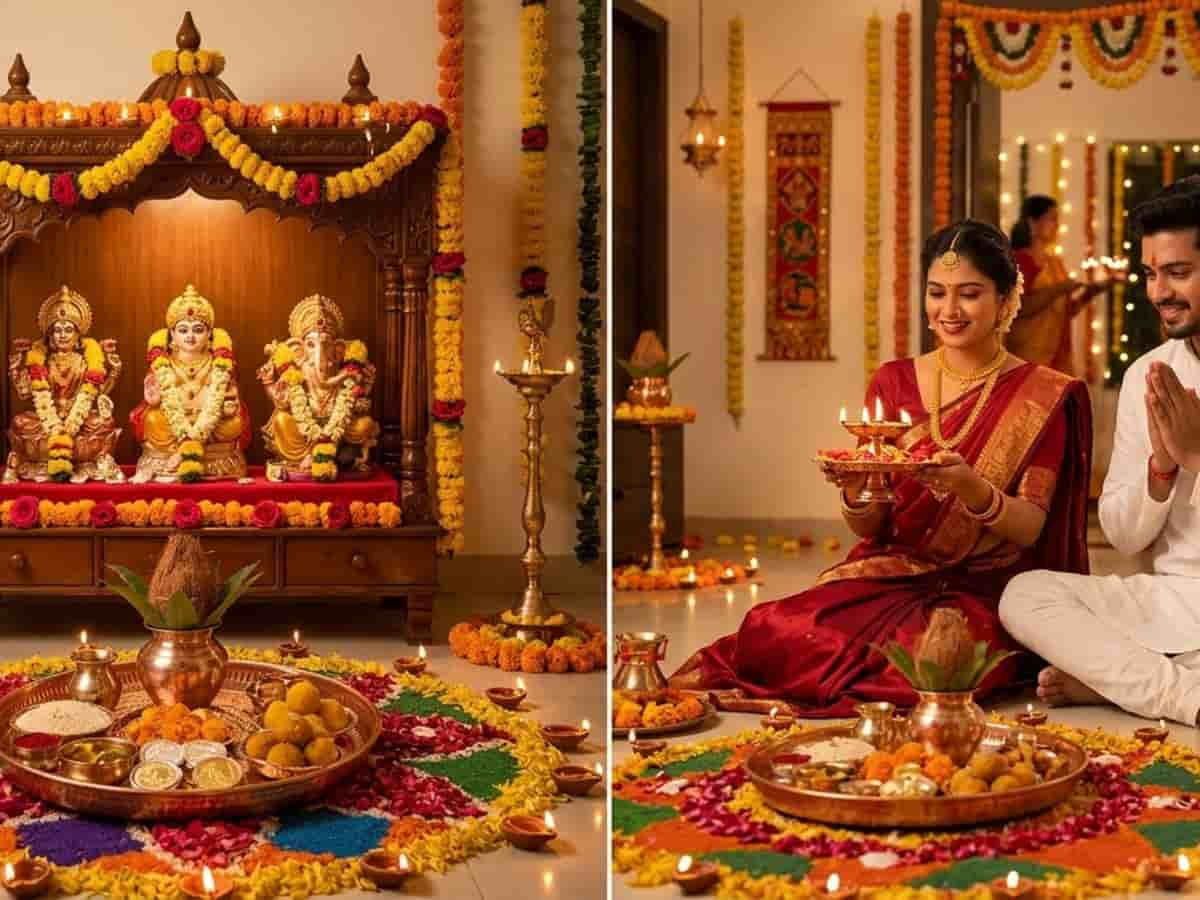
A successful, peaceful puja begins with disciplined preparation, ensuring you do not have to interrupt your prayers midway. Gather all items on a clean copper or brass tray beforehand. The essential ingredients include idols or images of Lord Ganesha, Goddess Lakshmi, Lord Kuber, and Lord Dhanvantari; a clean wooden plank (Chowki); a fresh red or yellow silk cloth; pure brass or clay diyas along with cotton wicks; cow ghee or cold-pressed sesame oil; raw mustard oil for the Yam diya; fresh betel leaves (Paan), betel nuts (Supari), and clove-cardamom pairs; unbroken raw rice grains smeared with turmeric (Akshat); holy water (Gangajal); fresh marigold garlands and red lotus flowers; seasonal fruits; milk-based sweets like kheer or peda; puffed rice (Kheel) and sugar candies (Batasha); a handful of dry whole coriander seeds (Sabut Dhania); new silver or copper coins; and five yellow cowries (Peeli Cowrie) paired with Gomti Chakras.
Step-by-Step Dhanteras Home Puja Vidhi: Invoking the Divine Guardians
Begin your evening rituals by taking a purifying bath and wearing clean, unstitched or freshly washed traditional attire, preferably in shades of yellow, saffron, or red. Thoroughly clean the north-eastern (Ishanya) quadrant of your living room or prayer sanctuary, as this corner represents divine cosmic flow. Place the wooden chowki facing north or east, drape it with the fresh red cloth, and sprinkle drops of Gangajal over the altar while chanting “Om Pavitrah Pavitro Va Sarvavastham Gato’pi Va”. Gently position the idols of Lord Ganesha on the left, Goddess Lakshmi in the center, and Lord Kuber alongside Lord Dhanvantari to the right. Place a brass Kalash filled with pure water, a coin, an areca nut, and five mango leaves, topped with a raw coconut wrapped in red sacred thread (Moli).
Commence the prayer by invoking Lord Ganesha to remove all obstacles from your household, applying sandalwood tilak, offering fresh flowers, and chanting “Om Gam Ganapataye Namah”. Next, direct your devotion to Lord Dhanvantari, the primordial physician who emerged from the cosmic churning holding the nectar of immortality. Bathe his representation symbolically with water, offer sacred basil leaves (Tulsi), yellow flowers, and fresh seasonal fruits, reciting “Om Namo Bhagavate Vasudevaya Dhanvantaraye Amrita-Kalasha Hastaya Sarva-Bhaya Vinashaya Trailokya-Nathaya Sri Mahavishnave Namah”, praying fervently for your family’s immunity, sound mental health, and longevity.
Following Dhanvantari puja, invoke Goddess Mahalakshmi and Lord Kuber to open the pathways of noble fortune and protect earned reserves from draining away. Place your newly bought brass utensils, gold or silver coins, and a bowl of whole coriander seeds at the feet of Goddess Lakshmi. Offer vermilion (Sindoor), Akshat, fragrant lotus blossoms, batashas, and kheel to the Goddess, followed by offering raw rice mixed with turmeric and yellow cowries to Lord Kuber. Light an aromatic pure ghee lamp before the altar, perform the traditional Aarti, and recite the Kuber Mantra: “Om Hreem Shreem Kreem Shreem Kuberaya Ashta-Lakshmi Mama Grihe Dhanam Puraya Puraya Namah”. Conclude the altar rituals by distributing sweet prasad among all family members with mutual love and reverence.
The Ritual of Yam Deepdaan: Dispelling Fear and Welcoming Longevity
The most spiritually critical and solemn rite of Dhanteras is Yam Deepdaan, performed immediately after the domestic altar puja has concluded. While the rest of Diwali honors light, wealth, and sweet delicacies, this unique rite pays explicit homage to Lord Yamraj, the cosmic judge and Lord of Death, to eliminate premature death (Apamrityu) and fatal diseases from striking the home. Prepare a large, four-faced earthen lamp (Choumukhi Diya) made of fresh clay or kneaded wheat flour dough. Fill the lamp with raw mustard oil and insert four cotton wicks aligned with the cardinal directions. Light all four wicks inside the prayer area.
The eldest or primary female member of the household takes the lighted diya and carries it through the house, walking outward toward the main external entrance without looking back. Place the diya outside the southern threshold of the main door, facing directly south—the cardinal direction ruled by Yamraj. Offer a small pinch of black sesame seeds, raw grains, and water droplets around the base of the lamp, bowing with joined palms while reciting: “Mrityuna Pashadandabhyam Kalena Shyamaya Saha, Trayodashyam Deepadanat Suryajah Preeyatam Mama”. Once placed, immediately step back inside the home and shut the main door without turning around to look at the lamp. The remaining thirteen small ghee lamps are then arranged throughout the veranda, kitchen, safe vaults, and balconies to flood the entire residence with auspicious light.
What to Buy on Dhanteras to Multiply Prosperity Thirteen-Fold
The purchases made on Dhanteras serve a dual purpose: practical utility and sacred symbolism. Buying gold or silver remains a timeless custom because precious metals do not degrade or tarnish, symbolizing everlasting familial wealth. Investing in brass cookware or copper storage vessels honors Lord Dhanvantari’s medical principles, as water stored in copper and brass actively destroys waterborne pathogens and strengthens gut vitality. However, you do not need to spend lavish amounts on luxury metals to receive the day’s blessings. Two of the most spiritually powerful purchases on Dhanteras cost practically nothing: a humble new broom (Jhadu) and a packet of whole dry coriander seeds (Dhania). The broom represents the physical embodiment of Goddess Lakshmi, tasked with sweeping away the accumulated poverty, dust, and lethargy (Alakshmi) of the past year. Bringing home a pair of natural grass brooms and using them on Diwali morning is believed to invite fresh financial energy. Simultaneously, the dry coriander seeds purchased on Dhanteras are placed before the deity during the evening puja, with a handful sown into home planters post-Diwali; the emergence of vibrant green saplings in the coming weeks serves as a traditional living indicator that household health, peace, and abundance are steadily growing.