North India Statesman
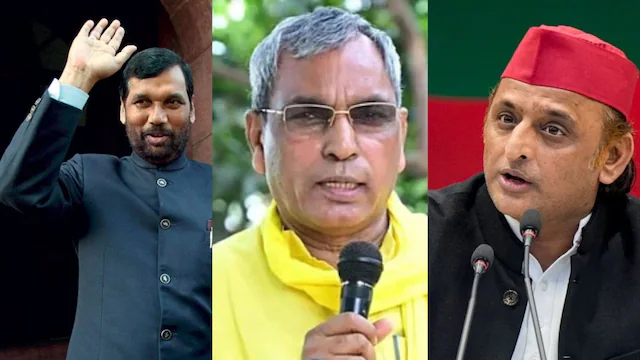
The political chessboard in Uttar Pradesh is witnessing intense maneuvering as regional heavyweights position themselves ahead of upcoming electoral battles. Amidst high-voltage exchanges between the ruling alliance and opposition camps, Suheldev Bharatiya Samaj Party (SBSP) chief and state cabinet minister Om Prakash Rajbhar has launched a scathing critique of Samajwadi Party (SP) president Akhilesh Yadav. Beyond standard political sparring, Rajbhar drew a compelling historical parallel, comparing the current internal challenges and coalition dilemmas faced by the SP leadership to the legendary “M factor” strategic gamble that once reshaped political equations for veteran leaders like the late Ramvilas Paswan.
The Historical Shadow of the ‘M Factor’ in Regional Indian Politics
In the lexicon of Indian electoral analysis, the “M factor” has historically denoted the delicate coalition arithmetic balancing specific caste groups and minority voter bases. Decades ago, political stalwarts experimented with various permutations of this formula to engineer sweeping social coalitions. However, as political history demonstrates, over-reliance on rigid identity equations without broad-based grassroots consensus often carries severe electoral risks. Pondering the current political climate in Uttar Pradesh, analysts and regional leaders like Rajbhar have pointed out that rigid alignments can alienate broader voting blocks, triggering intense internal friction and opening doors for rival parties to consolidate alternative social coalitions.
OP Rajbhar’s Sarcastic Advice and Warnings of Internal Rebellion in the SP
Stepping up his attack, OP Rajbhar didn’t hold back in his recent public addresses, offering a mix of sarcastic counsel and stern warnings to the Samajwadi Party chief. Referring to internal dynamics, ticket distribution tensions, and shifting loyalties within Purvanchal, Rajbhar warned that unmanaged aspirations among party workers and regional satraps could lead to widespread rebellions. He claimed that without careful coalition management and unity, the opposition camp risks facing multiple friendly contests and disgruntled factions on the ground, echoing the strategic vulnerabilities that have plagued ambitious regional formations in the past.
Navigating the Complex 2027 Electoral Landscape in Uttar Pradesh
As political parties map out their strategies for the 2027 Uttar Pradesh legislative assembly elections, the lessons from past electoral experiments remain acutely relevant. Balancing alliance partners, addressing community aspirations, and avoiding the pitfalls of over-calculated identity politics will ultimately dictate which political force successfully captures the imagination of the state’s diverse electorate. Whether Akhilesh Yadav adjusts his tactical approach in response to these persistent warnings from coalition critics remains one of the most closely watched storylines in contemporary Indian politics.