North India Statesman
A sudden diplomatic shift in the nearly five-year Russia-Ukraine war has left European capitals balancing urgent preparation with deep-seated distrust. Following high-stakes shuttle diplomacy connecting Abu Dhabi, Moscow, and Dublin, United States special envoys Steve Witkoff and Jared Kushner announced that Russian President Vladimir Putin has agreed to include European representatives in the next round of peace negotiations. While the move expands a negotiating format previously limited to Washington, Kyiv, and Moscow, officials across the European Union remain heavily skeptical of the Kremlin’s intentions—and questions immediately arise over whom Putin will choose to sit across from European diplomats.
Who Should Putin Send to Represent Russia at the Expanded Talks?
As European leaders finalize their own joint delegation, attention in Moscow and Brussels turns to the caliber and mandate of the negotiators Putin selects for the upcoming round. Throughout 2026, the Kremlin has relied on three distinct tiers of loyalists depending on whether it intends to stall, transact, or reshape continental security, leaving Putin with three clear strategic choices for his lineup. If Putin intends to maintain an uncompromising ideological stance, he will likely keep presidential aide Vladimir Medinsky at the helm alongside Deputy Foreign Ministers Sergei Ryabkov and Mikhail Galuzin, supported by senior intelligence and military officers from the recent Abu Dhabi delegation. Medinsky, who led earlier rounds in Istanbul, has repeatedly insisted on hardline territorial maximalism, signaling little appetite for compromise. Conversely, if the Kremlin seeks a more transactional negotiation centered on sanctions relief and economic arrangements with Washington and Brussels, Putin could elevate Russian Direct Investment Fund chief Kirill Dmitriev, who has served as a primary backchannel envoy in direct meetings with Kushner and Witkoff. Finally, because Moscow is pushing to tie any Ukrainian settlement to sweeping revisions of NATO’s footprint in Central and Eastern Europe, elevating Foreign Minister Sergei Lavrov or senior foreign policy aide Yury Ushakov would signal that the Kremlin views the expanded table as a venue for a broader European security treaty rather than a localized ceasefire.
Why Does the European Union Remain Deeply Skeptical of Moscow?
Despite U.S. assurances that Putin is willing to let European powers join the negotiations, skepticism inside the European Union remains acute. Hours after Kushner and Witkoff briefed Ukrainian President Volodymyr Zelenskyy in Dublin on Thursday evening, Kremlin spokesman Dmitry Peskov introduced fresh caveats, stating on Friday that Europeans could only join if they demonstrate a “readiness to contribute” constructively to the peace process. Peskov also mocked European debates over representation, remarking that European leaders “squabble like spiders in a jar” while declining to comment on whether Moscow would accept EU foreign policy chief Kaja Kallas as a counterpart. Arriving at an informal EU leaders’ summit in Dublin on November 13, Kallas warned member states not to walk into Russian diplomatic traps. She argued that Moscow naturally prefers to avoid facing a unified European front and is attempting to manipulate the agenda by shifting focus toward Russian security grievances rather than ending its invasion of Ukraine. Kallas firmly rejected any suggestion that the Kremlin holds veto power over Brussels’ choice of representatives, emphasizing that the EU relies on established institutions and legitimate leaders rather than informal envoys.
How Did Europe Resolve Its Own Representation Dilemma?
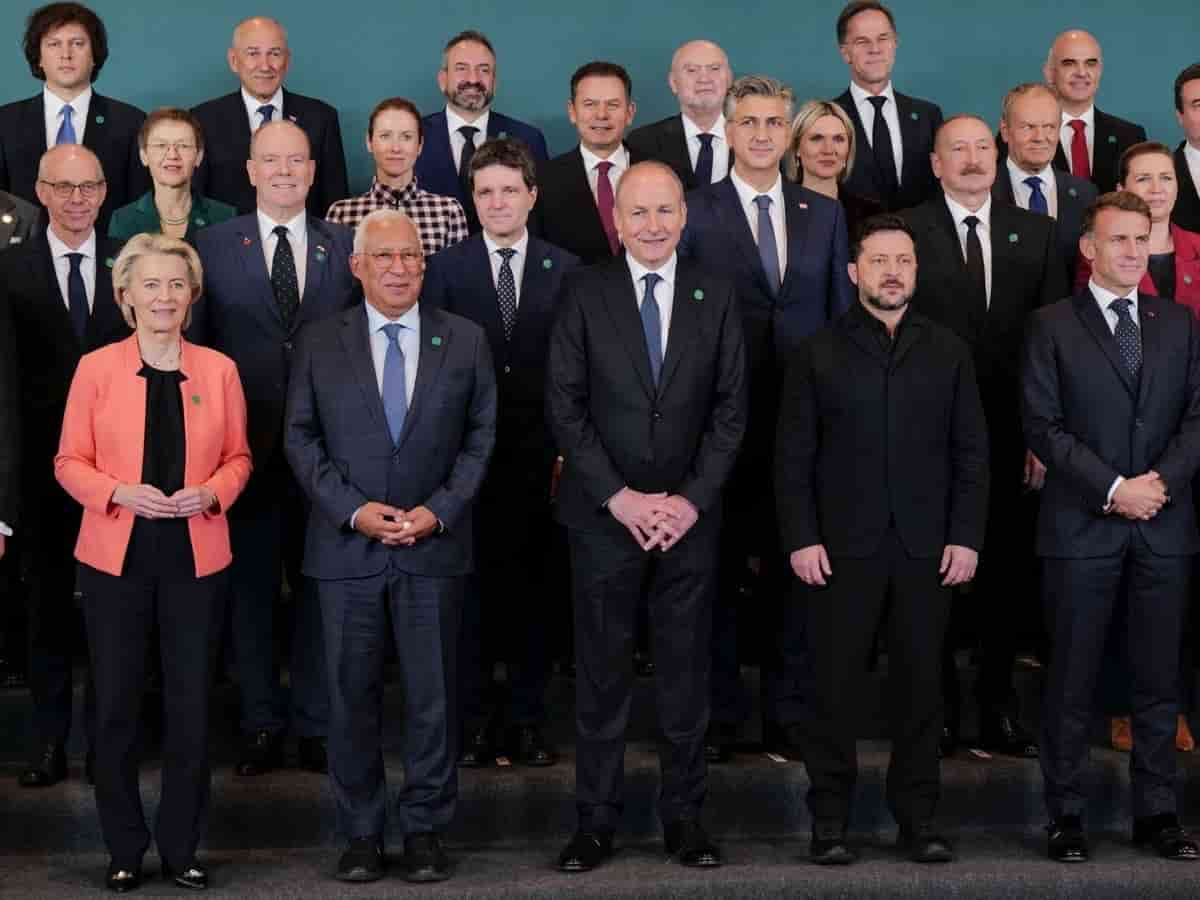
For months, Washington and Moscow pointed to Europe’s lack of a single diplomatic voice as a primary obstacle to giving the continent a seat at the table. Whether Europe should be represented by the 27-member European Union, major military powers, or broader continental frameworks had long frustrated American negotiators. At Friday’s summit in Dublin, however, European leaders moved swiftly to close ranks.European Council President António Costa announced that Europe will field a unified negotiating team combining European Union institutions with the “E5” group of major European powers—France, Germany, the United Kingdom, Italy, and Poland. Under this structure, EU institutions will oversee matters tied to Ukraine’s eventual EU membership, economic reconstruction, and financial aid, while the E5 powers coordinate postwar security guarantees alongside NATO. German Chancellor Friedrich Merz urged fellow leaders to maintain strict discipline and avoid unilateral surprises, while President Zelenskyy welcomed the decision, noting that European participation ensures the continent’s voice is heard directly in decisions affecting its own security.
Can an Expanded Table Break the Deadlock Over Territory and Security?
While bringing the EU and the E5 into the negotiating room alters the diplomatic geometry, the fundamental barriers to ending the war remain untouched. During his two-hour meeting with Kushner and Witkoff in Moscow, Putin reiterated his core demands without offering any public concessions. Moscow continues to insist on full Ukrainian withdrawal from all four regions Russia declared annexed in 2022—including territory Russian troops have failed to capture—alongside an additional buffer zone inside Ukraine.Even more contentious for European capitals is Putin’s flat rejection of any European peacekeeping forces in postwar Ukraine. Putin warned the American envoys that Western troops stationed on Ukrainian soil would be treated as a direct security threat and a legitimate military target, while also signaling plans to revive Moscow’s 2021 demands for NATO to roll back its military deployments in Central and Eastern Europe. Meanwhile, on the ground, Russia has continued heavy drone and missile strikes against Ukrainian energy infrastructure even as talks proceed in Abu Dhabi. For European leaders in Brussels, Paris, Berlin, London, Rome, and Warsaw, the challenge ahead is clear: stepping into the negotiating room to defend Ukraine’s sovereignty and continental security while ensuring that Moscow cannot use the expanded talks merely to buy time or divide the Western alliance.