North India Statesman
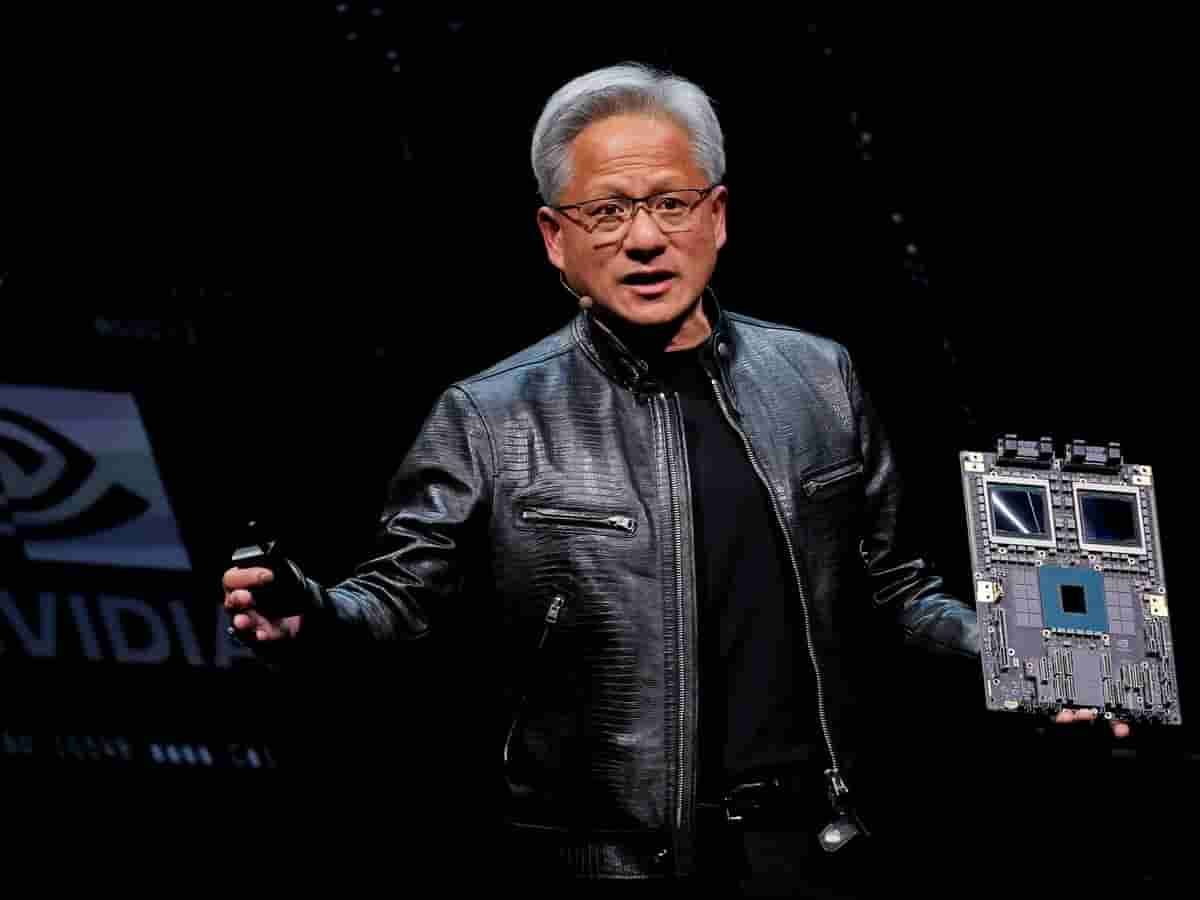
Just days after a stunning governance and national security scandal forced him out of the company he co-founded more than three decades ago, former Nvidia Chief Executive Officer Jensen Huang has broken his public silence. In a candid statement posted on X on Tuesday morning, November 17, 2026, the 63-year-old Silicon Valley titan acknowledged making “serious mistakes” in his personal life, pledged full cooperation with an independent board investigation, and declared that he would be “honored” to return as Nvidia’s CEO if directors decide his leadership is in the company’s best interest. Huang’s remarks land at a pivotal moment for the $3.7 trillion artificial intelligence chipmaker, arriving hours before Interim CEO and Chief Financial Officer Colette Kress is scheduled to lead Nvidia’s quarterly earnings call amid intense Wall Street scrutiny and a mounting Silicon Valley campaign demanding Huang’s reinstatement.
What Jensen Huang Said in His First Statement Since Resigning
Breaking a week-long silence following his abrupt departure, Huang struck a contrite yet resolute tone as he addressed employees, shareholders, lawmakers, and his family. Reflecting on the 53 years since he immigrated to the United States and built Nvidia into the backbone of global artificial intelligence computing, Huang admitted that his personal conduct had fallen short of corporate expectations. “I did not live up to the standards expected of everyone at NVIDIA, and I have made serious mistakes in my personal life,” Huang wrote, adding that he deeply regretted the problems created for the board and owned his mistakes completely. At the same time, Huang pointed to an outpouring of messages from Nvidia engineers, institutional investors, and commercial partners urging him to resume the helm as the company navigates fierce market competition and complex geopolitical pressures. Framing his potential comeback around shareholder and national interest, he stated that if the Board of Directors concludes his return best serves employees, investors, and America, he would gladly answer the call.
Why Huang Resigned: The Affair and China Espionage Controversy
Huang’s resignation last week sent shockwaves across global technology markets from Santa Clara and Wall Street to Bengaluru and Taipei, erasing more than $400 billion from Nvidia’s market capitalization within days. His exit followed internal and media revelations regarding multiple extramarital relationships—including an affair with a senior Nvidia executive who reported directly to him, as well as a relationship with a Chinese businesswoman suspected by U.S. authorities of acting as an intelligence asset for Beijing and facilitating the transfer of sensitive information and advanced AI chips to China. The allegations triggered both an independent investigation overseen by outside legal counsel and heightened alarm in Washington over export-control compliance. On Tuesday, shortly before Huang issued his statement, Nvidia’s board—chaired by former Synopsys CEO Harvey Jones—announced the creation of a dedicated board-level committee to oversee national security and semiconductor export controls. Huang has also agreed to testify behind closed doors before U.S. lawmakers next month as congressional panels examine Nvidia’s compliance safeguards.
Silicon Valley’s ‘Bring Jensen Back’ Push vs. Board Resistance
Despite the gravity of the governance and national security questions, Huang’s sudden exit has sparked a dramatic tug-of-war reminiscent of OpenAI’s 2023 boardroom turmoil. An open letter titled “Bring Jensen Back” has gathered nearly 170,000 signatures—including over 8,300 self-identified Nvidia employees, roughly a fifth of the company’s workforce—alongside prominent tech leaders such as Elon Musk, Uber co-founder Travis Kalanick, Epic Games CEO Tim Sweeney, and Shopify’s Tobias Lutke. Major institutional shareholders, including Altimeter Capital’s Brad Gerstner and Atreides Management’s Gavin Baker, have likewise urged directors to keep Huang’s reinstatement on the table. Even U.S. President Donald Trump remarked publicly that he would not oppose Huang’s return, suggesting the former chief had “learned a big lesson”. However, formidable roadblocks remain: U.S. Treasury Secretary Scott Bessent has called for a “dramatic shake-up” with an external successor, while sources familiar with Nvidia’s board indicate directors are not currently considering bringing Huang back.
What Nvidia’s Leadership Crisis Means for Global AI and India
Beyond Silicon Valley boardroom drama, the uncertainty surrounding Nvidia’s leadership carries direct consequences for global AI infrastructure, chip supply chains, and India’s rapidly expanding artificial intelligence ecosystem. Indian IT services majors, sovereign AI cloud builders, and enterprise data center operators rely heavily on Nvidia’s Hopper and Blackwell GPU architectures—and closely follow Huang’s direct strategic partnerships with Indian conglomerates—to power domestic large language models and compute clusters. Until the board’s independent probe concludes and congressional testimony clarifies whether any export rules were breached, Interim CEO Colette Kress faces the immediate task of reassuring global customers and investors during Tuesday’s quarterly earnings report that Nvidia’s product roadmap and supply commitments remain firmly on track.