North India Statesman
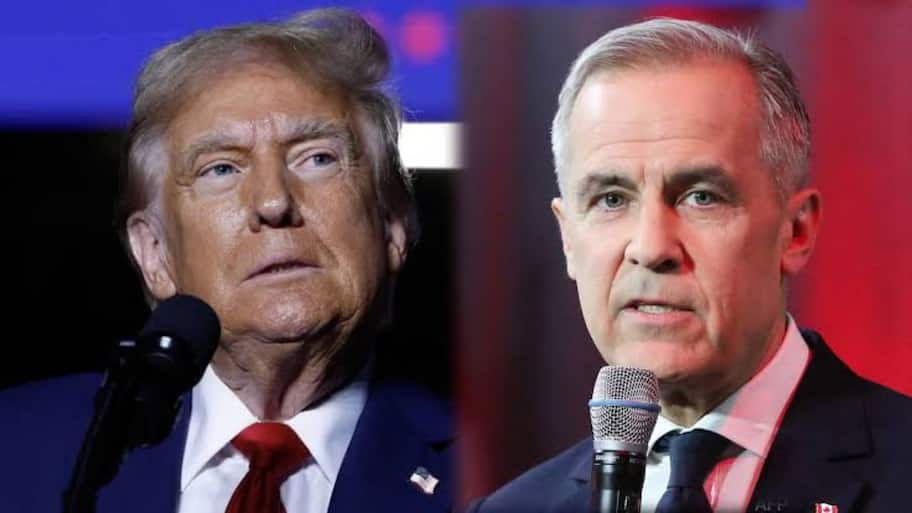
In a dramatic recalibration of Western geopolitical alignments, Canada has initiated a sweeping strategic pivot toward Europe, seeking formal entry into the UK-led Joint Expeditionary Force (JEF) while being offered an unprecedented “associate member” status by the European Union. The transatlantic overtures have triggered an immediate backlash from Washington, where US President Donald Trump warned Brussels of crippling tariffs and potential trade halts if the arrangement is deemed an economic or diplomatic provocation against the United States.
Canada Formally Applies For Joint Expeditionary Force (JEF) Role
The security dimension of Ottawa’s eastward pivot materialized during Canadian Prime Minister Mark Carney’s European tour. Following high-level discussions with UK Prime Minister Andy Burnham in Liverpool, Ottawa formally submitted an application to join the 10-nation, UK-led Joint Expeditionary Force.
The rapid-reaction coalition—which includes key northern NATO allies such as Norway, Sweden, Denmark, and the Netherlands—is engineered to respond dynamically to High North and Arctic security challenges. While Canada previously participated as an observer and partner in regional drills like Exercise TARASSIS, formal membership would mark Ottawa’s deepest integration into a dedicated European military framework since the founding of NATO. Alongside the JEF bid, Canadian and British officials advanced discussions regarding Canadian observer involvement in the Global Combat Air Programme (GCAP) and expanded infrastructure cooperation at the British Army Training Unit Suffield (BATUS) in Alberta.
EU Offers Unprecedented ‘Associate Member’ Status To Ottawa
Simultaneously, Brussels made a diplomatic breakthrough by offering Ottawa a bespoke tier of integration. Addressing the European Parliament in Strasbourg during her annual State of the Union address, European Commission President Ursula von der Leyen invited Canada to become the EU’s first-ever “associate member”.
Because the bloc’s foundational treaties explicitly restrict full EU accession to European states, the proposed associate tier is designed as a deep strategic compact. Building on the Comprehensive Economic and Trade Agreement (CETA)—which expanded two-way merchandise trade by 75%—the new framework targets joint defense-industrial production, secure supply chains for critical raw materials, Arctic surveillance, cybersecurity, and artificial intelligence integration. Both parties are scheduled to negotiate the structural contours of the partnership ahead of the EU-Canada Summit in Montreal.
Trump Warns EU Of Severe Tariffs Over ‘Hostile Act’
The diplomatic rapprochement drew a fierce warning from Donald Trump, who derided the associate membership concept as “laughable” and warned that Washington would treat any coordinated economic bloc flanking US trade interests with punitive trade measures.
Speaking to reporters in Charlotte, North Carolina, Trump declared that if the White House interprets the EU-Canada agreement as a hostile trade maneuver, the United States could impose heavy reciprocal tariffs or suspend bilateral trade across multiple sectors. The threat lands amid existing cross-border frictions, where the administration had already imposed targeted 50% tariffs and import bans across select Canadian agricultural, transport, and manufactured goods following deadlocked trade negotiations. Despite the rhetoric, European and Canadian officials maintain that the partnership is an exercise in mutual sovereignty and economic security rather than an aggressive posture against Washington.