 North India Statesman
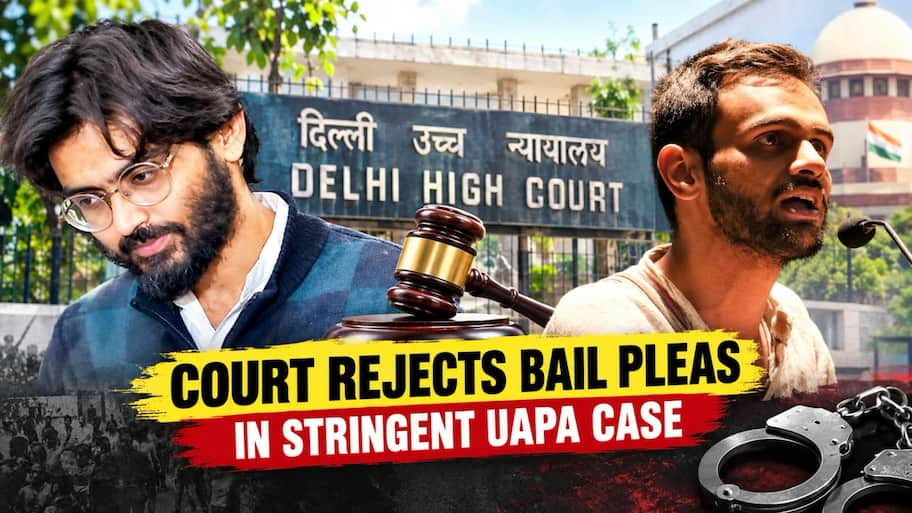
The Delhi High Court dismissed the bail pleas of former Jawaharlal Nehru University (JNU) student Umar Khalid and activist Sharjeel Imam in connection with the alleged “larger conspiracy” behind the 2020 northeast Delhi communal riots. A division bench comprising Justice Prathiba M. Singh and Justice Dinesh Bhatt rejected their appeals challenging the trial court’s July 4 order, which had denied them regular bail for the third time. Both Khalid and Imam remain incarcerated under the stringent Unlawful Activities (Prevention) Act (UAPA) and relevant sections of the Indian Penal Code.
Supreme Court Preconditions and Judicial Discipline
Delivering the judgment, the High Court emphasized that it was bound by judicial discipline to uphold the framework established by the Supreme Court of India in its January 5 order.
-
Preconditions for Bail: The apex court had previously stipulated that Khalid and Imam could renew their prayers for regular bail only upon the completion of the examination of protected witnesses or upon the expiry of one year from the date of the Supreme Court’s order, whichever came earlier.
-
Premature Applications: The bench observed that neither of the two preconditions had been fulfilled at the time of filing. Because protected witness examinations remain underway before the trial court and the one-year window has not elapsed, the High Court held that it could not alter or bypass the apex court’s directive.
-
Distinct Roles from Co-Accused: The court further noted that the roles attributed to Umar Khalid and Sharjeel Imam in orchestrating the alleged broader blueprint were distinct and separate from those of other co-accused granted relief in parallel proceedings.
Delhi Police Arguments: ‘Central Masterminds’ of the Clashes
Opposing the bail pleas, the Special Cell of the Delhi Police argued that both Khalid and Imam acted as pivotal masterminds who conceptualized and mobilized “chakka jams” (road blockades) designed to escalate into targeted communal violence.
The prosecution submitted that the duo used anti-Citizenship Amendment Act (CAA) protest sites across the capital to coordinate provocative speeches, logistics, and crowd mobilization. Investigators contended that the riots—which claimed 53 lives and left over 700 injured in February 2020—were not spontaneous neighborhood clashes, but a premeditated, deep-rooted conspiracy timed deliberately during high-profile international diplomatic visits to paralyze the capital.
Defense Arguments: Prolonged Incarceration Without Trial
Counsel representing Khalid and Imam argued that their continued detention amounts to pre-trial punishment without trial commencement:
-
Extended Incarceration: Sharjeel Imam has been behind bars since his arrest on August 25, 2020, while Umar Khalid has been lodged in judicial custody since September 13, 2020.
-
Lack of Direct Physical Violence: The defense argued that neither individual was physically present at the active riot sites in northeast Delhi during the peak clashes, nor were they linked to any overt acts of physical violence, weapons recovery, or terror funding.
-
Delay in Proceedings: Pointing to hundreds of listed prosecution witnesses and voluminous digital chargesheets, defense advocates asserted that concluding the trial remains a distant prospect, warranting conditional release on parity and fundamental liberty grounds under Article 21.
Road Ahead for the Accused
With the High Court turning down their third regular bail petitions, legal representatives for both activists are expected to approach the Supreme Court via special leave petitions (SLPs) to challenge the ruling. Pending any urgent interventions from the top court, both Khalid and Imam will continue their judicial detention in Tihar Jail as the Special Cell’s trial proceedings continue before the Karkardooma Court.


