North India Statesman
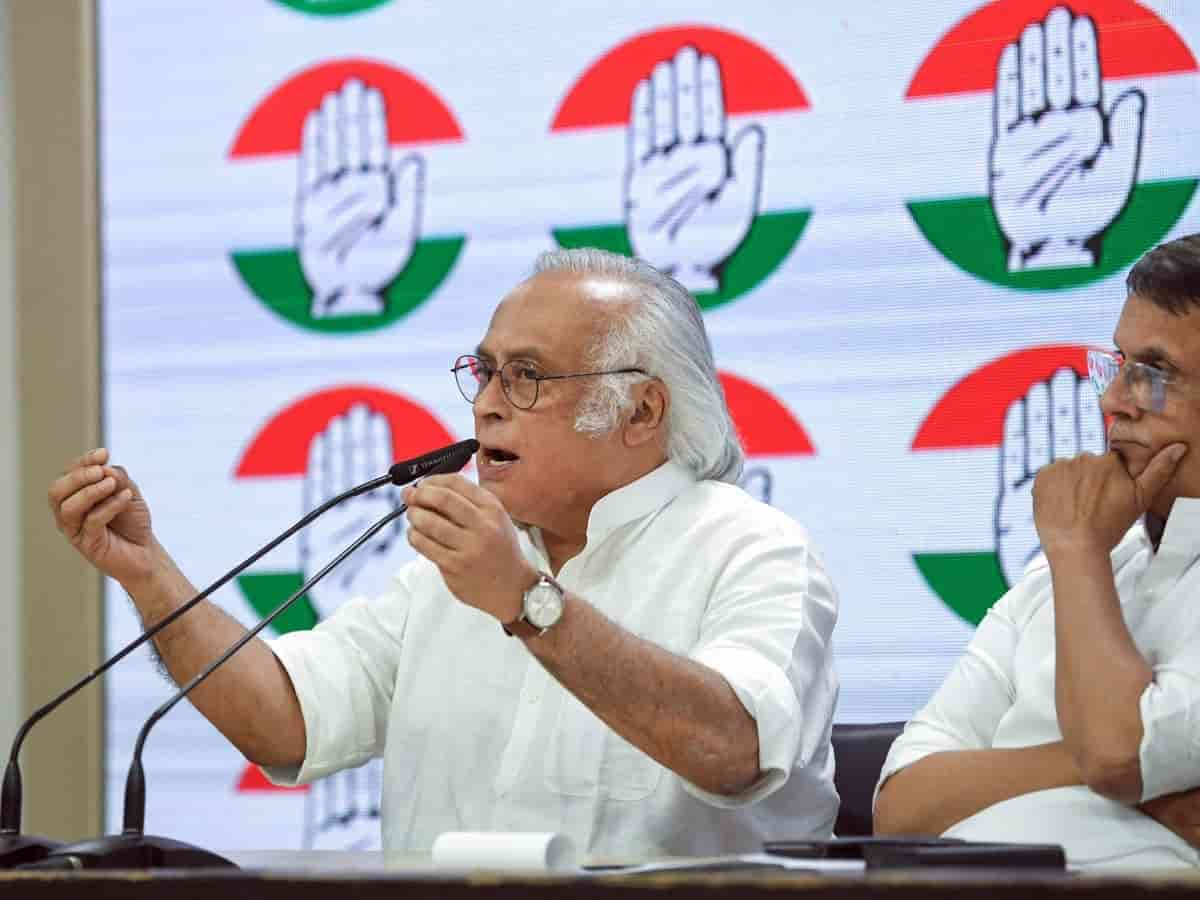
The Congress party launched a sharp political offensive against the Union government on Saturday, November 21, 2026, accusing the ruling establishment of institutional paralysis and political manipulation after Parliament’s Monsoon Session remained unprorogued for an unprecedented 100 consecutive days. Taking aim at Prime Minister Narendra Modi and Union Home Minister Amit Shah—frequently referred to in opposition political parlance as “Number 1 and Number 2″—Congress general secretary in-charge of communications Jairam Ramesh alleged that despite keeping both Houses technically open since August 13, the leadership has still failed to arrive at a clear legislative decision or muster the numbers required for its proposed Delimitation Bill. Contrasting the present administration’s approach with that of former Prime Ministers Indira Gandhi and Atal Bihari Vajpayee, Ramesh asserted that a vast gulf separates decisive national leadership from political manoeuvring, contending that urgent economic, social, and security priorities are being sidelined in pursuit of a controversial parliamentary majority.
Why Parliament’s Monsoon Session Has Remained Open for 100 Days
Under standard parliamentary procedure in India, once the Lok Sabha and Rajya Sabha conclude their scheduled sittings and are adjourned sine die, the President formally prorogues the session within days or weeks so a fresh session can be summoned later. However, following the conclusion of Monsoon Session sittings on August 13, 2026, the government refrained from issuing a prorogation order—marking the longest unprorogued stretch in the history of independent India’s Parliament. Keeping a session unprorogued enables the government to reconvene lawmakers at short notice for a special sitting without going through the longer procedural formalities of summoning a brand-new session. In a pointed post on social media platform X, Jairam Ramesh highlighted this 100-day milestone as evidence of legislative indecisiveness, arguing that the central leadership has kept Parliament in limbo for over three months without building consensus or scheduling a clear roadmap.
Congress Accuses Top Leadership of Seeking a ‘Supertainted’ Majority
Escalating the attack on the ruling coalition, Ramesh directly targeted the top two figures in the government, alleging that the extraordinary 100-day delay was engineered to give the Home Minister additional time to cobble together a two-thirds majority in the Lok Sabha for the Constitutional Amendment Bill on Delimitation. Referring to the required legislative threshold as a “supertainted” majority, the senior Congress leader claimed that no serious or structured consultations had been held with opposition parties on any concrete proposal. He further noted that Congress president Mallikarjun Kharge had written four separate letters to Prime Minister Narendra Modi requesting an all-party meeting to discuss the sensitive issue, yet none had been convened. Ramesh’s remarks also echoed wider opposition allegations—including recent claims by Shiv Sena (UBT) MP Sanjay Raut—suggesting intense behind-the-scenes efforts to sway MPs ahead of a potential special sitting.
Contrasting Indira Gandhi and Atal Bihari Vajpayee’s Delimitation Decisions
To underscore what the opposition described as a stark difference in statesmanship and governance priorities, Jairam Ramesh invoked the historical precedents set by former Prime Ministers Indira Gandhi in 1976 and Atal Bihari Vajpayee in 2001. He pointed out that both leaders had consciously deferred comprehensive parliamentary delimitation for 25 years each—freezing constituency boundaries until the first census conducted after 2026—so that national unity, federal balance, and pressing developmental goals would not be disrupted. Praising both former premiers as “wise and nationalist” leaders, Ramesh argued that India currently faces far more immediate economic, social, military, and foreign policy challenges that demand the government’s undivided attention. With the Congress reiterating that implementation of 33 per cent women’s reservation in Parliament should proceed immediately within existing Lok Sabha constituencies rather than waiting for delimitation, the 100-day deadlock has set the stage for a fierce confrontation when lawmakers next assemble in New Delhi.