North India Statesman
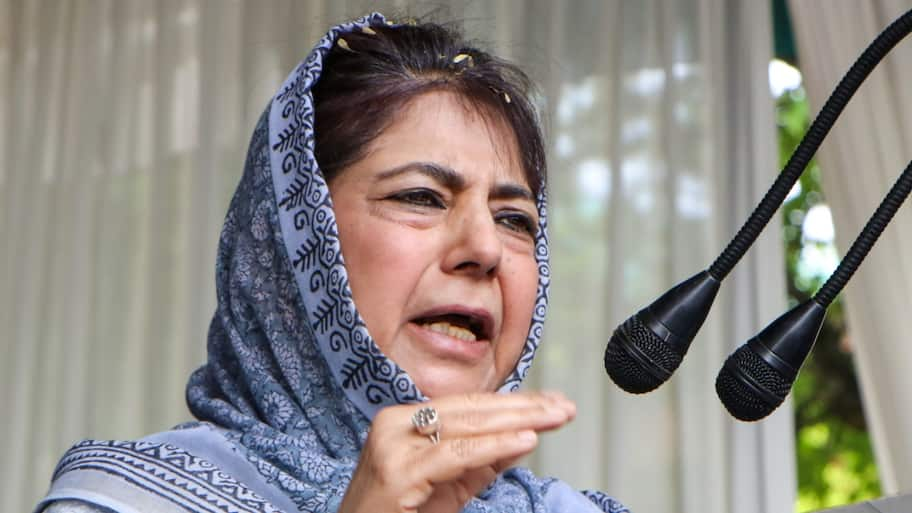
Peoples Democratic Party (PDP) president and former Jammu and Kashmir Chief Minister Mehbooba Mufti has issued a sharp warning over the state of democratic institutions in South Asia, cautioning that India risks resembling a “banana republic” if the alleged manipulation and partisan tweaking of electoral rolls continue unchecked. Speaking to reporters in Srinagar, Mufti addressed recent investigative disclosures concerning internal friction inside the Election Commission of India (ECI) during the Special Intensive Revision (SIR) of voter lists. Drawing parallel concerns across the border, the former Chief Minister also condemned the government of Pakistan for crushing peaceful domestic dissent and detaining the unarmed sisters of former Prime Minister Imran Khan while hypocritically projecting itself as an international peacemaker.
‘Competing to Harm Their Own People’: Mehbooba on India and Pakistan
Delivering a wide-ranging critique of regional governance, Mufti lamented that the two neighboring nations appear to be engaged in a race to degrade their own democratic foundations.
“I feel that both our sibling nations—India and Pakistan—are trying to undo each other, competing with each other over who can cause more harm to their own people and to their country,” she observed.
She highlighted that while India has long held pride as the world’s largest democracy—frequently lauded by Prime Minister Narendra Modi on international platforms as the “Mother of Democracy”—systemic efforts are now actively subverting the core foundation of that democracy: the integrity of the ballot box and electoral registers.
Voter Roll Discrepancies and the Fear of a ‘Banana Republic’
The PDP president was reacting to reports detailing that two Election Commissioners—Sukhbir Singh Sandhu and Vivek Joshi—had raised written objections on fourteen separate occasions over ten months regarding procedural protocols and the handling of additions and deletions under the pan-India Special Intensive Revision (SIR).
Mufti warned that when voter lists are adjusted to suit the electoral fortunes of the ruling Bharatiya Janata Party (BJP), public trust in constitutional governance evaporates. She noted that the large-scale purge of names from draft electoral rolls across states represents an assault on basic democratic franchise.
“If the situation continues where deletions and additions in the electoral rolls happen according to the wishes of the BJP, there is a danger that our country will come to resemble a banana republic, and there will be no democracy left,” she asserted.
Dissenting Election Commissioners Seen as a ‘Silver Lining’
Despite her grave assessment, Mufti described the internal pushback from within Nirvachan Sadan as a critical “silver lining” for Indian constitutional checks and balances. She commended the two election commissioners for demonstrating the courage and institutional integrity to question executive decisions, even while voicing concern that individuals who take independent stands often find themselves targeted by central investigative bodies such as the Enforcement Directorate (ED) and the Income Tax Department.
According to Mufti, the willingness of institutional officers to raise formal dissents ensures that arbitrary administrative actions do not pass entirely unchallenged, providing an essential safeguard that separates flawed democracies from absolute regimes.
Calling Out Islamabad’s Double Standards on Dissent and Peacemaking
Turning her focus toward Islamabad, the PDP chief strongly criticized the Pakistani establishment’s crackdown on political opposition, arguing that Pakistan’s international posturing is completely undermined by its internal authoritarianism. She pointed to the recent detention of former Prime Minister Imran Khan’s sisters, who were protesting peacefully without weapons.
“Look at Pakistan, which goes around the world as a peacemaker and mediator of peace; it is crushing dissent within its country with an iron hand. Detaining Imran Khan’s sisters, who were unarmed and protesting peacefully just because they are trying to stand up for their brother—what does that say? You are going around the globe presenting yourself as a peacemaker, yet at home, you detain unarmed women,” Mufti said.
Concluding her remarks, she noted that unlike in India—where dissenting voices within constitutional institutions still periodically emerge—Pakistan’s political and security establishment has completely silenced internal voices capable of questioning arbitrary arrests and human rights crackdowns, describing the prevailing governance across both neighbors as deeply distressing.