North India Statesman
In the quiet hills of Panchur in Uttarakhand’s Pauri Garhwal district, a simple wooden courtyard once witnessed one of the most poignant rituals of Hindu monastic tradition—a mother placing alms into the hands of her own son as he stepped permanently into the life of a renunciate. Decades later, following the passing of 91-year-old Savitri Devi and her cremation along the Ganga at Haridwar’s Chandi Ghat, that memory has returned to the heart of public reflection across Uttar Pradesh and Uttarakhand. For Uttar Pradesh Chief Minister and Gorakhnath Peethadhishwar Yogi Adityanath, the loss marks the end of a deeply personal anchor—a quiet, unconditional reservoir of maternal love and affection that endured even after formal worldly relationships were renounced at the altar of spirituality and public service.
The Sacred Ritual of Mother’s Alms in Sannyasa Tradition
Within the ancient tenets of the Nath Sampradaya and broader Hindu monastic orders, embracing sannyasa requires severing every worldly attachment, family obligation, and personal identity. Yet before a monk formally leaves behind his former life, custom mandates a deeply symbolic rite known as bhiksha—seeking alms from one’s birth mother. When young Ajay Singh Bisht left his Himalayan home in the early 1990s to join Mahant Avaidyanath at the Gorakhnath Temple in Gorakhpur, that sacred exchange transformed their relationship forever. By offering alms to her son in saffron robes, Savitri Devi acknowledged that he no longer belonged solely to one household, while the newly initiated Yogi Adityanath accepted her offering as a universal expression of maternal grace. In that single moment, biological kinship gave way to spiritual reverence, yet the unspoken warmth between mother and child remained quietly intact across the miles separating Gorakhpur and Garhwal.
Growing Up in Panchur Under a Mother’s Quiet Strength
Long before he became a five-time Member of Parliament from Gorakhpur and the Chief Minister of India’s most populous state, Yogi Adityanath grew up in a modest household in Panchur village in the Yamkeshwar block of Pauri Garhwal. Born on June 5, 1972, to forest ranger Anand Singh Bisht and homemaker Savitri Devi, he was raised alongside siblings in an environment defined by simplicity, discipline, and rural resilience. Neighbours and relatives in Pauri Garhwal often recall how Savitri Devi managed the household with quiet dignity, instilling values of self-reliance, humility, and service in her children while living far from the glare of politics or power. Even as her son rose to national prominence in Lucknow and Gorakhpur, Savitri Devi chose to remain rooted in her ancestral mountain home, tending to everyday village life without seeking special privileges or public attention.
Rare Reunions Between Duty and Maternal Affection
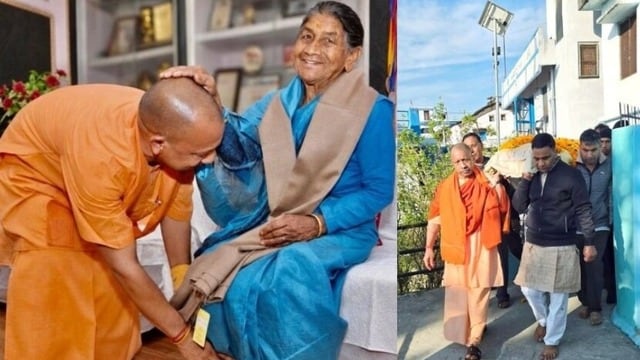
Because monastic discipline and administrative responsibilities kept Yogi Adityanath bound to Uttar Pradesh for years at a stretch, visits to his native village in Uttarakhand were rare and fleeting. Whenever he did return to Panchur—such as during his emotional visit in May 2022 after nearly five years away—the images of him touching his mother’s feet and sitting beside her in their ancestral courtyard resonated deeply with millions across India. In those brief, unguarded moments, the stern administrator gave way to a son listening attentively as Savitri Devi blessed him, inquired about his health, and offered simple home-cooked food. Following the passing of his father Anand Singh Bisht in April 2020—when Yogi Adityanath could not attend the funeral due to strict COVID-19 lockdown duties in Uttar Pradesh—Savitri Devi remained the sole surviving parental link to his childhood, making every rare meeting all the more precious.
When a Sannyasi’s Composure Gave Way to Silent Tears
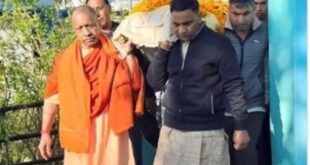
That lifelong restraint made the scenes from Panchur and Haridwar all the more moving for onlookers and residents across both states. Upon receiving news of his mother’s demise on Friday morning while fulfilling official commitments in Gorakhpur, Yogi Adityanath completed his scheduled address before travelling to his native village. Inside the ancestral home where he had once received bhiksha as a young ascetic, the Chief Minister broke down during the final darshan, wiping away tears before composing himself to shoulder his mother’s bier for the final journey toward Haridwar. Sharing a photograph of that solemn moment on social media alongside a Sanskrit verse from the Mahabharata declaring that there is no shade, refuge, protection, or love equal to that of a mother, he captured a truth felt by every child regardless of office or renunciation. Though monastic tradition meant his younger brother lit the funeral pyre at Moksh Dham in Chandi Ghat, the departure of Savitri Devi has left an irreplaceable void—marking the quiet end of a mother’s earthly blessings and the unconditional affection that shaped a son’s journey from the Garhwal hills to the heart of Uttar Pradesh.