North India Statesman
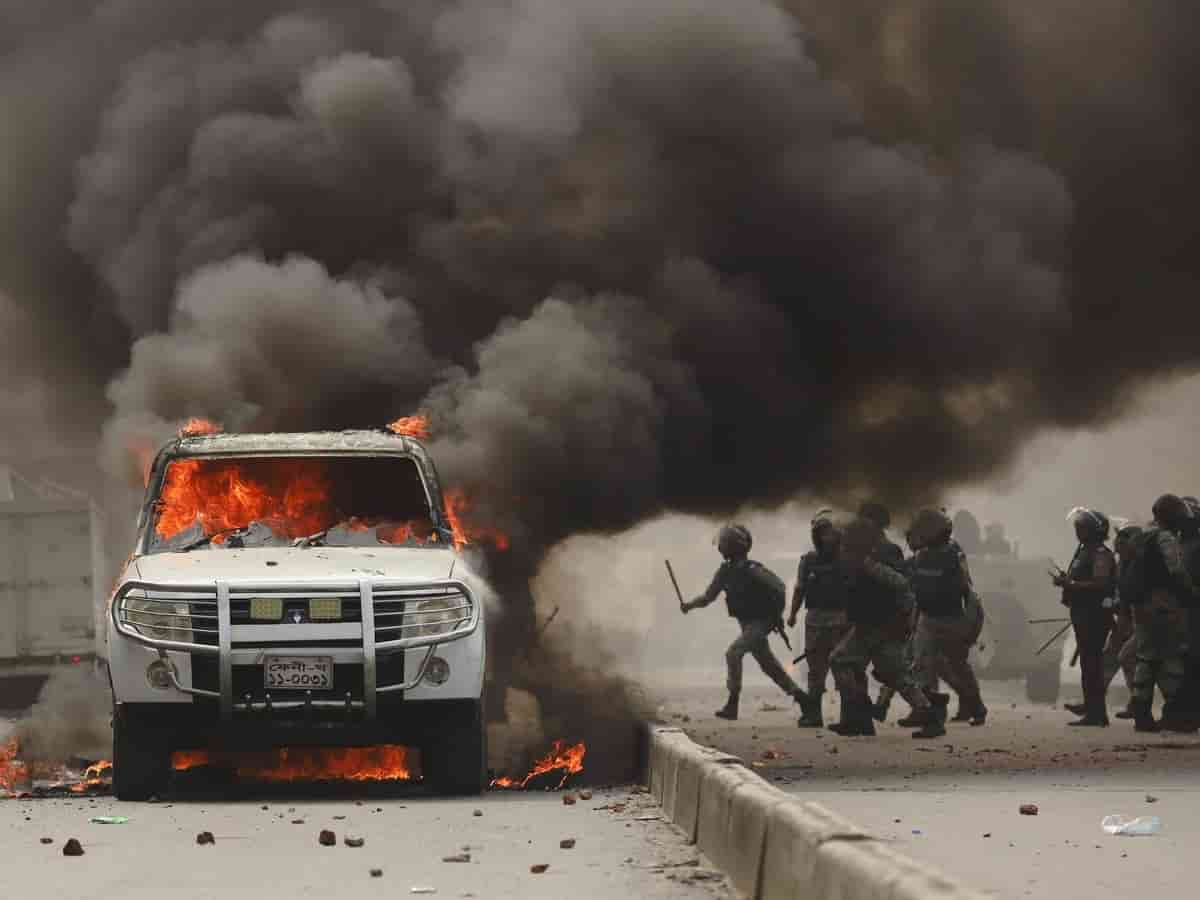
Fresh political turmoil has erupted across Bangladesh after unidentified arsonists set fire to the ancestral residence of Nobel laureate and former interim government chief adviser Professor Muhammad Yunus in Chattogram, intensifying an already volatile wave of street violence. The late-night attack occurred around 11:30 PM on Wednesday, November 18, 2026, at the three-storey family home located in the Panchlaish area of the port city. According to local police officials, a patrolling team spotted flames erupting from an unused, unoccupied ground-floor room on the eastern side of the building and quickly extinguished the blaze before it could spread to the upper floors, where the families of Yunus’s two brothers reside. While no casualties were reported inside the residence and local suspicion points toward petrol bombs being hurled at the property, the incident—coming alongside coordinated arson attacks on dozens of Grameen Bank branches—has triggered widespread alarm across Dhaka and New Delhi.
What Happened at Muhammad Yunus’s Residence in Chattogram?
Police Inspector Mozammel Haque, Officer-in-Charge of Panchlaish Police Station, confirmed to reporters on Thursday morning that swift intervention by patrol officers prevented a major tragedy at the historic residence. Because the ground floor was vacant at the time of the attack, the fire was contained before reaching the second and third storeys occupied by Yunus’s extended family. Visuals of the ground-floor room engulfed in flames circulated rapidly on social media overnight, prompting senior police officials to inspect the compound and deploy round-the-clock armed guards around the premises. Authorities have launched a formal investigation to identify the perpetrators behind the suspected petrol-bomb attack, though no arrests had been officially announced in connection with the Chattogram house fire by Thursday afternoon.
Why Has Fresh Violence Erupted Across Bangladesh?
The attack on Yunus’s ancestral home did not occur in isolation; rather, it unfolded on the eve of a nationwide dawn-to-dusk “lockdown” called for Thursday, November 19, by the banned Awami League. The shutdown was timed to coincide with the one-year anniversary of a special Bangladeshi tribunal verdict that sentenced former Prime Minister Sheikh Hasina to death in absentia over the deadly 2024 crackdown on student-led protests. Tensions have escalated sharply following Hasina’s recent public remarks from exile in India stating that she intends to return to Bangladesh in December 2026.
Over the past ten days, a wave of retaliatory arson, crude bomb explosions, and street clashes has swept multiple districts, posing a severe law-and-order test for Prime Minister Tarique Rahman’s Bangladesh Nationalist Party (BNP) government:
-
Targeted Attacks on Grameen Bank: Grameen Bank, the pioneering microfinance institution founded by Yunus, reported that at least 72 of its branches and offices across Sylhet, Rajshahi, Barishal, and Faridpur were targeted in arson or attempted fire attacks over the last ten days.
-
Fatal Clashes and Arson Across Districts: At least four people have been killed in recent political violence, including two BNP associate organisation leaders killed during an attack on a procession in Narail and a bus helper burned to death after passenger buses were torched in Pirojpur.
-
Attacks on Police Stations and Rival Leaders: In Sheikh Hasina’s home district of Gopalganj, protesters stormed and set fire to the Tungipara police station, freeing detainees and torched a local MP’s residence, while suspected rival activists attacked the Dhaka residences of two Awami League leaders.
India-Bangladesh Diplomatic Context and Yunus’s Past Remarks
For observers in India, the targeting of Muhammad Yunus carries heightened geopolitical significance given the strained bilateral atmosphere that marked his 18-month tenure as chief adviser of Bangladesh’s interim administration following Hasina’s ouster in August 2024. During his time in office, Yunus drew sharp criticism from New Delhi over repeated anti-India rhetoric, remarks questioning regional connectivity in India’s Northeast, and Dhaka’s handling of minority safety and border sensitivities. At the same time, Bangladesh’s Home Minister Salahuddin Ahmed told Parliament this week that exiled Awami League figures were using social media platforms from “across the border” to instigate unrest—an indirect reference to India, where Hasina has resided since August 2024 while Dhaka’s extradition request remains under legal review. As security forces deploy Border Guard Bangladesh (BGB) platoons across seven sensitive districts and tighten checkpoints throughout Dhaka, regional analysts warn that escalating street confrontation threatens both internal stability in Bangladesh and diplomatic calm across South Asia.