North India Statesman
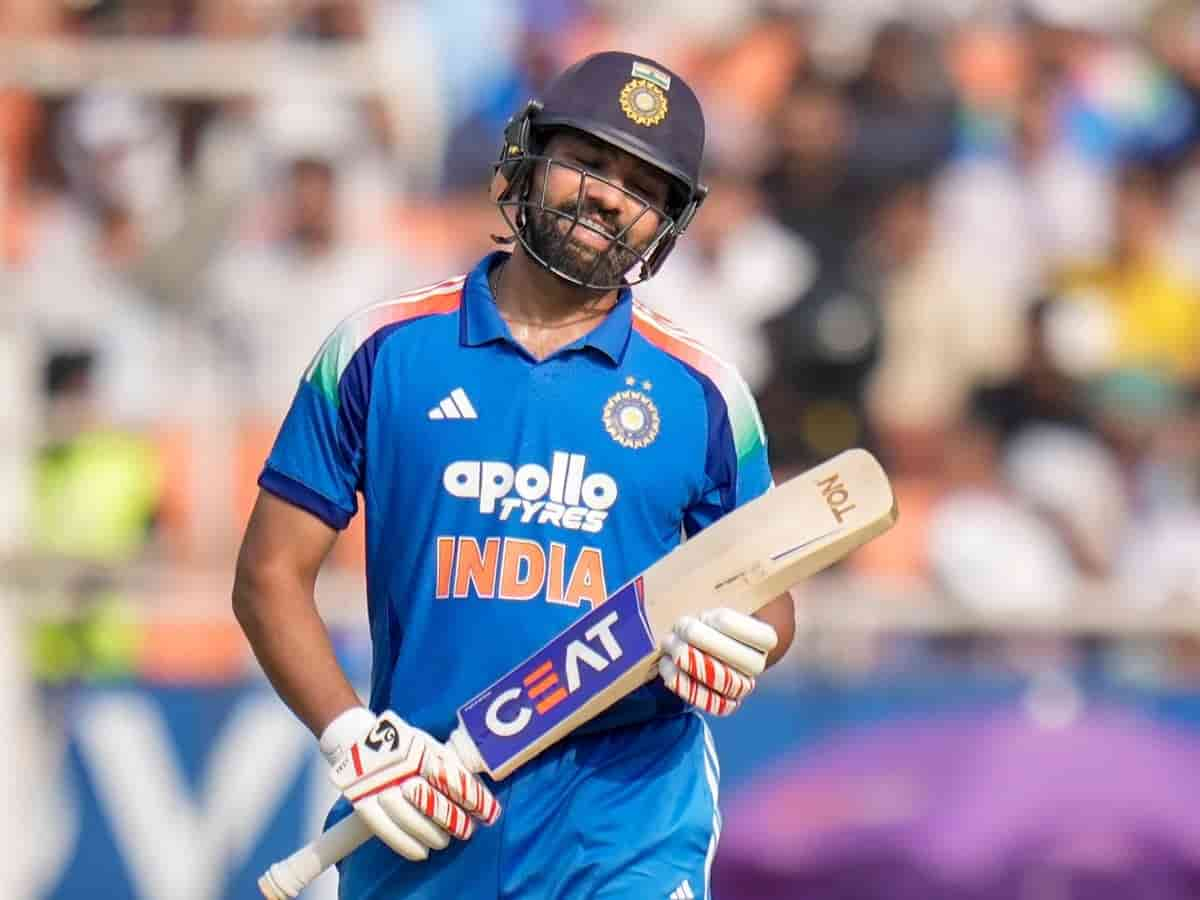
In a stunning early shock that silenced a packed home crowd, Indian captain Rohit Sharma was dismissed for a rare duck in One-Day Internationals, marking his first zero in the 50-over format in over three years. Known globally as the “Hitman” for his destructive white-ball exploits and effortless timing, the veteran opener’s stay at the crease was cut short abruptly in the opening overs. The man responsible for orchestrating the dismissal was none other than New Zealand’s towering speedster Kyle Jamieson, who once again proved why his awkward release angle and towering trajectory have turned him into one of the most persistent tactical nightmares for the Indian batting maestro across international formats.
The Rare Stumble: Inside Rohit Sharma’s First ODI Duck in Over Three Years
Rohit Sharma’s dismissal for a zero represents an extraordinary statistical rarity in modern international cricket. Prior to this encounter, the Indian skipper had maintained an enviable streak of uninterrupted run-scoring in ODIs, with his previous zero dating back to early 2021. For a batter who holds the world record for the highest individual ODI score of 264 and boasts three historic double-centuries in the format, walking back to the pavilion without opening his account sends shockwaves across the cricketing fraternity. Statistically, ducks are an extreme anomaly in Sharma’s prolific ODI ledger, which spans well over 10,000 career runs, making this sudden powerplay breakthrough by the Black Caps a headline-grabbing tactical triumph.
The Kyle Jamieson Kryptonite: Why the Tall Kiwi Pacer Perennially Troubles the Hitman
The tactical battle between Rohit Sharma and Kyle Jamieson has steadily evolved into one of the most compelling bowler-batter rivalries in contemporary cricket. Standing at an imposing height of 6 feet 8 inches, Jamieson extracts steep, natural bounce from traditional good-length areas that standard fast bowlers cannot replicate. When targeting Rohit, the Kiwi quick consistently exploits a precise technical channel on the fourth-stump line. By angling the ball in sharply from an exceptionally high release point and getting the seam to nip away slightly off the deck, Jamieson denies Rohit the room required to execute his signature horizontal-bat pull or punch through extra cover. This unique biomechanical advantage cramps Sharma for room, leaving him indecisive between playing on the front foot or defending deep inside his crease.
Tactical Parallels: Memories of the World Test Championship Final and Red-Ball Struggles
The dismissals orchestrated by Jamieson against Rohit are not isolated white-ball incidents; they are rooted in a proven blueprint established during red-ball encounters. Cricket historians and analysts quickly drew parallels to the historic 2021 ICC World Test Championship Final in Southampton, where Jamieson repeatedly tied down Rohit before trapping him with sharp seam movement and extra bounce. The tall Kiwi seamer has now dismissed the Indian opener multiple times across formats, maintaining an exceptionally tight economy rate and an extraordinarily high dot-ball percentage against him. Jamieson’s ability to generate rapid upward deviation forces Rohit to play with hard hands away from his body, creating frequent outside edges and mistimed aerial pokes toward the cordon and mid-wicket fielders.
High-Risk, High-Reward: Evaluating Rohit Sharma’s Ultra-Aggressive Powerplay Blueprint
This rare failure also brings renewed focus to Rohit Sharma’s radically aggressive batting philosophy that has defined India’s powerplay strategy since 2022. Rather than consuming initial deliveries to settle into his rhythm—a trademark method that defined the first decade of his career—Rohit has embraced a selfless, high-risk approach aimed at maximizing run-rates inside the mandatory first ten overs. While this tactical overhaul was pivotal in powering India to formidable totals in major tournaments, it inherently magnifies the probability of early dismissals against world-class seam attacks exploiting fresh morning pitch moisture. Facing a bowler of Jamieson’s calibre with the brand-new white ball requires razor-sharp defensive judgment, and any premature attempt to dominate the bowling before assessing the surface bounce elevates the vulnerability index for opening batters.
Technical Adjustments: How Global Fast Bowlers Target Rohit’s Early Inward Movement
Bowling analysts around the world have increasingly identified the first ten deliveries as the critical window to remove Rohit Sharma. In the initial phase of his innings, Sharma’s front foot occasionally commits straight down the track without opening his hips, making him susceptible to sharp incoming seamers as well as balls that hold their line from a tall angle. While genuine pace bowlers like Mitchell Starc and Shaheen Shah Afridi target his front-pad with dipping swing, tall hit-the-deck bowlers like Jamieson rely on uncomfortable chest-high elevation. When bowlers marry accurate line with awkward chest-level deviation, Rohit’s trademark backfoot swivel pull becomes a double-edged sword, resulting in mistimed top-edges or cramped defensive pushes that carry straight to short fielders.
What the Rare Failure Means for India’s Top-Order Stability and Overseas Campaigns
While a solitary duck after a three-year interval will not deter a seasoned veteran like Rohit Sharma, it serves as a timely tactical wake-up call for Team India’s management ahead of major ICC assignments and foreign tours. The dismissal underscores the enduring challenge Indian top-order batters face against tall overseas seamers on bouncy tracks. With upcoming tours against pace-heavy units like Australia and South Africa featuring fast, bouncy wickets, mastering early-over discipline against tall hit-the-deck operators remains paramount. For Rohit, recalibrating his balance against Jamieson’s awkward trajectory will be essential to ensuring that his aggressive powerplay template continues to yield match-winning dominance rather than premature setbacks.