North India Statesman
[ad_1]
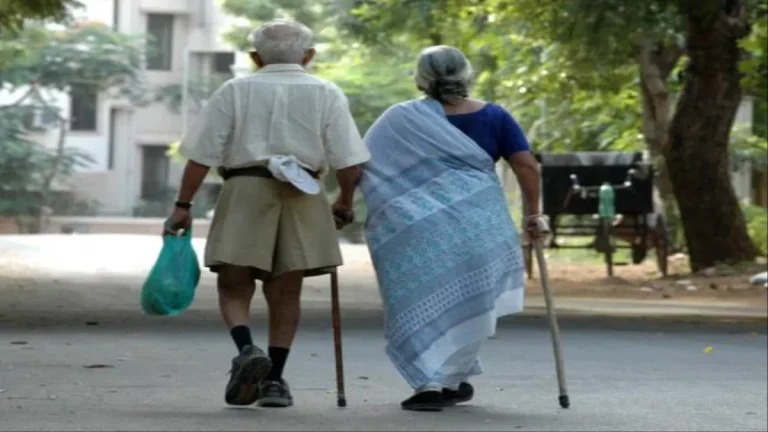
Nation respects elders: Recently the government has decided to include all the elderly above seventy years of age in the Ayushman Bharat scheme. Under this, about six crore senior citizens will get an insurance cover of Rs 5 lakh. The Central Government's scheme for the elderly is no coincidence. Four recently published reports have assessed the rapidly growing elderly population in the country. All these things have also attracted the attention of the Central Government.
The first of these reports is based on studies conducted by several Indian and international researchers. Their study has been published in the journal Plus One. This shows that today every fourth elderly person in the country is struggling with problems like weak memory, not using language properly, weak ability to think, understand and take decisions and facing difficulties in everyday work.
Another report by SBI states that the average age of India's working population is likely to increase to 28-29 years in 2024 compared to 24 years in 2021. Today the average working age in China is 39.5 years. Whereas in Europe it is 42 years, in North America it is 38 years and in Asia it is 32 years. Globally this average age is 30.4 years. The population of elderly, which was 7.9 crore in 2001, has increased to 15 crore in 2024.
This elderly population is 10.7 percent of the total population of the country. Of these, 7.7 crore are men and 7.3 crore are women. The working population which was 58.6 crore in 2001 is likely to be 91 crore in 2024. Thus, soon the share of working people will reach 67 percent of the total population of the country.
The third report of the Male and Female series is from the Statistics Ministry of the Central Government, which shows that the child and adolescent population of the country will decline rapidly by 2036. At the same time, the number of elderly and middle-aged people will increase. The percentage of people above 60 years of age in the current population is 9.5. At the same time, the population of elderly people will increase to 13.9 percent in 2036. The fourth report pertains to a statement given by Andrea Wojnar, the India chief of the United Nations Population Fund (UNFPA), in an interview.
According to him, in the next 25 years the number of people above 60 years of age in the country's population will increase to 20.8 percent. That means every fifth person in the country will be elderly. According to UNFPA, between 2024-2050 the total population of the country will increase by only 18 percent, but the population of elderly people will increase by 134 percent. As the number of elderly people in the country is increasing, the possibility of imbalance between the working youth and the elderly in the country is increasing.
Another noteworthy fact is that the population growth levels in developed countries like Japan, France, Germany, Australia and Britain have generally reached zero. Undoubtedly, in future the number of elderly people will increase and the working population will decrease which will automatically reduce the production. However, this is not the case in India.
The gist of the above four reports is that if the number of elderly people is increasing here, the number of working youth is also increasing to a great extent. Today, birth rates and population growth rates continue to decline in Brazil, Russia, India, and China. In the future, India will be the only country where its working and knowledge-driven young population will hoist its flag across the world.
Today, there is greater concern about the aging social structure in the country and the growing generation gap and population imbalance between the young and the old. If the energy, strength, enthusiasm and ability of the youth of the country will be useful to the country, then in the same proportion the long experience of the senior citizens of the country will also act as a shield for the safety of these youth.
Any country becomes great because of the people living there and these people later become important citizens of that great country, but the elderly citizens of a civilized country like India are forced to live a neglected life here. No political party in America and Europe dares to ignore the senior citizens there. In Europe and America a large part of the budget is spent on the social and economic welfare of the elderly.
While governments should increase their pension, there should also be a strong system for their socio-economic security, including concessions in rail and air travel, expansion of health services and ease of living a dignified life.
Remember that a society and nation which respects its senior citizens preserves its social capital for the present as well as for the bright future. The developed India we envision by the year 2047 will be realized only by striking a balance on the bridge of harmony between the long experience of the growing numerical strength of the senior citizens and the functional energy and strength of the youth.