North India Statesman
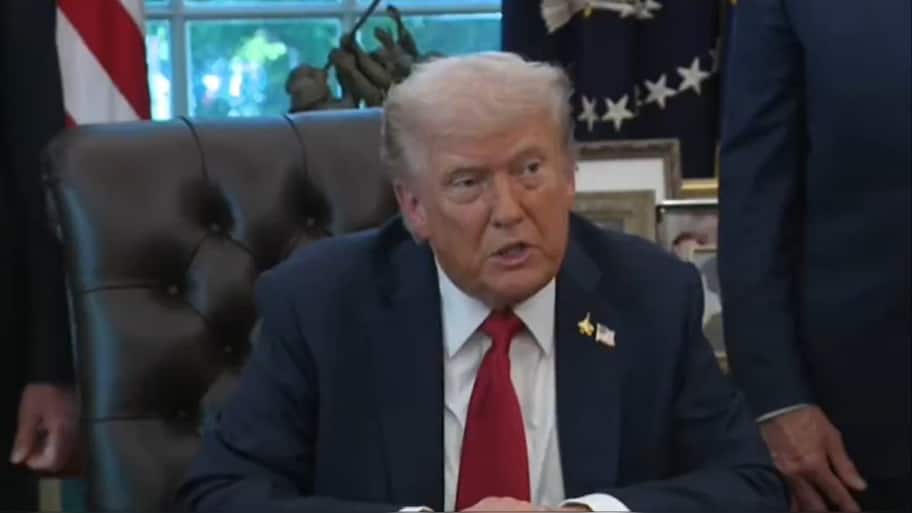
United States President Donald Trump has mounted a sharp defense of his administration’s sudden decision to bar three prominent news organizations—CNN, MS NOW, and Politico—from entering the White House grounds, asserting that the executive measure is an assault on “fake news” rather than an attack on constitutional press freedoms. Trump’s remarks on his Truth Social platform arrived shortly after the three targeted outlets mounted a joint legal challenge in the US District Court in Washington, accusing the administration of violating their First Amendment rights and arbitrarily interfering with independent journalism. The dispute marks an unprecedented escalation in presidential media restrictions and sets the stage for a critical constitutional battle over executive access and freedom of information.
Rejecting allegations of government overreach, Trump insisted on social media that he cherishes the free press while characterizing the targeted outlets’ editorial coverage as an out-of-control national security threat. Calling modern media misreporting a cancer that has spread across the country, the President claimed the coverage produced by the barred networks is corrupt, purposeful, pervasive, and coordinated. The confrontation has triggered fierce pushback from press freedom organizations, legal scholars, and network executives, who warn that penalizing reporters over unfavorable news coverage strikes at the heart of public accountability.
Ground-Level Confrontation at the White House Gates
The executive order took practical effect over the weekend when veteran correspondents from the three organizations arrived for routine coverage duties at the White House complex. Secret Service personnel and White House security staff turned away reporters—including Betsy Klein of CNN, Akayla Gardner of MS NOW, and Cheyenne Haslett of Politico—at the security perimeter and revoked their physical press credentials.
The sudden revocation caused immediate disruption to the White House television pool, a long-standing rotating mechanism managed by major television networks to share pooled video feeds of the President’s public events, movements, and travels where space constraints prevent the entire press corps from being present. In response to the gate-side expulsions, the three newsrooms declared that they would not be intimidated by executive pressure and would continue reporting on administration policies, executive orders, and federal governance from outside the physical premises while seeking judicial relief.
The Joint First Amendment Lawsuit
Within hours of being locked out, CNN, MS NOW, and Politico released a joint legal statement confirming the filing of an emergency federal lawsuit against the Trump administration. The legal filing asserts that revoking journalists’ credentials without prior written notice, standard administrative procedure, or due process violates core constitutional protections established by long-standing judicial precedent.
The newsrooms emphasized that the government has no legal authority to dictate what independent journalists investigate, publish, or broadcast. Legal analysts have pointed to the landmark 1977 federal appellate ruling in Sherrill v. Knight, which affirmed that while the executive branch can control administrative logistics, once press facilities are established, the White House cannot revoke an individual reporter’s access arbitrarily or on the basis of political viewpoint and news content.
Warnings of Further Press Restrictions
Far from walking back the restrictions, President Trump has signaled that additional media houses could soon find themselves expelled from the West Wing briefing rooms. The President reiterated that media outlets should not be permitted to report what he described as lies and fiction when covering the administration, the presidency, or national affairs, promising that other news entities would follow if their reporting fails his administration’s standards.
As federal judges in Washington prepare to take up emergency filings concerning credential restoration, the standoff threatens to fundamentally alter daily interactions between executive leadership and the Washington press corps, raising urgent questions over the limits of executive power in managing public transparency and independent oversight.