North India Statesman
[ad_1]
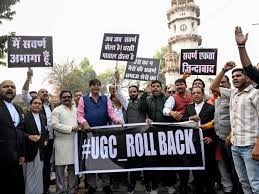
News India Live, Digital Desk: Protests by upper caste organizations have intensified in many states of the country, especially Uttar Pradesh and Bihar, regarding the new rules of the University Grants Commission (UGC). The main reason for the protest is regarding the formation of committees to investigate complaints. A section of the upper caste community fears that they will not be represented in these committees and through this, fake complaints can be filed.
However, on a closer study of the UGC regulations, the picture appears somewhat different. Let’s know what it is ‘Equity Committee’ And what are the provisions regarding representation of upper castes in it.
What is Samata Samiti and its constitution?
According to UGC rules, every higher educational institution will have an ‘Equal Opportunity Centre’, under which parity committee Will be formed. This committee will investigate complaints of discrimination and work for the welfare of disadvantaged groups.
Composition of the Committee (Total 10 members):
Ex-officio Chairman: Head of the institution (Director or Vice Chancellor).
Ex-officio Secretary (Coordinator): A senior professor or faculty member.
Member: Three professors or senior faculty members.
Non-Teaching Staff: An employee of the institute.
External representative: Two persons from the society with professional experience.
Special Invited Student Members: Two student representatives (their tenure will be 1 year).
Mathematics of representation: Will the upper castes be left out?
Amidst the opposition, it is important to clarify that the structure of the committee is inclusive:
Mandatory Representation: It is mandatory for 5 out of 10 members to be from OBC, SC, ST, women and disabled categories.
Remaining 5 members: There is no restriction of caste or class for the remaining 5 posts. The head of the institute, at his discretion, can give place to experienced professors or representatives of the upper caste community.
Women and Disabled Quota: Women and disabled members can belong to any caste (including upper caste). Therefore, technically representation of the upper castes is completely possible.
How will this committee work?
Tenure: Tenure of key members 2 years Will be of.
Meetings: at least a year twice The meeting is mandatory.
Review: The committee will review all the cases received in the last half year, the progress of investigation and the cases referred to other committees.
Quorum: Except for members specially invited to the meeting, at least 4 members Presence is necessary.
‘Samta Helpline’: 24-hour complaint facility
Section 6 of UGC Rules for prompt action against discrimination ‘Samta Helpline’ There is provision for.
this helpline 24 hour Will work.
the complainant should identity confidential He will have full right to keep it, so that he does not have to face any kind of harassment.