North India Statesman
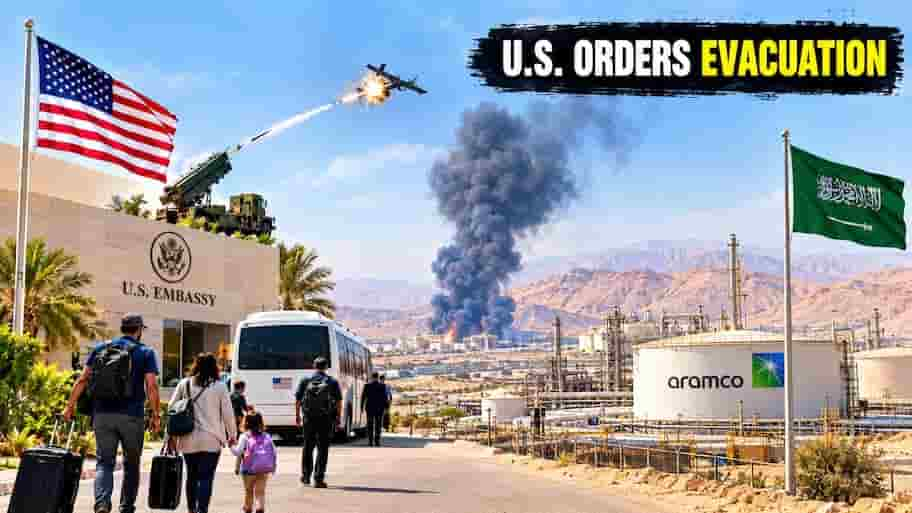
The United States Department of State has formally instructed non-emergency government personnel and their family members stationed across Saudi Arabia to depart the country immediately. The high-level directive comes in response to a sharp surge in armed cross-border hostilities, including lethal drone and missile attacks launched by Yemen’s Iran-aligned Houthi forces targeting strategic infrastructure and civilian transport hubs across the kingdom. State Department spokesperson Tommy Pigott confirmed the departure order, emphasizing that the physical security of American diplomatic staff and their dependents remains Washington’s primary concern. Diplomatic sources also indicate that missions in neighboring Gulf countries are closely reviewing risk profiles, with family evacuation protocols actively under assessment for several regional posts.
Fatal Interception at Aramco’s Shaybah Facility: Casualties and Impact
The immediate trigger for the diplomatic order centers on a lethal drone incident targeting infrastructure near Saudi Aramco’s strategic Shaybah oilfield in southeastern Saudi Arabia. According to the Saudi Energy Ministry, royal air defense units successfully intercepted an incoming unmanned aerial vehicle aimed at the energy site. However, heavy falling debris from the mid-air blast struck a contractor vehicle operating just outside the operational perimeter, sparking an intense fire. The impact resulted in the tragic deaths of two foreign workers—one Filipino and one Nepali national—while leaving two others, an Indian and a Pakistani national, injured. While Saudi authorities confirmed that core processing units suffered no structural damage and crude operations continued uninterrupted, the fatal collateral impact demonstrated the severe operational hazards posed even by intercepted aerial munitions.
Coordinated Attacks on Critical Infrastructure and Civilian Hubs
The strike near Shaybah forms part of an expansive, multi-pronged aerial offensive against key logistics and transit hubs across the Arabian Peninsula. Shortly following the diplomatic announcement, Saudi civil aviation officials confirmed a separate assault on King Fahd International Airport in Dammam, which claimed one life and left eight people wounded. Earlier security advisories released by the US Embassy in Riyadh had cautioned American citizens about heightened threats to civilian aviation networks, international flight schedules, and metropolitan centers. By repeatedly directing low-flying loitering munitions toward civilian airports and energy nodes, Houthi military units have escalated the operational burden on regional air defense grids, causing major logistical ripples across global commercial transport lanes.
Widening Regional Strains: Collapse of the Yemen Truce
The sudden spike in strikes reflects a broader, dangerous collapse of security arrangements on the Arabian Peninsula. Following the breakdown of the multi-year UN-administered truce earlier this year, combat between Houthi units and coalition forces has erupted with renewed ferocity across northern and western Yemen. The renewed fighting has intersected directly with broader geopolitical frictions in the Middle East, reigniting concerns over maritime chokepoints, international tanker safety in the Red Sea, and the sustained security of critical energy extraction corridors. With deterrence fraying and cross-border exchanges accelerating, international analysts warn that prolonged confrontations could trigger secondary energy price shocks and draw regional actors deeper into open conflict.
Safety Protocols and Advisory for Expatriates
As security alerts remain active throughout Saudi Arabia, Western diplomatic posts and foreign embassies—including missions from South and Southeast Asia—have urged their citizens to exercise extreme vigilance. Foreign nationals and industrial contractors stationed near oil installations, defense clusters, and international border areas are advised to limit non-essential travel, stay apprised of official civil defense alerts, and familiarize themselves with protective sheltering procedures. While the US departure order is currently limited to non-emergency embassy personnel and their dependents, diplomatic observers warn that continued attacks on civilian installations could prompt broader travel warnings and operational restrictions across the Gulf.