North India Statesman
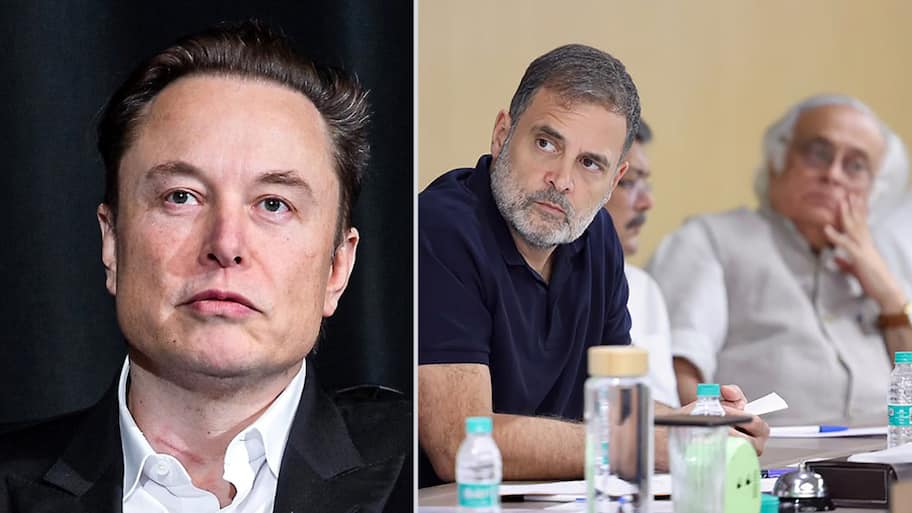
A sudden digital interaction between Leader of Opposition in the Lok Sabha Rahul Gandhi and SpaceX chief Elon Musk has triggered political debate across India’s telecom and political landscape. The exchange unfolded after Musk publicly questioned why Starlink remains without a commercial operating licence in India despite spending five years working through regulatory compliance. In a post on X, Musk went further, asking: “Is Ambani the real boss of India?” and alleging that foreign satellite players are being delayed by domestic conglomerates seeking to maintain a “monopolistic chokehold” on connectivity. Seizing on Musk’s grievance, Rahul Gandhi issued a cryptic one-line response: “Welcome to India, Elon. Wait till you discover the other guy”. Within an hour, Musk replied back: “Thank you, Rahul. This is indeed troubling,” turning a commercial telecom dispute into a national political talking point.
The Subtext: Opposition Leans into the Monopoly Critique
Gandhi’s brief retort immediately caught the attention of policy observers due to the underlying political repositioning it suggests. For years, the Congress party’s primary critique of industrial policy has centered on allegations of crony capitalism and concentrated market power in key sectors such as ports, airports, and telecommunications. By nudging Musk toward “the other guy”—an apparent reference to Gautam Adani alongside Mukesh Ambani—the Congress leadership sought to validate its core political campaign against corporate duopolies through the words of the world’s richest entrepreneur. Rather than questioning the security risks or data sovereignty concerns traditionally associated with foreign low-Earth orbit (LEO) satellite constellations, the principal opposition party used Musk’s frustration to reinforce its argument that regulatory frameworks in India disproportionately favor select domestic conglomerates.
The Counter-Critique: Shifting Stances and Domestic Protectionism
The exchange, however, quickly drew pushback from political opponents and industry analysts, who highlighted inconsistencies in the opposition’s stance. Ruling party leaders pointed out that the Congress had previously raised concerns about foreign multi-billionaires and overseas tech dominance encroaching on critical sovereign sectors. Critics questioned the logic of aligning with an American tech magnate whose global commercial footprint often clashes with domestic national interest priorities. Furthermore, detractors noted the irony of an opposition leader appearing to advocate for an international commercial entrant against home-grown enterprises that employ hundreds of thousands of domestic workers and have built extensive digital infrastructure across the subcontinent.
The Reality of India’s Satcom Approvals: Security and Spectrum Rules
Behind the sharp online rhetoric lies a complex, multi-tiered regulatory framework governing satellite communications in India. The central government and the Department of Telecommunications (DoT) have firmly rejected allegations of discrimination, clarifying that statutory rules apply equally to all players. To date, the DoT has granted provisional satellite licenses and spectrum authorisations to three key entities: Musk’s Starlink, Reliance Jio’s satellite venture Jio Space Technology, and the Bharti Airtel-backed Eutelsat OneWeb. None of these three operators have been granted final commercial clearance to transmit live signals to retail consumers. Minister of State for Communications Dr. Chandra Sekhar Pemmasani confirmed that Starlink’s commercial clearance is currently under statutory security evaluation with the Ministry of Home Affairs (MHA). The scrutiny covers data localization norms, lawful interception protocols, and terminal security verification—safeguards that Indian regulators mandate for any foreign communications network operating within domestic borders.
The High-Stakes Battle for India’s Digital Frontier
The skirmish underscores the high commercial stakes surrounding India’s untapped satellite broadband market. While terrestrial fiber and 5G networks cover urban clusters, millions of citizens residing in rugged Himalayan regions, dense forests, and isolated islands depend on satellite relays to bridge the digital divide. The debate over whether to assign satellite spectrum via administrative allocation or open public auctions previously saw global players like Starlink and Amazon Kuiper lock horns with domestic telecom operators. As the central government finalizes pricing mechanisms and completes security vetting, the clash between Elon Musk and Indian corporate stalwarts—now amplified by top political leaders—illustrates how digital infrastructure, national security, and big-ticket geopolitics are intersecting in modern India.