North India Statesman
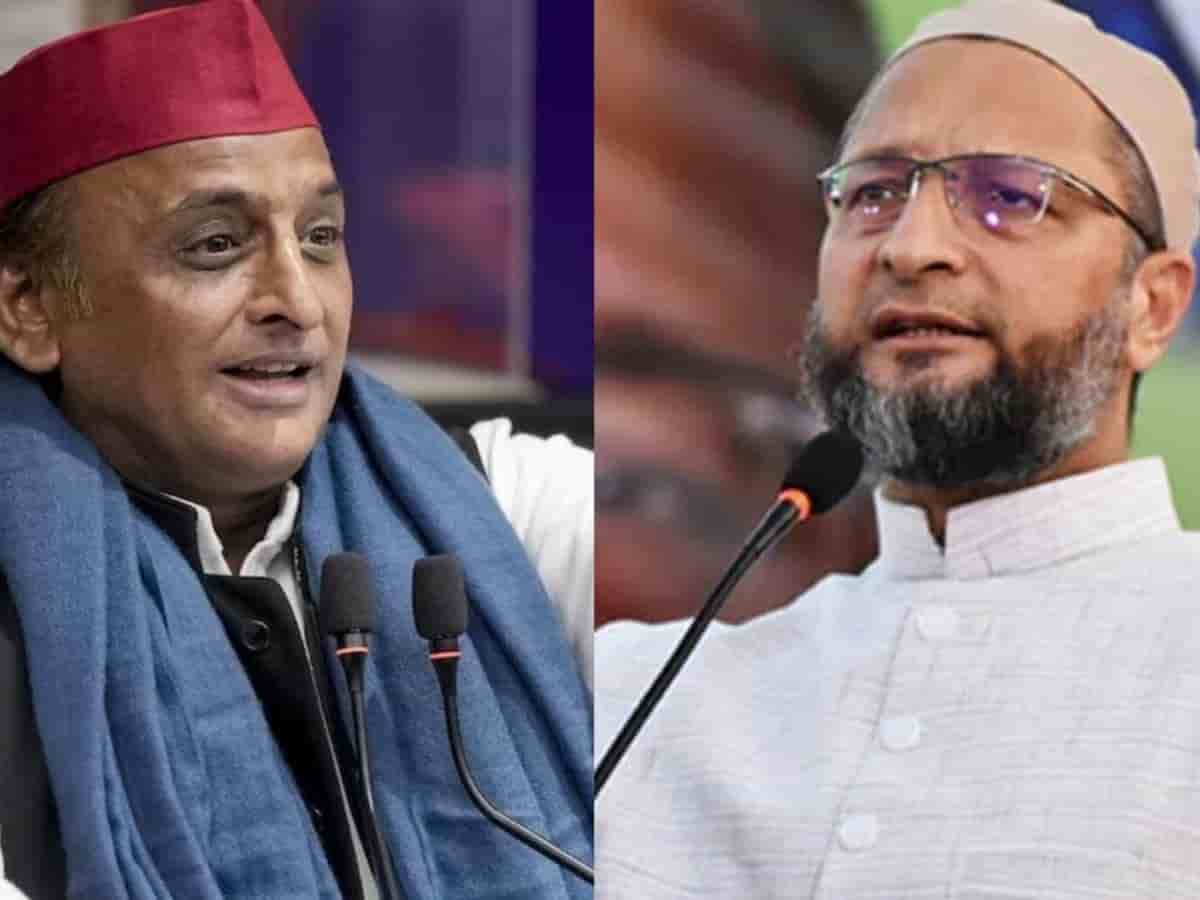
The electoral landscape in Uttar Pradesh is witnessing a calculated realignment as Asaduddin Owaisi’s All India Majlis-e-Ittehadul Muslimeen (AIMIM) zeroes in on traditional Samajwadi Party (SP) bastions. Rather than scattering resources across the state, AIMIM’s recent rallies, ground workers’ conventions, and public addresses are deliberately concentrated in districts with significant minority concentrations—such as Bahraich, Sambhal, Azamgarh, Rampur, Moradabad, and Kanpur. By focusing its organizational muscle on these long-standing strongholds of Akhilesh Yadav, AIMIM is openly positioning itself to test the durability of the SP’s core electoral foundation.
The Direct Rhetoric: Questioning Political Representation and Dependency
During these aggressive ground campaigns, Owaisi has sharply escalated his rhetoric against the Samajwadi Party leadership. The central theme of his speeches revolves around political autonomy, arguing that minority communities have historically acted as a reliable vote bank for regional parties without receiving proportional executive representation or enduring empowerment in return. By invoking local grievances, educational backlogs, and community representation, AIMIM is attempting to plant seeds of doubt among younger demographics. The party urges voters to move beyond legacy political dynasties and cultivate independent political voices instead of remaining locked into cyclical dependency.
Akhilesh Yadav’s Counter-Strategy: The PDA Formula Under Fire
For SP chief Akhilesh Yadav, this targeted offensive presents a strategic headache. The Samajwadi Party’s state strategy relies heavily on the “PDA” formula—uniting Pichhda (backward classes), Dalit, and Alpsankhyak (minorities)—which proved instrumental during recent state and parliamentary elections. While the SP leadership frequently dismisses AIMIM as a vote-splitting entity that inadvertently advantages the ruling Bharatiya Janata Party (BJP), Owaisi’s concentrated presence in tight, triangular contests carries genuine disruption potential. Even a marginal percentage swing or localized fracture in high-density constituencies could tilt closely contested assembly segments, complicating the SP’s arithmetic.
The Regional Realities and Historical Electoral Hurdles for AIMIM
Despite the loud footfall at Owaisi’s rallies, translating enthusiasm into assembly seats remains an uphill climb in Uttar Pradesh. In past assembly contests, AIMIM struggled to breach significant vote-share thresholds, as tactical voting largely favored the strongest anti-incumbency vehicle on the ground. Many local community leaders and regional analysts note that voters in Uttar Pradesh remain pragmatic when assessing bipolar electoral dynamics. Unless AIMIM can forge viable local community pacts or field widely credible grassroots faces, its localized surge risks functioning primarily as a spoiler rather than resulting in direct legislative conversions.
Can Owaisi Realistically Dent the SP’s Core Math?
The brewing friction between the Samajwadi Party and AIMIM reveals a deeper battle for narrative control across Uttar Pradesh’s political landscape. While Akhilesh Yadav maintains a formidable, multi-caste alliance framework backed by robust rural organization, Owaisi’s aggressive penetration into SP strongholds ensures that the Samajwadi Party cannot take its minority support for granted. With the election cycle intensifying, the SP will need to deploy senior regional leaders and address local discontent swiftly to maintain its defensive perimeter, while AIMIM continues its bid to carve out an indispensable third front in heartland politics.