North India Statesman
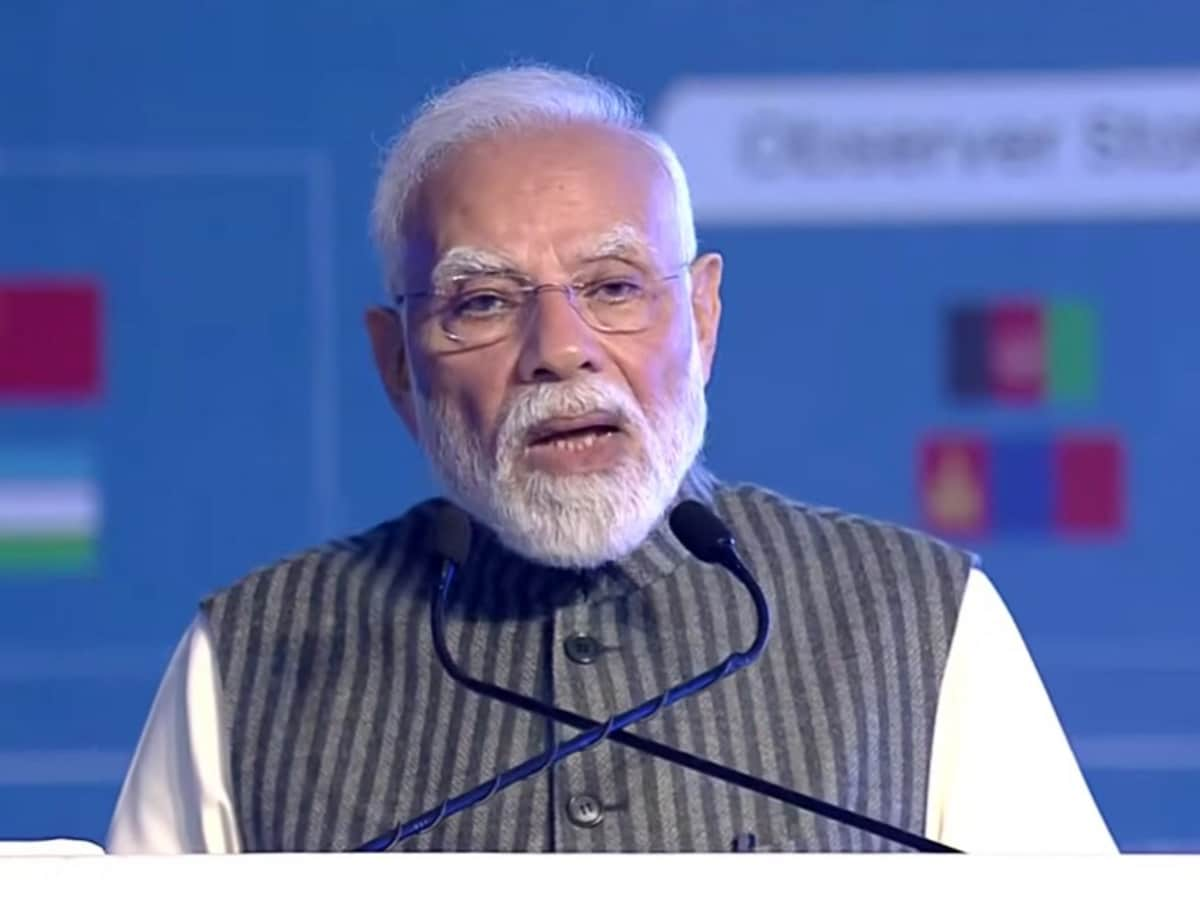 Amid ongoing geopolitical conflicts and global uncertainty, Prime Minister Narendra Modi on Friday, November 20, 2026, underscored the enduring power of shared heritage by declaring that cultural connectivity remains the strongest guarantee for global peace.Inaugurating the historic First Shanghai Cooperation Organisation (SCO) Civilisational Dialogue Forum against the atmospheric backdrop of Purana Qila in New Delhi, the Prime Minister contrasted global discussions dominated by war and unrest with India’s initiative to bring Eurasian nations together through dialogue. Addressing delegates, scholars, and cultural representatives from across SCO member states, Modi emphasized that while the grouping has steadily expanded cooperation in security, trade, and physical connectivity, lasting stability across Eurasia depends on reviving deep people-to-people bonds. Hosting the inaugural forum in the national capital, he noted, marks the beginning of a new institutional tradition aimed at offering moral and cultural direction to a fractured world.
What Did Prime Minister Modi Say About Ancient Trade and Shared Heritage?
Tracing the historical roots of Eurasian interdependence, Prime Minister Modi reminded the gathering that the bonds linking SCO nations stretch back nearly five millennia. He pointed to ancient commercial exchanges between the Indus Valley Civilisation and Mesopotamia as the earliest chapters of a vast network that later connected India, China, Central Asia, and wider Eurasia. Along those storied overland and maritime corridors, merchants did not travel alone—they were accompanied by scholars, philosophers, travellers, and Buddhist monks who carried ideas, languages, scripts, and spiritual traditions across borders. According to the Prime Minister, those centuries of peaceful exchange laid a civilisational foundation that modern geopolitical boundaries cannot erase. Drawing upon India’s timeless ethos of Vasudhaiva Kutumbakam—the world is one family—he observed that the SCO Civilisational Dialogue Forum is far more than a ceremonial gathering, describing it as a living platform capable of guiding global harmony.
How Does India Plan to Use Modern Technology to Preserve SCO Heritage?
Looking beyond history toward the future, Prime Minister Modi outlined a forward-looking roadmap that blends twenty-first-century innovation with ancient preservation. Highlighting that thousands of years of priceless artefacts, manuscripts, and artistic treasures are currently housed in museums, libraries, and archives across SCO countries, he proposed developing collaborative institutional frameworks to safeguard and digitize this shared legacy. Specifically, Modi suggested leveraging modern digital tools and artificial intelligence-assisted translations to make rare historical collections accessible to younger generations across member states. He also urged academic institutions in India and partner nations to pursue joint research projects exploring shared traditions in music, architecture, cuisine, traditional games, and monastic trails. By connecting young researchers and citizens in cities from New Delhi, Varanasi, and Kolkata to Tashkent, Samarkand, Bishkek, and Beijing, India aims to transform passive historical memory into active cultural diplomacy.
What Is the Significance of the First SCO Civilisational Dialogue Forum in New Delhi?
The three-day forum, running from November 20 to 22, 2026, represents the culmination of a diplomatic initiative first proposed by Prime Minister Modi during the 2025 SCO Summit in Tianjin, China, and subsequently endorsed by member states in the Bishkek Declaration. Following Defence Minister Rajnath Singh’s formal announcement of India’s hosting plans at the SCO Council of Heads of Government meeting in Dushanbe in October 2026, New Delhi curated an immersive cultural showcase at the historic Purana Qila complex. Friday’s opening ceremony featured “Civilisations in Conversation,” a multidisciplinary presentation weaving together classical music, dance, narration, and visual storytelling to trace cultural intersections across Asia. Visitors and international delegates are also exploring “ASTITVA – The Essence of Our Existence,” a specially curated exhibition highlighting India’s archaeological, artistic, and literary continuum, alongside four thematic academic sessions scheduled over November 21 and 22.
Why Does Cultural Diplomacy Matter for India’s Broader SCO Strategy?
Foreign policy observers in New Delhi note that the Civilisational Dialogue Forum complements India’s broader three-pillar vision for the Shanghai Cooperation Organisation—Security, Connectivity, and Opportunity—articulated by Modi at the 26th SCO Summit in Bishkek earlier this year. While New Delhi continues to push firmly within the bloc for zero tolerance against cross-border terrorism, resilient supply chains, and regional economic integration, cultural diplomacy provides a non-controversial bridge that builds mutual trust among diverse Eurasian societies. As the SCO celebrates its 25th anniversary milestone in 2026, India’s effort to institutionalize civilisational dialogue reinforces its role as a constructive consensus-builder in the Global South. By placing shared human heritage at the center of regional statecraft, Prime Minister Modi sent an unmistakable message from Purana Qila: sustainable peace is built not merely through treaties, but through the enduring bonds of culture and civilisation.