North India Statesman
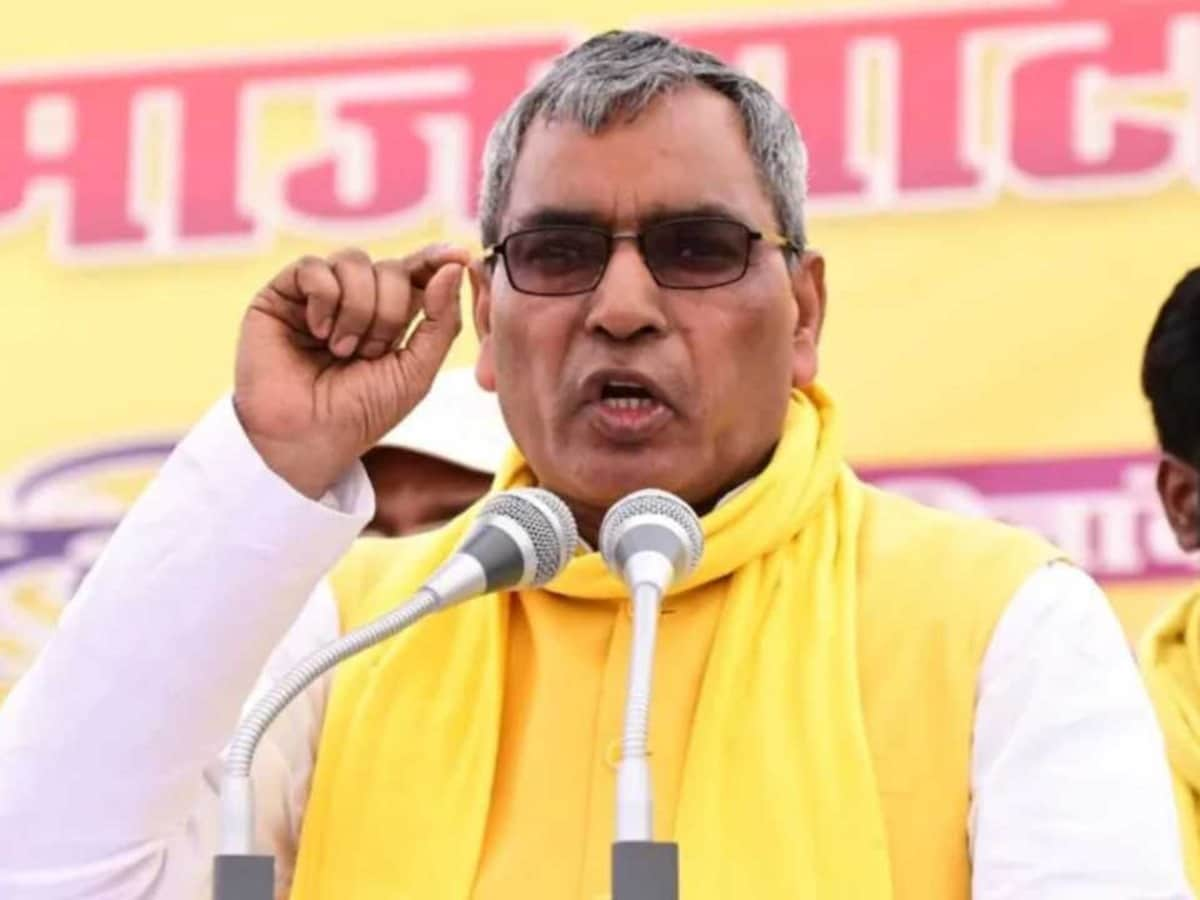
The outcome of the Uttar Pradesh Legislative Council (MLC) elections delivered a major psychological jolt to the ruling National Democratic Alliance (NDA) in Prime Minister Narendra Modi’s parliamentary constituency of Varanasi. In a stunning sweep, the opposition Samajwadi Party (SP) captured both the Varanasi Division Teachers’ and Varanasi Division Graduates’ constituencies. While the opposition quickly framed the double defeat as a referendum on state governance and a direct precursor to the 2027 Uttar Pradesh Assembly elections, Uttar Pradesh Cabinet Minister for Panchayati Raj and Suheldev Bharatiya Samaj Party (SBSP) chief Om Prakash Rajbhar offered an unconventional defense. Speaking to reporters, Rajbhar dismissed the loss as insignificant for mainstream politics, remarking: “It is the mandate of the educated people; it is not the vote of the general public. We welcome whatever mandate has come, but these are votes of the educated class, not the common masses”. The statement ignited fierce debates across Uttar Pradesh, with political analysts decoding four primary dimensions behind his reasoning.
Decoding the Arithmetic: Council Electorates vs. Mass Rural Assembly Voters
At a technical level, Rajbhar sought to highlight the distinct statutory difference between a general assembly election and a Legislative Council election. In assembly or Lok Sabha polls, universal adult franchise applies, giving every citizen over 18 years of age an equal vote. In sharp contrast, MLC Teachers’ and Graduates’ constituencies feature a heavily restricted electoral roll. Only registered teachers with prescribed minimum tenure can vote in the Teachers’ quota, while only formally enrolled degree holders can cast ballots in the Graduates’ quota. Rajbhar pointed out that in typical rural villages with 2,000 to 4,000 residents, barely 5 to 50 people meet the eligibility criteria to register as voters in an MLC graduates’ poll. By emphasizing this demographic gap, Rajbhar attempted to convince alliance cadres that a setback among a microscopic, elite segment does not reflect any erosion of the NDA’s sprawling rural base.
Refusing the ‘Semi-Final’ Narrative: The Voting Day Holiday Jibe
Rajbhar’s primary political objective was to dismantle the Samajwadi Party’s celebratory narrative that the Varanasi verdict serves as a semi-final for the 2027 state elections. Dismissing any direct electoral correlation between the two, Rajbhar took a sharp swipe at urban voter turnout habits. He asserted that the salaried and degree-holding demographic that turned out for the MLC ballot often stays home to enjoy a holiday on general assembly polling days, while the daily-wage workers, farmers, and underprivileged villagers form the real queues at election booths. Because the NDA’s electoral machinery relies heavily on grassroots rural mobilization, Rajbhar argued that the council outcome provides zero actionable insight into how the broader electorate will vote when general assembly polling stations open.
The Beneficiary Firewall: Why the NDA Relies on the ‘Labharthi’ Base
By deliberately separating the “educated class” from the “common public,” Rajbhar reinforced his party’s traditional political identity. As a regional leader claiming to represent extremely backward classes (EBCs), rural laborers, and marginalized communities, Rajbhar believes the ruling coalition’s foundational strength lies in the vast Labharthi (welfare scheme beneficiary) network. In his political assessment, welfare interventions—such as free food grain distributions under PMGKAY, direct cash transfers via PM-Kisan Samman Nidhi, subsidised housing, and law-and-order crackdowns on local mafias—firmly anchor the underprivileged majority to the leadership of Chief Minister Yogi Adityanath and Prime Minister Narendra Modi. Even if white-collar urban professionals lean toward the opposition, Rajbhar remains confident that the welfare-dependent rural poor will preserve the NDA’s legislative majority.
Unintended Admission: Public Sector Discontent Over OPS and Jobs Exposed
Despite Rajbhar’s efforts to downplay the setback, political observers noted that his statement inadvertently highlighted deep-seated discontent among educated and salaried voters. The sweeping victories of Samajwadi Party candidates Lal Bihari Yadav in the Teachers’ seat and Ashutosh Sinha in the Graduates’ seat were powered by concrete policy grievances. Government teachers and state employees have organized sustained protests demanding the restoration of the Old Pension Scheme (OPS), regularization of non-aided (vitt-viheen) educators, and timely service benefits. Concurrently, educated degree holders and young graduates have voiced frustration over delayed recruitment cycles, paper-leak controversies, and contractual hiring models. By admitting that educated voters turned away from the ruling alliance, Rajbhar inadvertently validated the opposition’s claim that intellectual, administrative, and youth demographics are pushing back against current policy directions.
Fierce Backlash: Samajwadi Party and Opposition Accuse NDA of Mocking Education
Rajbhar’s remarks triggered immediate outrage from opposition parties across Lucknow and New Delhi. Samajwadi Party and Congress spokespersons condemned the statement, questioning whether the ruling coalition now considers educated citizens as adversaries. Opposition leaders asked if the NDA believes educated youth and respected educators are disconnected from the “real public,” arguing that when doctors, engineers, university professors, and degree holders reject an administration, it indicates governance fatigue. While Om Prakash Rajbhar intended his statement as a mathematical defense of NDA voter demographics, the controversial remark has generated an unintended political controversy, handing the opposition fresh ammunition to question the government’s rapport with Uttar Pradesh’s educated middle class.