North India Statesman
Across the cultural heartland of Northern and Central India, from the vibrant markets of Delhi NCR and Punjab to the festive courtyards of Uttar Pradesh, Rajasthan, and Madhya Pradesh, Karwa Chauth stands as one of the most revered observances of devotion and marital longevity. On this sacred Chaturthi of the Krishna Paksha in the month of Kartik, married women observe a strict nirjala (waterless) fast from sunrise until the moon graces the night sky. While the fast tests spiritual endurance, the evening puja serves as the spiritual anchor of the entire celebration. Astrologically and ritualistically, the puja must be performed within a highly specific cosmic window known as the Pradosh Kaal. This year, Vedic panchang calculations determine the prime puja muhurat to last precisely 1 hour and 17 minutes, spanning early evening twilight just after sunset. Participating in the rituals during this designated 1-hour and 17-minute timeframe is believed to align the devotee’s sankalpa with divine frequencies, maximizing blessings of harmony, health, and uninterrupted companionship. Engaging in prayer outside this window compromises the sanctity of traditional timekeeping, making it vital for observers across every city to organize their preparatory arrangements well before the auspicious planetary alignment begins.
Essential Preparation: Arranging the Sacred Puja Space and Altar
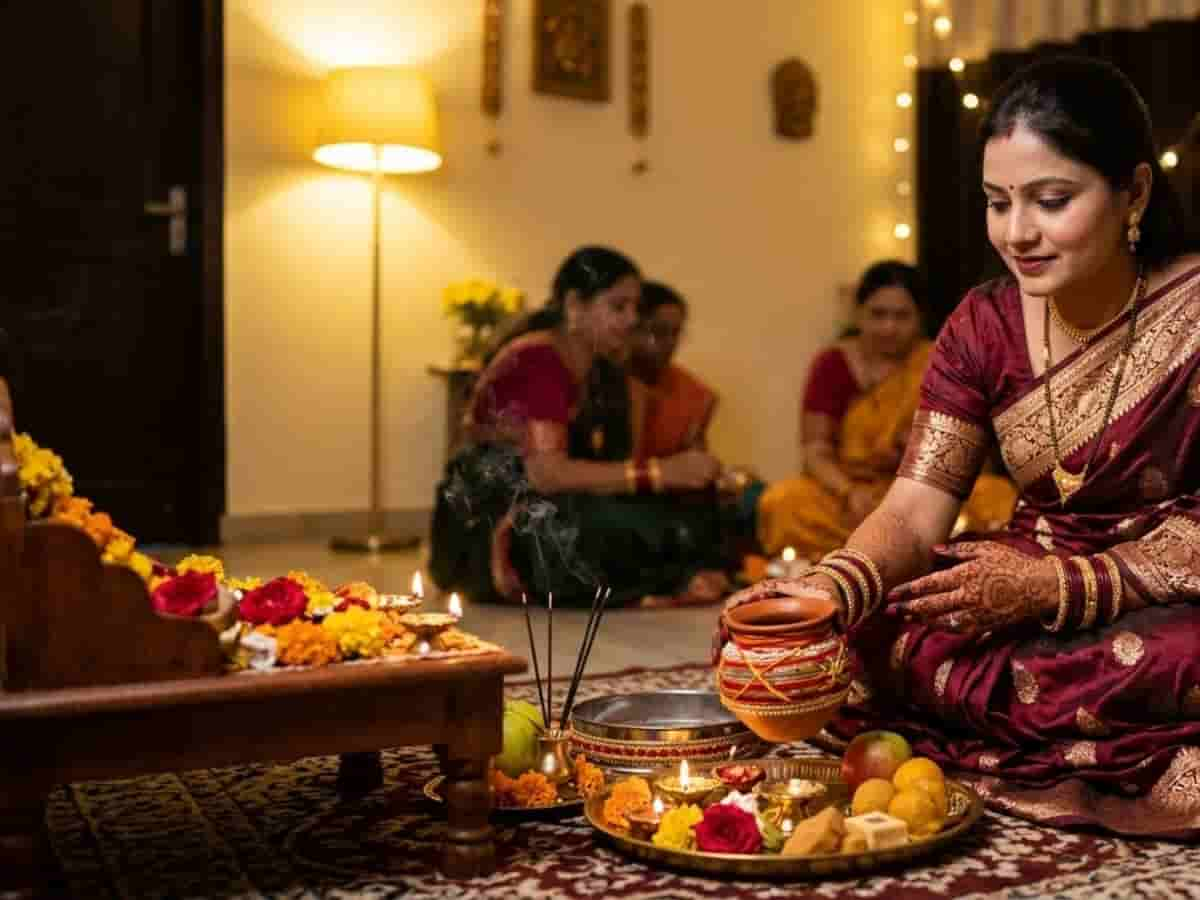
Establishing a spiritually charged environment is the foundational first step of Karwa Chauth. Traditionally, the puja space should be prepared in the northeast (Ishanya) corner of the home or living area, as this direction attracts positive cosmic vibrations and spiritual purity. The floor is meticulously cleansed with water and sanctified with a touch of Ganga jal before laying down a clean wooden platform (chauki). Drape the chauki with an unblemished red or yellow cloth, colors representing auspiciousness, shakti, and prosperity. On this sacred altar, place an idol or image of Maa Gaura (Goddess Parvati), Lord Shiva, Lord Ganesha, and Lord Kartikeya. In authentic household traditions, a paste made of rice flour and turmeric or geru (red ochre) is applied to draw the Karwa Chauth imagery on the wall, known as the Karwa Mata picture. Place a brass plate (thali) on the altar containing all essential items: akshat (unbroken raw rice), roli, sandalwood paste, fresh flowers, sweet mathri, dry fruits, unrefined sugar treats (batashas), and an incense holder. Surrounding this sanctified altar, devotees place the earthen pots that define the festival’s timeless identity.
Where to Place the Karwa: Traditional Rules and Directional Alignment
The earthen or metallic pot, known as the Karwa, is the principal vessel of the festival, embodying the nectar of life, self-restraint, and devotion. Determining where and how to position the Karwa is critical according to traditional scriptures. Two Karwas are typically required for the main ritual: one representing Goddess Parvati (or the celestial reservoir of blessings) and the other representing the fasting woman herself. The primary Karwa must always be placed on the sacred wooden chauki to the right-hand side of the deity or placed directly before Maa Parvati. Prior to seating the pot, scatter a small bed of unbroken wheat grains or raw rice on the chauki so the pot does not rest directly on bare fabric. Fill the pot with clean potable water, milk mixed with water, or raw wheat grains, depending on your family’s regional kuldevi traditions. Tie a sacred red sacred thread (kalava or moli) securely around the neck of the pot, and apply four swastika and roli dots on its belly facing outward. On top of the earthen vessel’s lid (sarai), place sweet flour preparations, dry mathri, or batashas along with a modest monetary offering (dakshina). If using two pots, position the second Karwa alongside the first, ensuring that both spouts (tondi) point inward or toward the devotee, symbolizing the acceptance of divine grace.
Step-by-Step Karwa Chauth Puja Vidhi during the Auspicious Muhurat
As the 1-hour and 17-minute shubh muhurat commences, the fasting woman should sit facing either the East or the North direction, draped in auspicious festive attire such as red, maroon, or yellow lehengas or sarees, complete with traditional solah shringar. Begin the puja by performing Atma Shuddhi, sprinkling a few drops of water on yourself and the altar while chanting basic purifying mantras. Light an unbroken ghee lamp (akhand diya) placed on the thali, ensuring it remains illuminated throughout the recitation. Apply a tilak of sandalwood and kumkum to Lord Ganesha, Maa Parvati, and the Karwa. Offer fresh red blossoms, durva grass, and akshat to the deities. Hold a few grains of wheat and a sprinkle of raw rice in your left hand or folded palm as an elder woman, family priest, or community member begins the dramatic recitation of the Karwa Chauth Vrat Katha. Listen with undivided devotion to the story of Veeravati, whose devotion rekindled her husband’s life, and the legendary Karwa whose unfaltering love challenged Yama himself. Once the story concludes, sprinkle the sanctified grains onto the Karwa and the deity altar as a symbol of complete surrender and prayer fulfillment.
The Sacred Karwa Rotation Ritual: Step-by-Step Guide to Karwa Ferna
The pinnacle of the evening communal puja is the Karwa exchange ritual, traditionally known in Punjabi, Hindi, and Marwari vernaculars as ‘Karwa Ferna’ or rotating the pots. This joyous yet solemn rite signifies mutual blessing, solidarity, and the transmission of good fortune among married women. The rotation takes place immediately following the recitation of the vrat katha and must be conducted exactly seven consecutive times. Sit facing your mother-in-law, sister-in-law, or a fellow fasting married peer. Hold your filled Karwa with both hands firmly supporting its base, ensuring your thumbs point upward and the spout faces toward you. As the traditional folk verse begins—”Thumak chhad de, bhali karein Kartar, suhag bhag vadha de”—slowly and gracefully pass your Karwa to the woman seated opposite you with your right hand leading, while receiving her Karwa with your left hand. With each pass, rotate the pot slightly so the vessels exchange energetic vibrations. Complete this clockwise movement seven times without abrupt movements or spilling the contents inside. On the seventh turn, the final Karwa is retained in your lap, symbolizing the complete sealing of prayers for the husband’s longevity and prosperity.
Offering Arghya to the Moon and Concluding the Vrat
Following the communal puja within the 1-hour and 17-minute window, women await the moonrise, which varies across geographic coordinates such as Delhi, Lucknow, Jaipur, and Kolkata. Once the moon breaches the horizon, carry the puja thali containing the lighted diya, the water-filled Karwa, and a sieve (chhalni) to a balcony, terrace, or open courtyard. Pour a gentle, continuous stream of water from the spout toward the moon as an offering (arghya), making sure the stream reflects the moonlight before hitting the ground. Cover your gaze with the sieve, look at the radiant moon through the woven mesh, and immediately shift your gaze downward to view your husband’s face through the same sieve. This ritual symbolizes filtering away worldly negativity, seeing only purity and longevity in the marital bond. Touch your husband’s feet in humility, receive his blessings, and accept the first sip of water and bite of sweet from his hands to conclude the fast, sealing another year of unbroken love, health, and mutual prosperity.