North India Statesman

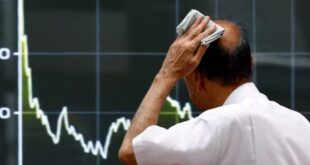
The domestic and global commodity landscape has been rattled by a breathtaking reversal of fortune as the relentless bull run in precious metals comes to an abrupt halt. Silver, which captivated investors worldwide earlier in the year by scaling a historic peak of ₹4,20,048 per kilogram on India’s Multi Commodity Exchange (MCX), has witnessed an astonishing downturn. Plunging more than 57% from its zenith, the white metal has shed over ₹2.44 lakh per kilogram, dragging futures and physical spot rates down toward the ₹1.76 lakh to ₹1.78 lakh territory. Gold has followed in lockstep, experiencing its steepest multi-week sell-off as it retreated by more than ₹42,000 per 10 grams from its record peak of ₹1,80,779 to hover near ₹1,38,400. Across traditional jewelry hubs from Chandni Chowk in Delhi to Aminabad in Lucknow and the bullion bazaars of Patna, the dramatic correction has transformed festive euphoria into cautious hesitation, leaving retail shoppers, jewelry merchants, and commodity traders wondering whether this represents a temporary cooldown or the start of a protracted bear cycle.
Anatomy of the Plunge: Why Safe-Haven Assets Are Bleeding on Global Exchanges
To decipher the velocity of this market unwinding, analysts point to an overlapping web of geopolitical recalibrations, monetary policy shifts, and aggressive institutional profit-taking. For much of late 2025 and early 2026, precious metals traded at extreme premiums fueled by soaring energy prices, supply-chain fractures along the Persian Gulf, and widespread inflation anxieties. However, recent diplomatic signaling—including renewed peace negotiations and backchannel talks between Washington and Tehran—has triggered a swift repricing of geopolitical risk. As crude oil contracts softened and fears of an immediate regional escalation eased, the safe-haven premium that institutional hedge funds had baked into gold and silver evaporated rapidly. Concurrently, persistent dollar firmness and sustained high benchmark yields from the United States Federal Reserve have increased the opportunity cost of holding non-yielding metals, sparking widespread liquidation by systematic trend-following funds and algorithmic trading desks.
MCX and COMEX Breakdown: How Deep Has the Bloodbath Gone for Gold and Silver?
The statistical magnitude of this correction reveals just how overheated the speculative frenzy had become. On the global COMEX exchange, spot silver touched an eye-watering high of $121.64 per troy ounce during its late January euphoria before embarking on a relentless slide that dragged prices beneath the psychological $50 mark, currently hovering near $48.89 to $49.20 per ounce. Spot gold has similarly cooled from its all-time highs above $5,500 per ounce to trade around the $3,875 to $3,905 zone. In the Indian domestic market, the decline has been amplified by shifts in import dynamics and currency movements. Even after accounting for the revised 15% customs tariff and mandatory 3% Goods and Services Tax (GST), MCX silver contracts broke through multiple support thresholds in rapid succession. The gold-to-silver ratio—a classic metric used by seasoned commodity traders to evaluate relative valuation—has expanded from extreme historic lows of under 45 back toward 77.5 to 80, signaling that silver has endured far harsher structural damage than gold during this widespread liquidation wave.
How Low Can Prices Go? Crucial Support Levels and Bear Case Targets
Technical chartists and commodity strategists are keeping a watchful eye on several make-or-break price levels to evaluate where the free fall might finally stabilize. On international charts, silver is trading well below its 20-day, 50-day, and 200-day exponential moving averages (EMAs), reflecting deep underlying bearish momentum. Immediate technical support is established at $48.50 per ounce; if this line fails on a weekly closing basis, secondary support rests near the crucial $45.00 mark. For the Indian market, a breach below $48 on COMEX, coupled with a steady rupee near ₹95 against the dollar, implies that MCX silver futures could slide further toward ₹1.68 lakh to ₹1.70 lakh per kilogram. In a severe bear-case scenario—where global industrial manufacturing indicators slow and speculative funds exit long positions completely—analysts warn of a possible test of the ₹1.60 lakh to ₹1.63 lakh range. For gold, key domestic support lies between ₹1,35,000 and ₹1,36,200 per 10 grams, with a decisive breakdown potentially dragging prices down toward the ₹1,32,000 mark before institutional value buyers step in with defensive bids.
Institutional Forecasts: What Wall Street and Top Commodity Analysts Predict Next
Leading investment banks and brokerage houses maintain varied perspectives on where bullion will establish a durable bottom. Global research desks at J.P. Morgan and Citigroup have updated their commodity models, noting that while the violent speculative bubble has deflated, long-term industrial fundamentals remain structurally intact. J.P. Morgan forecasts silver to trade in a consolidated band between $60 and $65 per ounce over the medium term, implying that current sub-$50 prices represent an oversold condition rather than an irreversible collapse. Prominent domestic research desks, including Aditya Birla Capital and Motilal Oswal, highlight that the structural deficit in global silver supply—driven by high-intensity consumption in photovoltaic solar cells, electric vehicle power electronics, and artificial intelligence data-center infrastructure—will eventually establish a solid price floor. While the consensus view does not foresee an immediate return to the historic ₹4 lakh peak, base-case projections for late 2026 and early 2027 project silver consolidating between ₹1.80 lakh and ₹2.10 lakh per kilogram once global interest-rate easing cycles regain momentum.
Smart Investor Blueprint: Strategic Accumulation or Wait on the Sidelines?
For retail investors and families with upcoming wedding commitments across northern and central India, navigating this volatile price correction requires emotional discipline rather than panic-driven reactions. Market experts strongly discourage deploying lump-sum capital in an attempt to catch the absolute bottom of a falling knife. Instead, financial advisors recommend adopting a systematic, phased accumulation approach (buying in staggered tranches) across every major dip toward key support zones. For those seeking pure financial exposure rather than physical jewelry or heavy silverware, transitioning toward paper alternatives—such as Silver Exchange Traded Funds (ETFs) and sovereign gold schemes—offers significant advantages. These instruments mirror real-time spot movements without burdening buyers with hefty making charges, regional dealer premiums, or vault storage risks. While the white metal may experience further choppy sessions as macroeconomic uncertainties unwind, patient investors who view the ₹2.44 lakh crash through a multi-year lens may find the current correction an attractive window for long-term portfolio diversification.