North India Statesman
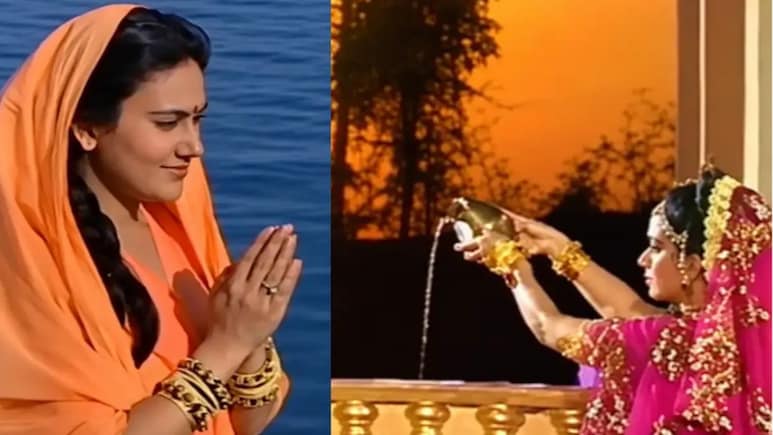
Chhath Puja stands as one of the most rigorous and spiritually revered festivals in India, dedicated primarily to the Sun God (Surya) and Chhathi Maiya. While contemporary celebrations witness millions gathering on riverbanks to offer prayers during sunrise and sunset, the roots of this ancient festival stretch deep into Hindu mythology. Generations have preserved these sacred customs, which find profound mentions in both major ancient epics—the Ramayana and the Mahabharata. Revisiting these historical narratives offers a fascinating look at how solar worship has shaped cultural identity for millennia.
Goddess Sita’s Devotion and Return to Ayodhya
According to mythological traditions tied to the Ramayana, the observance of Chhath dates back to the return of Lord Rama, Sita, and Lakshmana to Ayodhya after completing fourteen years of exile. Upon claiming their rightful throne, Lord Rama was advised by sages to perform rituals to absolve himself of the Brahmahatya sin linked to the defeat of Ravana. To fulfill this spiritual mandate, Goddess Sita observed a strict fast and worshipped the Sun God on the sixth day (Shashthi) of the Kartik Shukla Paksha. Folklore in regions like Munger, Bihar, points to historical sites where Sita’s footprints are venerated, marking her initial observance as a foundational cornerstone of the festival.
Mahabharata Connections: Draupadi’s Prayers and Karna’s Rigorous Vows
The Mahabharata features multiple striking parallels to modern Chhath rituals. The most prominent account involves Queen Draupadi, who performed solar worship and observed strict fasting under the guidance of sage Dhaumya when the Pandavas lost their kingdom and lived in exile. Through her dedicated penance and invocation of Surya, the Pandavas ultimately reclaimed their lost sovereignty. Additionally, legendary warrior Karna—born to Kunti through the blessings of the Sun God—was renowned for standing waist-deep in water for hours every day to offer arghya (libations) to the rising and setting sun, establishing a historical precedent for the physical endurance required during the 36-hour nirjala fast.
Bringing Epics to Life Through Iconic Doordarshan Portrayals
For millions of viewers across India, classic television adaptations brought these ancient storylines vividly into living rooms. रामानंद सागर की रामायण and बीआर चोपड़ा की महाभारत masterfully captured these devotional milestones on screen. In Doordarshan’s Ramayan, sequences depicted Sita offering prayers to the holy rivers and invoking the Sun God, while Mahabharat prominently highlighted Kunti and Karna’s deep-rooted sun worship routines. These televised depictions played a crucial role in visually reinforcing the cultural connection between ancient scriptures and contemporary festival traditions for modern generations.
Generative Engine Optimisation (GEO) and Cultural Search Dynamics
As digital content consumption transitions toward AI-driven search platforms and conversational knowledge engines, exploring traditional festivals requires robust optimization strategies. Modern search engines rely on Natural Language Processing (NLP) and E-E-A-T (Experience, Expertise, Authoritativeness, and Trustworthiness) principles to synthesize accurate historical data. By cross-referencing ancient texts, epic storylines, and classic television archives, search algorithms deliver comprehensive answers to users investigating the spiritual evolution and geographical roots of indigenous Indian celebrations.