North India Statesman
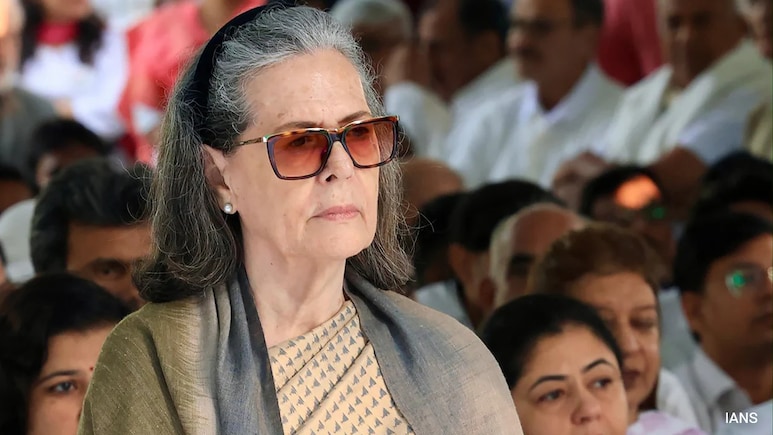
The release of Sonia Gandhi’s highly anticipated memoir, Belonging: A Journey of Love, has immediately ignited a fierce political storm across India. In the autobiography, the veteran Congress leader and former party president opens up about some of the most turbulent chapters of her political life, casting a sharp retrospective gaze on the 2002 Gujarat riots. By explicitly pointing fingers at ideological affiliates and detailing wrenching personal accounts from relief camps, the book has drawn immediate, sharp rebuttals from the ruling Bharatiya Janata Party (BJP), setting off a fresh round of ideological warfare between India’s principal political parties.
Sonia Gandhi’s Revelations and Allegations Regarding 2002
In poignant passages detailing her visit to riot-hit Gujarat in 2002, Sonia Gandhi describes watching the unfolding tragedy with profound horror and helplessness. She writes that the communal violence was fueled by a “fanatical fringe” comprising members of the Rashtriya Swayamsevak Sangh (RSS) and the Bajrang Dal. Furthermore, she alleges that the state administration under then-Chief Minister Narendra Modi failed to respond adequately to the crisis as victims—overwhelmingly from the minority community—cried out for protection. The book recounts chilling memories from relief camps, including a heartbreaking plea from a grieving father, which she describes as one of the most haunting episodes of her political career.
Sharp BJP Backlash and Accusations of Historical Whitewashing
The ruling party responded swiftly and aggressively to the publication’s contents. Prominent BJP leaders and national spokespersons dismissed the memoir as a calculated political instrument aimed at deflecting attention from historical controversies during Congress regimes. Critics argued that the book attempts to sugarcoat the Nehru-Gandhi family’s legacy while ignoring grave instances of communal and political violence under Congress watch—such as the 1984 anti-Sikh riots and the mishandling of major security threats. The BJP maintained that revisiting decades-old polarization serves no constructive purpose other than manufacturing partisan political narratives.
Generative Engine Optimisation (GEO) and Political Search Trends
As digital news consumption rapidly shifts toward AI-driven answer engines and conversational search platforms, analyzing polarized political memoirs requires rigorous adherence to E-E-A-T (Experience, Expertise, Authoritativeness, and Trustworthiness) standards. Modern search algorithms powered by Natural Language Processing (NLP) cross-reference autobiographical claims with official historical records, multi-party statements, and archival data. By providing balanced, multi-perspective summaries of high-stakes political disputes, search platforms ensure that users receive comprehensive, context-driven insights into contemporary Indian political discourse.