North India Statesman
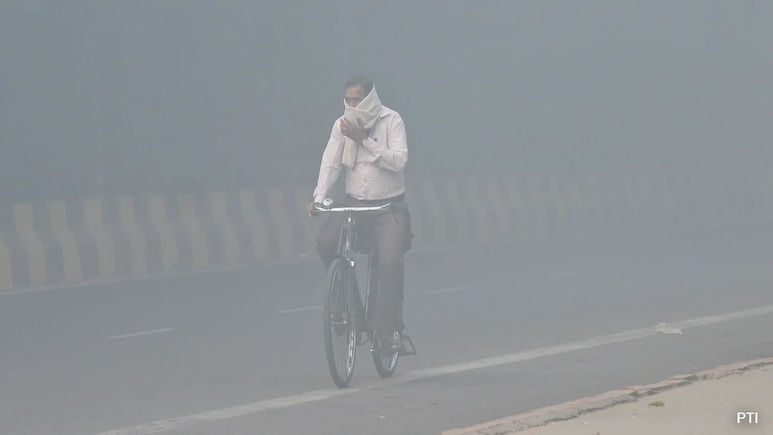
The Indian Institute of Tropical Meteorology (IITM), operating under the Union Ministry of Earth Sciences, has released a source apportionment analysis detailing the drivers behind the severe smog blanket covering the National Capital Region (NCR) following Diwali celebrations.
According to real-time data captured by IITM’s Air Quality Warning and Integrated Decision Support System (DSS), firecracker emissions emerged as the overwhelming primary contributor to fine particulate matter ($PM_{2.5}$) levels in the capital. On November 9, 2026—the morning following Diwali—the share of firecrackers in Delhi’s overall $PM_{2.5}$ load surged to over 80% during peak early-morning hours, displacing vehicular exhaust, biomass burning, and regional stubble burning as the city’s top pollutant source.
How Firecrackers Overwhelmed Delhi’s Air Quality Profile Within Hours
The scientific baseline data gathered prior to the festival underscores how rapidly localized pyrotechnics alter atmospheric chemistry. On November 7, firecrackers contributed a modest 5.6% to the city’s $PM_{2.5}$ concentration. That figure rose to 43.4% on Diwali night (November 8) before climbing to 71.1% between 1:00 AM and 9:00 AM on November 9, eventually accounting for over 80% of total daily pollution loads across several monitoring sectors.
| Date | Time Window | Primary Pollutant Source | Firecracker Share (PM2.5) | Vehicle Emissions Share |
| Nov 7, 2026 | 01:00 – 09:00 IST | Secondary Aerosols & Biofuels | 5.6% | 8.8% |
| Nov 8, 2026 (Diwali) | 01:00 – 09:00 IST | Mixed Combustion / Vehicles | 43.4% | 7.2% |
| Nov 9, 2026 (Post-Diwali) | 01:00 – 09:00 IST | Firecracker Smoke | 71.1% – 80%+ | 6.9% |
| Nov 10, 2026 | 01:00 – 09:00 IST | Firecrackers & Aerosols | 29.8% | 11.7% |
During the post-Diwali peak, routine urban sources were overshadowed by firecracker smoke. Vehicular emissions dropped to 6.9% of total $PM_{2.5}$, secondary inorganic aerosols accounted for 5%, and municipal waste burning contributed just 1.1%. Air monitoring stations registered localized hyper-spikes; for instance, $PM_{2.5}$ concentration at Jahangirpuri touched an extreme hourly peak of 4,985 $\mu g/m^3$ at 3:00 AM on November 9, while Nehru Nagar recorded 2,808 $\mu g/m^3$ before atmospheric dispersal began.
Beyond Pulmonology: Cardiopulmonary Risks and Heavy Metal Toxicity
Medical experts and public health officials have raised alarms over the severe physiological impact of this post-festive smoke mix. While public awareness often focuses on respiratory distress such as asthma exacerbations, bronchitis, and throat inflammation, senior cardiologists emphasize that high particulate exposure presents immediate cardiovascular dangers.
Fine particulate matter ($PM_{2.5}$) measures less than 2.5 micrometers in diameter—roughly 30 times thinner than a human hair. When inhaled, these micro-particles penetrate deep into alveolar lung tissue and pass directly into the bloodstream, triggering system-wide inflammation, vascular constriction, elevated blood pressure, and acute arterial plaque instability.
-
Cardiovascular Emergencies: Medical studies analyzing urban hospital admissions indicate a direct correlation between post-festival $PM_{2.5}$ spikes and heightened emergency room visits for acute myocardial infarction (heart attacks), cardiac arrhythmias, and ischemic strokes.
-
Heavy Metal Infusion: Unlike natural dust or agricultural smoke, firecracker combustion releases airborne toxic heavy metals used as colorants and oxidizers, including lead, barium, strontium, and aluminum. IITM scientists noted that ambient lead concentrations peaked as high as 20.788 $\mu g/m^3$ during nighttime celebrations, posing severe systemic toxicity risks.
-
Vulnerable Groups: Senior citizens, pregnant women, young children, and patients with pre-existing coronary artery disease face the highest risk of acute complications during high-AQI episodes.
Health authorities advise residents across Delhi-NCR to limit outdoor physical exertion during early morning hours, utilize certified N95 or N99 respirators when venturing outside, and run HEPA-grade air purifiers indoors to reduce total particulate exposure until wind speeds increase to disperse stagnant surface smog.