North India Statesman
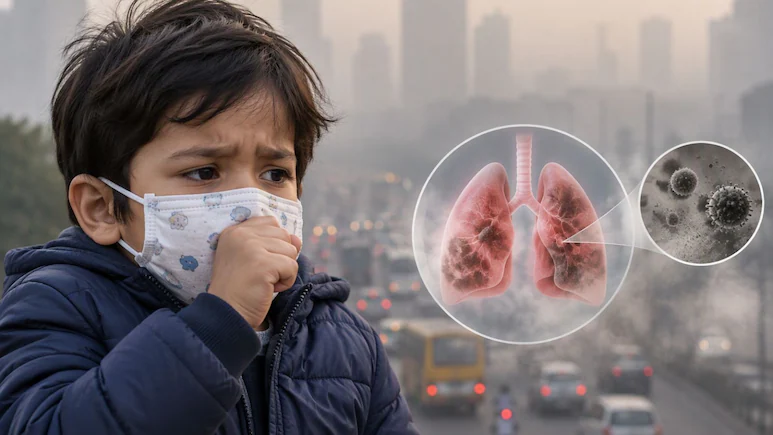
Every year on November 12, World Pneumonia Day serves as a critical global reminder of the single largest infectious killer of children under five worldwide. While microbial pathogens like Streptococcus pneumoniae, respiratory syncytial virus (RSV), and various fungi remain the direct causes of lung tissue inflammation, medical experts increasingly pinpoint an invisible amplifier behind the surge in severe cases: escalating air pollution. As smog and particulate matter degrade ambient air quality—particularly during late autumn and early winter transitions across heavily populated regions—pediatricians report a noticeable rise in pediatric emergency admissions for severe lower respiratory infections.
Understanding the biochemical and physiological bridge between toxic air and severe lung infections is essential for parents, caregivers, and public health officials alike. Children do not merely breathe the same air as adults; their physiological vulnerabilities make them disproportionately susceptible to airborne toxins. When fine particulate matter (PM2.5PM_{2.5}) and gaseous pollutants penetrate a child’s developing respiratory system, they weaken cellular barriers and cripple local immune defense mechanisms, turning minor viral exposures into full-blown pneumonia.
The Physiological Connection: How Smog Weakens Young Respiratory Systems
The physiological link between polluted ambient air and pediatric pneumonia operates on several biological fronts. Children breathe at a faster rate than adults relative to their body size, taking in higher volumes of air per kilogram of body weight. Furthermore, their immune systems and pulmonary structures are still maturing. The microscopic mucosal linings and hair-like structures called cilia—which actively filter out dust, bacteria, and viral particles—are easily damaged when exposed continuously to high concentrations of fine particulate matter (PM2.5PM_{2.5} and PM10PM_{10}), nitrogen dioxide (NO2NO_2), and ground-level ozone (O3O_3).
When inhaled deeply into the alveolar sacs of the lungs, PM2.5PM_{2.5} particles trigger localized oxidative stress and systemic inflammation. Medical researchers note that this persistent chemical irritation damages the epithelial barrier of the airways, making it significantly easier for pathogenic bacteria and viruses to adhere to mucosal surfaces, replicate, and invade pulmonary tissues. Additionally, particulate exposure suppresses alveolar macrophages—the frontline immune cells responsible for engulfing and destroying inhaled microbes. Consequently, a respiratory virus that might typically cause a mild common cold in a clean environment rapidly escalates into severe broncho-pneumonia when a child lives in a heavily polluted atmosphere.
Recognizing Pneumonia Symptoms in High-Pollution Environments
Disentangling general pollution-induced respiratory irritation from a dangerous pneumonia infection is one of the greatest challenges parents face during peak smog seasons. Air pollution routinely causes baseline throat tickles, dry coughing, and minor nasal congestion in young children. However, pediatricians emphasize that pneumonia carries distinct red flags requiring immediate medical intervention.
Pneumonia occurs when the microscopic air sacs (alveoli) in one or both lungs become inflamed and fill with fluid or pus, severely compromising oxygen exchange. Parents should look out for rapid or labored breathing—often visible as the skin pulling in tight between or below the ribs (intercostal retractions). High fever accompanied by chills, persistent lethargy, poor feeding in infants, and a wet, phlegm-producing cough are key indicators that an infection has moved deep into the lungs. If a child displays chest indrawing, nasal flaring, or bluish coloration around the lips and fingernails, emergency medical care must be sought immediately, as these signal oxygen deprivation.
Environmental Exposures: Indoor and Outdoor Hazards Amplifying Risk
While outdoor atmospheric smog dominates headlines during winter months, indoor air pollution represents an equally formidable threat to pediatric pulmonary health. In many households, indoor air quality is compromised by secondary tobacco smoke, unvented biomass fuel cooking, incense burn-off, poor ventilation, and chemical fumes from paints or cleaning agents.
During severe pollution spikes, families frequently keep windows tightly closed to block outdoor haze. Without adequate air filtration, indoor environments trap metabolic waste, volatile organic compounds (VOCs), and airborne pathogens, creating a dense micro-environment where respiratory infections spread rapidly among family members. Medical surveys indicate that infants living in environments combining both high outdoor smog levels and poor indoor air exchange experience higher rates of hospital readmission for recurrent pulmonary infections compared to children living in well-ventilated spaces.
Expert Action Guide: Protecting Children During Peak Pollution Seasons
Mitigating the threat of pollution-induced pneumonia requires a proactive, layered defense strategy balancing environmental control with robust medical prevention.
-
Monitor Air Quality Daily: Track local Air Quality Index (AQI) reports regularly. Keep children indoors during peak pollution hours, typically early mornings and late evenings when thermal inversions trap pollutants near the ground.
-
Deploy High-Efficiency Air Filtration: Use certified High-Efficiency Particulate Air (HEPA) purifiers in rooms where children sleep to maintain low indoor PM2.5PM_{2.5} levels.
-
Up-to-Date Vaccination: Ensure children receive all recommended immunizations, particularly the Pneumococcal Conjugate Vaccine (PCV), Influenza vaccine, and routine childhood immunizations. Vaccines provide the primary defense against the microbial agents that exploit pollution-weakened lungs.
-
Maintain Proper Hydration and Nutrition: Adequate fluid intake keeps airway mucus thin and easily clearable, while a diet rich in antioxidants (vitamins C and E) helps counter oxidative stress induced by atmospheric toxins.
-
Use Protective Masks Correctly: For children aged two and older who must step outdoors during high AQI days, ensure they wear well-fitted, age-appropriate N95 or KN95 respirators. Standard cloth masks offer minimal defense against micro-particulates.
Addressing the dual challenge of air pollution and pediatric pneumonia demands vigilant daily care and long-term public health measures. By strengthening immune protection through timely vaccination and minimizing toxin exposure, families can safeguard young lungs even during the most challenging air quality seasons.