North India Statesman
Tulsi Vivah is one of the most cherished Hindu festivals, marking the sacred ceremonial union of Goddess Tulsi (an incarnation of Goddess Lakshmi) and Lord Shaligram (a sacred form of Lord Vishnu). It symbolically signifies the end of Chaturmas—the four-month cosmic slumber of Lord Vishnu—and heralded the official opening of the Hindu wedding season across India.
This year, confusion has surfaced regarding whether Tulsi Vivah should be observed on November 20 or November 21. According to Vedic astrology and traditional Panchangs, Devutthan (Prabodhini) Ekadashi begins on Friday, November 20. While some households observe the ceremonial wedding on Ekadashi evening itself, the main Kartik Shukla Dwadashi Tithi officially commences on Saturday, November 21. As a result, the primary and widely accepted date for Tulsi Vivah is Saturday, November 21.
Shubh Muhurat and Timings for Tulsi Vivah
Performing the Tulsi Vivah during the auspicious evening Pradosh Kal window yields maximum spiritual benefits, harmony, and prosperity for the family.
-
Dev Uthani Ekadashi Tithi: Begins at 7:15 AM on Friday, November 20, and ends at 6:31 AM on Saturday, November 21.
-
Kartik Shukla Dwadashi Tithi: Starts at 6:31 AM on Saturday, November 21, and concludes at 4:56 AM on Sunday, November 22.
-
Main Evening Puja (Pradosh Kal) Muhurat: 5:25 PM to 7:49 PM IST on Saturday, November 21.
-
Godhuli Muhurat: 5:25 PM to 6:13 PM IST.
Step-by-Step Tulsi Vivah Puja Vidhi to Perform at Home
Conducting Tulsi Vivah at home brings marital bliss, eliminates domestic discord, and bestows blessings equivalent to performing Kanyadaan. Follow these step-by-step rituals to perform the ceremony smoothly:
-
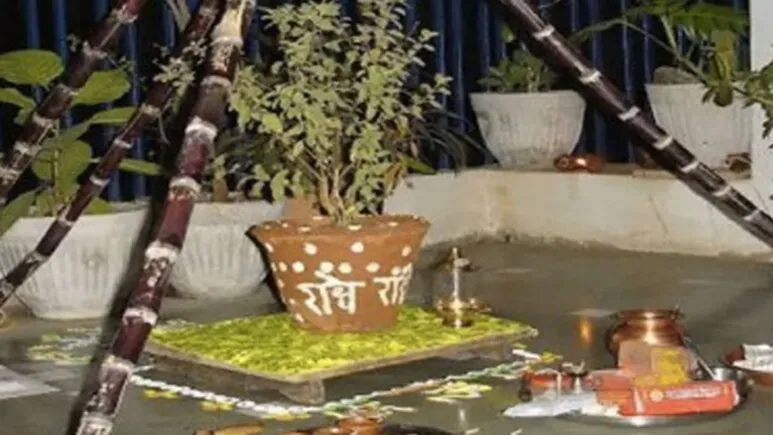
Prepare the Sanctum: Thoroughly clean your home courtyard or balcony where the Tulsi plant is kept. Decorate the floor around the pot with vibrant rangoli patterns using natural colors or rice flour.
-
Erect the Mandap: Set up a small marriage canopy (Mandap) around the Tulsi plant using four tall sugarcane stalks tied together at the top.
-
Deck the Bride (Goddess Tulsi): Adorn the Tulsi pot with a fresh red or yellow chunari (drape), cosmetics (solah shringar items like bangles, bindi, and vermilion), and marigold garlands. Apply turmeric paste (haldi) gently to the plant stems.
-
Seat the Groom (Lord Shaligram): Place a clean wooden stool (chowki) next to the Tulsi plant. Place Lord Shaligram (or a brass idol/picture of Lord Vishnu) on a yellow cloth.
-
Sacred Offerings: Offer yellow clothes, incense, flowers, fruits, and sweets to Lord Shaligram. Remember to use black sesame seeds (kale til) instead of regular rice grains (akshat) during Vishnu worship.
-
The Wedding Rituals: Tie a sacred thread or cloth piece (Gathbandhan) connecting Lord Shaligram and Goddess Tulsi. A male family member should gently lift the Shaligram deity and perform seven circumambulations (Parikrama) around the decorated Tulsi plant.
-
Aarti and Prasad: Conclude the ceremony by lighting a ghee lamp and camphor to perform the aarti while chanting Vishnu mantras. Distribute seasonal prasad, such as sugarcane, roasted peanuts, and sweets, among family members and neighbors.