North India Statesman
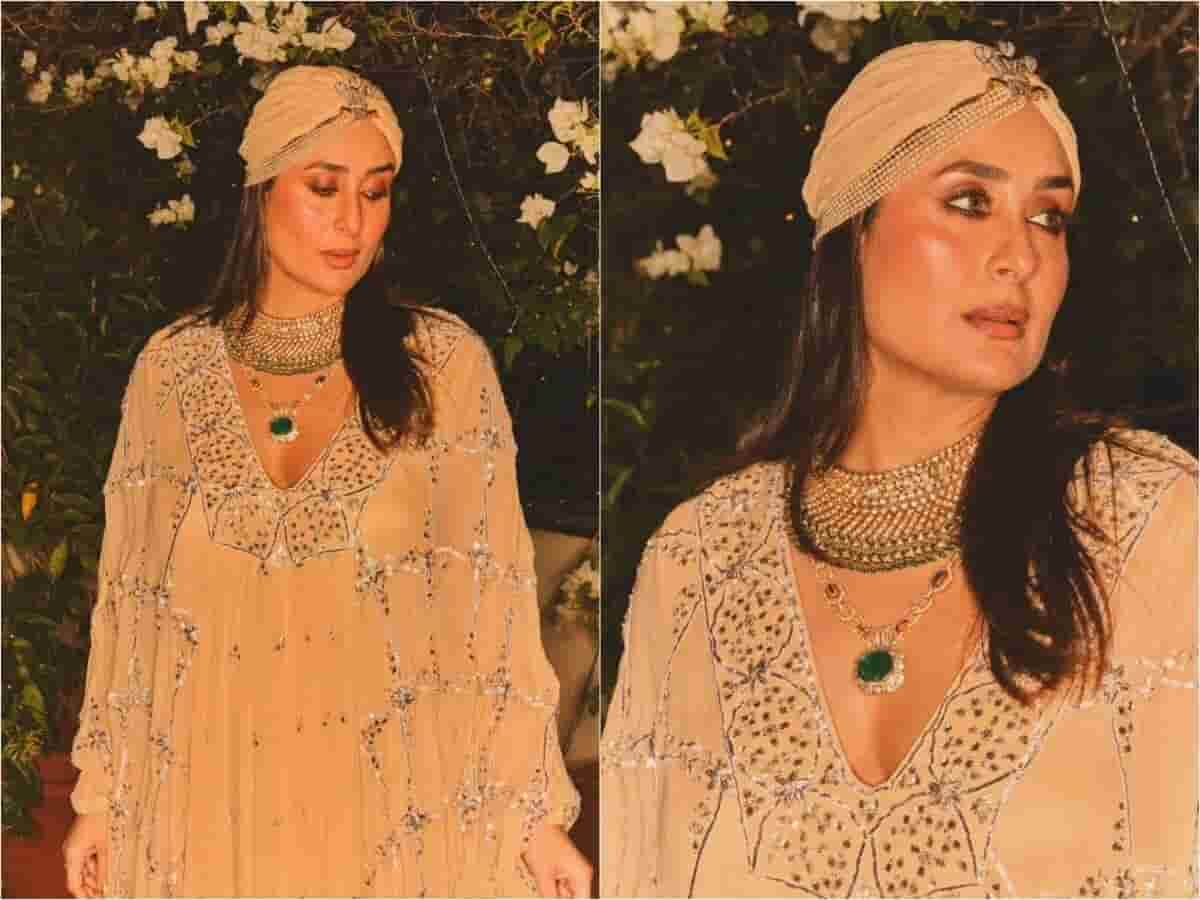
A festive fashion showcase by Bollywood actor Kareena Kapoor Khan has sparked an unexpected cultural and religious controversy across Bhopal, Mumbai, and New Delhi. The dispute centres on a historic 30-carat emerald pendant engraved with Ayat-ul-Kursi—a deeply revered verse from the Holy Quran—that the actor wore during her Diwali appearance and subsequently shared on Instagram. Madhya Pradesh Congress chief spokesperson Abbas Hafeez has served a formal legal notice to both Kareena Kapoor Khan and celebrity stylist Rhea Kapoor, alleging that displaying sacred Quranic scripture as a festive fashion accessory has hurt religious sentiments. Demanding the immediate deletion of the social media photographs alongside a public apology, Hafeez warned that failure to comply could prompt further police or legal action. At the same time, the row has triggered sharp counter-reactions from Bhopal-based Hindu organisations, which have stepped forward in defence of the actor and her right to wear inherited family jewellery.
What Triggered the Row Around Kareena Kapoor’s Festive Look
The debate began shortly after Kareena Kapoor Khan and her stylist Rhea Kapoor posted close-up photographs of the actor’s Diwali ensemble on social media. Styled in a pure silver-toned beige kaftan by designer Punit Balana paired with a matching turban, Kareena accessorised her outfit with rare ancestral pieces connected to the erstwhile royal family of Bhopal. In her Instagram caption, Rhea Kapoor highlighted that the look featured a nearly 200-year-old kalgi (turban ornament) that once belonged to the Nawab of Bhopal, alongside a 200-year-old, 30-carat emerald pendant belonging to the Begum of Bhopal inscribed with Ayat-ul-Kursi. Rhea noted that the heirlooms came through Saif Ali Khan’s lineage, as his grandmother, Sajida Sultan, was the daughter of the last ruling Nawab of Bhopal. While fashion commentators initially praised the archival styling, attention quickly shifted to the religious inscription resting against the emerald centrepiece.
Why Abbas Hafeez Objected and Clarified the Congress Party’s Stance
Explaining his decision to serve a legal demand notice through advocate Mohammad Zafar, Abbas Hafeez stated that his objection had nothing to do with Kareena wearing the Nawab’s kalgi or celebrating Diwali. Instead, he took exception to the public presentation of Ayat-ul-Kursi in a glamour-oriented social media post. Hafeez pointed out that in Islamic tradition, specific protocols of purity—including performing wudu (ritual ablution)—are observed before touching or reciting Quranic verses. He argued that historically, the Begums of Bhopal treated the inscribed emerald as an object of private faith and spiritual protection rather than a public style statement. Crucially, Hafeez emphasized that he issued the notice strictly in his personal capacity as a member of the Muslim community and clarified that the Indian National Congress has no official involvement or stance on the matter.
Hindu Organisations Defend Kareena Kapoor Over Royal Heirloom
As news of the legal notice spread across Madhya Pradesh and national media on November 11 and November 12, Bhopal-based outfits including the Hindu Utsav Samiti and Sanskriti Bachao Manch voiced strong support for Kareena Kapoor Khan. Hindu Utsav Samiti president Chandrashekhar Tiwari questioned the demand for an apology, pointing out that the actor wore the pendant respectfully around her neck, close to her heart. Describing Kareena as a Sanatani married into the Pataudi and erstwhile Bhopal royal lineage, Tiwari argued that she is fully entitled to wear ancestral jewellery passed down through her husband’s family and suggested that critics were unnecessarily politicising a traditional heirloom.
Awaiting Kareena Kapoor’s Response as Debate Over Heritage Continues
So far, neither Kareena Kapoor Khan nor Rhea Kapoor has issued an official public statement addressing the legal notice or removed the contested photographs from their social media handles. The episode has sparked a broader conversation online about the intersection of royal Indian heritage, religious etiquette, and celebrity styling. With both legal warnings and cultural counter-arguments gaining traction in Bhopal and beyond, industry observers and fans are watching closely to see whether the actor responds directly or lets the controversy subside.