North India Statesman
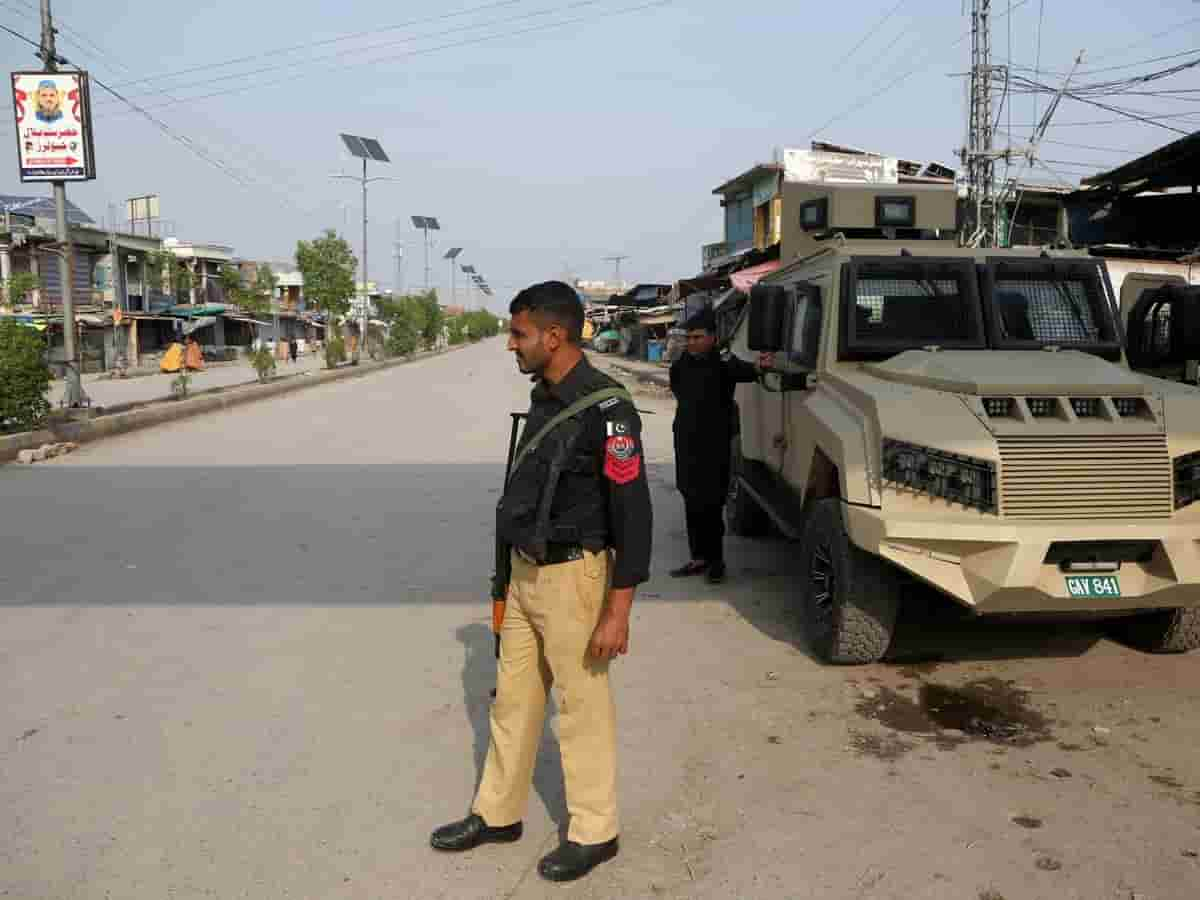
A fierce gunbattle in Pakistan’s restive Khyber Pakhtunkhwa province has left at least 11 police personnel—including a Deputy Superintendent of Police and a Sub-Inspector—dead alongside 18 heavily armed terrorists. The deadly ambush unfolded on Wednesday, November 11, 2026, in the rugged Darbokach Jalandhar Banda belt situated between Kohat and Karak districts, roughly 65 kilometres south of the provincial capital Peshawar. According to official statements from Khyber Pakhtunkhwa Police and Rescue 1122, the police convoy was carrying out a joint enforcement operation with the local civil administration against illegal gold mining networks when militants positioned on surrounding hilltops opened indiscriminate fire. Despite being caught in a sudden crossfire that left five official police mobile vans torched and a dozen officers wounded, the surviving personnel mounted a fierce counter-assault that eliminated 18 attackers before reinforcements arrived.
How the Kohat Anti-Mining Operation Turned Into a Fierce Gunbattle
Police spokesperson Muhammad Nauman Zeb confirmed that the joint team was moving through the Gumbat Kohat sector to dismantle illegal alluvial gold extraction sites—an illicit trade that authorities say has increasingly funded armed outfits across northwestern Pakistan. As the convoy navigated the narrow terrain near Darbokach Jalandhar Banda, militants entrenched along elevated ridgelines launched a coordinated assault using automatic weapons. Among the 11 fallen officers were Gumbat Deputy Superintendent of Police (DSP) Haider Zaman and Sub-Inspector Mukhtiar, both of whom were leading the field contingent from the front. During the prolonged exchange of gunfire, the assailants set five police patrol vehicles ablaze, while Rescue 1122 teams rushed at least 12 injured personnel to the District Headquarters Teaching Hospital in Kohat, where an immediate medical emergency was declared. Heavy police contingents subsequently cordoned off the mountainous perimeter to launch clearance and search operations.
Nexus Between Illegal Gold Mining and Militancy Under Scrutiny
In official briefings following the clash, Khyber Pakhtunkhwa Police stated that the ambush was carried out by operatives of Fitna-al-Khawarij—the state’s official designation for the banned Tehreek-e-Taliban Pakistan (TTP)—acting in direct collusion with local criminal syndicates. Provincial Governor Faisal Karim Kundi strongly condemned the attack, calling it clear evidence of a deepening nexus between criminal mafias and terrorist networks operating in the mineral-rich belt. Paying tribute to DSP Haider Zaman and the fallen officers, Kundi directed senior security officials to submit a comprehensive inquiry report and vowed that neither armed extremists nor illegal mining cartels would be permitted to establish no-go zones in the province. Security analysts in Islamabad and Peshawar note that illegal riverbed gold mining along the Indus and surrounding tributaries in Kohat, Karak, and Nowshera has turned into a lucrative shadow economy, drawing armed protection from militant groups seeking steady local financing.
Escalating Security Crisis in Khyber Pakhtunkhwa Under Governor’s Rule
The Kohat ambush underscores the deteriorating security climate across Khyber Pakhtunkhwa, which has remained under federal emergency and Governor’s Rule since October 11, 2026. Islamabad imposed direct federal administration last month after accusing the previous Pakistan Tehreek-e-Insaf (PTI)-led provincial government of failing to mount coordinated counterterrorism operations—a move that sparked widespread political protests across Peshawar and neighbouring districts. Over the past year, frontline police units, border posts, and paramilitary Frontier Corps convoys across Kohat, Bannu, Lakki Marwat, and Dera Ismail Khan have borne the brunt of targeted night raids and hilltop ambushes. While security forces succeeded in neutralizing 18 militants during Wednesday’s encounter, the loss of a senior officer like DSP Haider Zaman highlights the mounting operational risks faced by local police forces battling both entrenched insurgencies and organised resource crime.